Topical authority clusters are interconnected networks of pages that signal deep expertise to search engines. These signals drive rankings, featured snippets, and AI overview citations. Sites with comprehensive, interconnected content ecosystems outrank sites with isolated pages, regardless of individual page quality.
Your competitors ranking above you probably do not have better content on any single page. They have better content networks. This guide shows you exactly how to build these ecosystems using the Mother-Son-Grandson hierarchy.
Why Search Engines Reward Topic Coverage Over Individual Keywords
Google no longer evaluates pages in isolation. Its algorithms assess your entire domain’s coverage of a topic when determining which pages rank highest. A single well-optimized article cannot compete against a site that comprehensively covers every angle of the same subject.
Search engines map relationships between concepts using knowledge graphs and semantic understanding. When your site has multiple pages covering different angles of the same topic, and those pages link to each other strategically, Google recognizes you as an authority. You gain preference in competitive SERPs, appear more frequently in AI overviews, and earn featured snippet placements at higher rates.
Traditional SEO used to focus on individual keyword targets, but modern content clusters prioritize comprehensive topic coverage that supports complete search journeys. A user researching “digital marketing strategies” might also need answers about budget allocation, channel selection, measurement frameworks, and vendor evaluation. When you anticipate related questions and provide answers across multiple connected pages, you capture users at every stage of their research.
The Mother-Son-Grandson Framework Explained
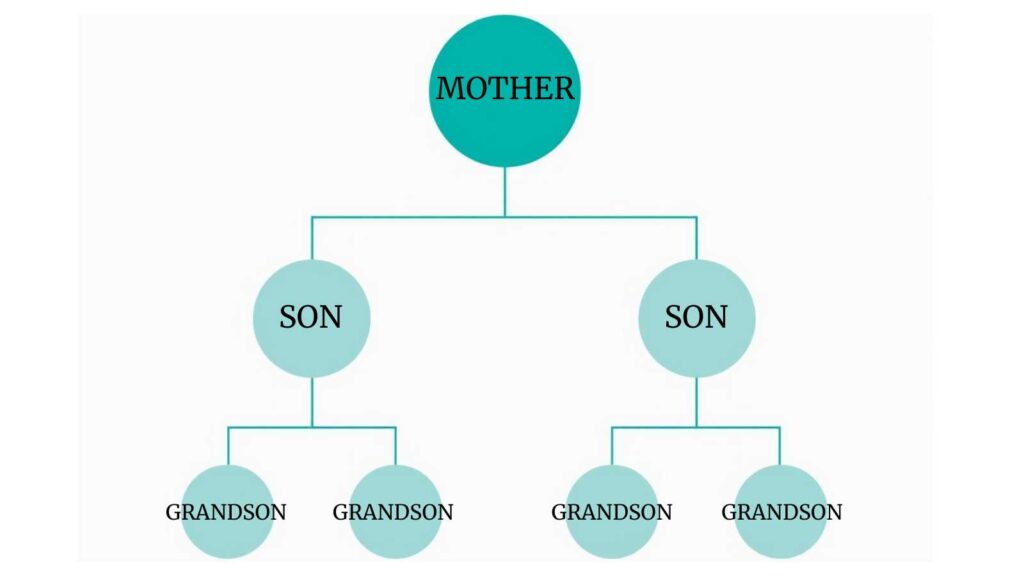
Think of your content ecosystem as a family tree. Mother pages sit at the top as broad topic hubs targeting high-volume, competitive terms. Son pages branch out to cover specific subtopics with medium-tail keywords. Grandson pages address the most granular questions with long-tail phrases that carry high conversion potential.
This structure creates clear pathways where users find answers at any depth they need, while crawlers understand topical relationships through your linking patterns. Each level serves a distinct purpose and targets different levels of keyword competition, allowing you to capture traffic across the entire search landscape for your topic.
Building Your Pillar Page Strategy
Your pillar pages serve as the Mother layer of your content infrastructure. These comprehensive overviews target head terms and act as central hubs for your entire topical cluster. A well-built pillar might address “Digital Marketing Strategies” and cover definitions, channel overviews, and strategic frameworks at a high level.
Defining Scope Correctly
Your pillar topic must be broad enough to support multiple cluster pages but narrow enough to establish clear expertise. “Marketing” is too broad and impossible to dominate. “Digital Marketing Strategies for B2B Manufacturing Companies” is appropriately focused and defensible.
You can define your pillar scope by answering these questions:
- What primary search term captures your target audience’s initial research query?
- What subtopics do users need to fully understand this subject?
- What questions appear in PAA boxes for this term?
- Can you create at least 8-12 supporting cluster pages for this topic?
If you cannot identify at least eight distinct subtopics, your pillar scope may be too narrow. More than twenty suggests you should split the topic into multiple pillar ecosystems.
Establishing E-E-A-T Signals
Google’s algorithms reward content that references recognized named entities, including brands, people, organizations, and concepts in its knowledge graphs. Your pillar pages should incorporate relevant entities naturally while citing authoritative sources.
Build E-E-A-T signals by including statistics with source citations, case studies showing real-world results, expert references, and original insights your competitors don’t have. Generic advice without supporting evidence fails to differentiate your content. Pillar pages typically run 3,000+ words to achieve the comprehensive coverage that establishes genuine authority.
Developing Cluster Content That Expands Your Reach
Son pages dive into specific subtopics that your pillar content only introduces. These cluster pages target medium-tail keywords with clearer user intent and lower competition than head terms. You might create Son pages like “Advanced Link Building Techniques,” “Google Analytics 4 Implementation Guide,” or “B2B Email Marketing Sequences” to support a digital marketing pillar.
Read More: What are Topical Clusters and How Do They Improve Your SEO?
Using PAA and Search Intent for Topic Discovery
People Also Ask boxes reveal exactly what questions users have about your topic. These questions map directly to opportunities on the cluster page. When you analyze PAA results for your pillar keyword and its variations, you identify gaps in your current coverage that represent ranking opportunities.
Group your subtopics by search intent for strategic planning. Informational intent covers how-to guides, definitions, and process breakdowns. Commercial investigation intent includes comparisons, reviews, and best-of lists. Transactional intent addresses pricing pages, service descriptions, and resource downloads. Each cluster page should target a single primary intent type, as mixing intents confuses both users and search algorithms.
Preventing Keyword Cannibalization
Keyword cannibalization occurs when multiple pages target the same search queries, forcing them to compete with each other rather than competitors. Your topic cluster model requires explicit keyword assignments that prevent overlap.
Create a content map documenting the primary keyword for each page, secondary keywords (limited to 2-3 per page), search intent classification, and parent pillar relationships. Review this map before creating new content. If a proposed page targets keywords already assigned elsewhere, either merge the content or differentiate the angle to target a distinct intent.
Read More: How AI Tools Can Detect Cannibalization and Fix Internal Competing Keywords
Adding Depth With Grandson Content
The Grandson layer targets long-tail keywords with lower search volume but high conversion potential. You might create content addressing questions like “How to fix Google Analytics 4 tracking errors on WordPress” or “Email subject line templates for abandoned cart sequences.”
These pages run 500-1,000 words, providing precise answers without unnecessary expansion. When someone searches for a highly specific question and finds your answer, they recognize your expertise immediately. This layer captures users closest to decision points, making Grandson content particularly valuable for lead generation despite lower traffic volumes.
Internal Linking Architecture That Signals Relevance
Links within your cluster pass authority and communicate topical relationships to search engines. Strategic internal linking for SEO amplifies your cluster’s effectiveness and helps you maximize the value of every page you create.
Read More: Advanced Internal Linking Tactics to Deepen Local Topical Relevance
Creating Bidirectional Link Flows
Cluster pages should link up to their parent pillar, and pillars should link to all supporting cluster pages. This bidirectional structure creates clear topical associations that algorithms recognize and reward.
You should place pillar-to-cluster links contextually within the pillar body, not just in navigation lists. Reference the pillar naturally in cluster pages using varied anchor text. Link laterally between sibling cluster pages when topically relevant. Connect Grandson pages to their parent Son pages and occasionally to the main pillar.
Contextual links placed within relevant paragraphs carry more weight than navigation-style lists at the bottom of the page. Search engines interpret in-content links as editorial endorsements, while footer links transfer less authority.
Using Semantic Anchor Text
Effective internal linking uses semantically related anchor text that reinforces topical relevance. You should avoid generic anchors like “click here” or “learn more” that provide no context to search engines.
Strong anchor text examples include phrases like “comprehensive guide to content clustering,” “how pillar pages build domain authority,” and “avoiding keyword cannibalization across your site.” Vary your anchor text across links to the same target page because repetitive exact-match anchors look artificial and signal manipulation rather than genuine editorial endorsement.
Read More: How to Optimize Internal Anchor Text for Topical Relevance and Better Rankings
Measuring and Maintaining Your Content Ecosystem
Building clusters without measurement leads to wasted resources. You need to track specific KPIs that indicate your topical ecosystem is delivering results.
Tracking Cluster-Wide Performance
Individual page rankings tell only part of the story. Measure cluster performance holistically by tracking combined keyword rankings across all related terms your cluster captures. A healthy cluster should hold positions for dozens of related queries, not just primary targets.
Monitor organic traffic growth across all pages in the cluster, not just the pillar. Rising tide metrics indicate your authority is expanding across the topic. Track impression share to measure what percentage of searches in your topic area show your pages. Pay attention to SERP feature capture as well, including featured snippets, AI overview citations, and PAA inclusions.
Scheduling Content Refreshes
Engagement metrics indicate content quality beyond rankings. Monitor pages per session to see if users explore multiple cluster pages in a single visit. Track time on-page to confirm that content depth aligns with user intent expectations. Review bounce rates by entry page to identify which cluster pages fail to capture visitor interest.
Schedule quarterly content audits to refresh underperforming cluster pages. Use current PAA data and search trends to update outdated information. Review rankings for each cluster page, update statistics with current figures, add new questions that have emerged, and refresh internal links to include newer cluster content. Clusters require ongoing maintenance to sustain momentum in competitive SERPs.
Start Building Your Content Ecosystem With A Top SEO Agency
At The Ad Firm, we build topic architecture that aligns with how your customers actually search and how search engines evaluate authority. Our digital marketing agency designs SEO strategies that earn rankings, attract qualified traffic, and turn visibility into measurable revenue.
Your competitors are already building topical authority and gaining compound advantages over time. Each new cluster page strengthens its entire ecosystem. Starting now means closing the gap before it widens further.
Contact our SEO specialists for an audit and find out what you need to do to rank first on search engines.