
In the world of SEO, change isn’t just inevitable, it’s necessary for survival. If you’re still chasing keyword rankings the same way you did a few years ago, we’ve got some tough love for you: you’re already behind. As 2025 unfolds, the smart players are mastering Entity SEO because today, it’s not just about matching words; it’s about owning ideas.
Search engines are no longer dumb robots counting word matches. They’re intelligent systems interpreting context, meaning, and relationships. And if you want to win at SEO today, you have to build content that reflects that evolution.
Let’s dive into exactly why concepts crush keywords now and how you can make the shift that will future-proof your rankings.
What Exactly Is Entity SEO?
First things first: what is an entity?
An entity is a clearly defined, distinct concept or object that search engines can recognize and understand. Think people (“Barack Obama”), places (“Mount Everest”), organizations (“Tesla”), or ideas (“quantum computing”). It’s something that can stand alone as a recognisable thing, with connections to related topics.
Where traditional SEO obsessed over specific phrases — “best running shoes for women,” for example — Entity SEO cares more about the idea behind the search, like “running footwear performance” or “women’s marathon training essentials.”
Search engines like Google have built massive knowledge graphs that map these entities and their relationships. So when someone searches for “Obama,” Google doesn’t just match the word; it taps into everything it knows about him: his presidency, his books, his policies, his family.
In other words, keywords tell search engines what a user typed. Entities tell them what the user meant.
And in 2025, meaning wins. Every time.
Why We’re Moving Beyond Keywords
Not too long ago, the SEO playbook was simple: pick a keyword, stuff it in the title, URL, and first paragraph, then rinse and repeat.
But then something happened.
Search engines, led by Google’s BERT and MUM models, became better at understanding natural language. They stopped treating search queries as isolated words and started interpreting them as semantic units — clusters of meaning.
This shift means that optimizing for keywords alone is like bringing a knife to a gunfight. Here’s why:
1. Search Engines Understand Context
Modern algorithms don’t just scan your content for matching terms. They analyze the relationships between ideas. If your article talks about “electric cars,” Google expects to see terms like “charging stations,” “battery range,” and “EV incentives” naturally appear.
It’s not looking for repetitions of “electric car”; it’s checking whether you truly understand the topic.
2. User Intent Is King
Today’s searchers aren’t just typing words; they’re asking complex, conversational questions. Think voice searches like:
“What’s the best way to prepare for a half-marathon in humid weather?”
There’s no single keyword for that. Winning content interprets the intent behind the question and provides a well-rounded, entity-rich answer.
3. AI and Voice Search Are Driving the Change
As AI assistants like Siri, Alexa, and Google Assistant get more sophisticated, the way we search is becoming more conversational and fluid. Voice queries often don’t even contain “keywords”; they’re full sentences that need semantic understanding.
If your content isn’t built around entities and relationships, you’re invisible to this new wave of search.
How to Master Entity SEO
So, how do you transition from keyword hunter to entity master?
Here’s a blueprint:
1. Identify Your Core Entities
Start by mapping out the key people, places, products, or ideas relevant to your niche. Entities are the foundational building blocks of your content strategy, not just supporting details.
If you’re writing about digital marketing, your entities might include:
- SEO
- Content marketing
- Google algorithm updates
- Keyword research tools
- SERP features
Think of these as the “anchor points” for your knowledge network. They are not isolated; they live within a wider web of associations. When you clearly define your core entities upfront, you can craft content that not only answers direct questions but also anticipates related queries.
This is your content’s knowledge graph. Build it thoughtfully, making sure each entity you choose is highly relevant and valuable to your audience. By being deliberate here, you lay a strong foundation that search engines can easily interpret and trust.
2. Build Topic Clusters
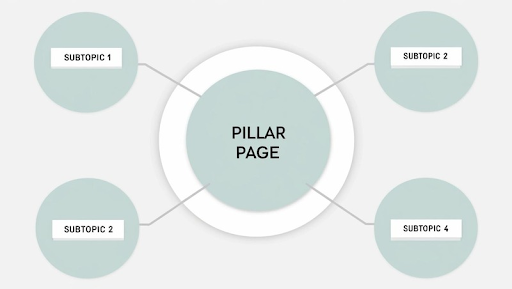
Topic clusters are the new pillar pages. Instead of writing isolated blog posts, group your content around central entities to show search engines that you’re an authority, not just a one-hit wonder.
For example, a pillar article on “SEO in 2025” could link to subtopics like:
- Entity SEO strategies
- Voice search optimization
- Structured data best practices
- AI and search engine evolution
Each subtopic strengthens the main pillar by covering important facets of the topic. The goal is to create a natural ecosystem where one piece of content leads logically into another, both for the reader and for search crawlers.
Good topic clusters not only improve SEO performance, they make navigation easier, boost engagement, and encourage longer site visits. Everything stays interconnected, forming a comprehensive resource centre instead of a disconnected series of articles.
READ ALSO: Topic Clustering for SEO: 5 Mistakes to Avoid
3. Use Structured Data (Seriously)
Schema markup helps search engines understand your entities better. Think of it as giving Google a VIP backstage pass to your content.
When you tag your pages properly with structured data, like marking a person’s biography with a Person schema, or a product review with ProductReview, you’re telling search engines, “Here’s exactly what this is.”
This clarity can lead to powerful enhancements in search results, like:
- Rich snippets that display ratings or event dates
- Knowledge panels with detailed entity information
- Improved voice search results, because voice assistants rely heavily on structured data
You don’t need to be a developer to get it right, either. Tools like InLinks, SEMRush’s SEO Writing Assistant, and Google’s Structured Data Markup Helper make it much easier to generate and test schema code without having to dig into complex backend systems.
By implementing structured data, you make it easier for search engines to trust, feature, and prioritise your content, which is exactly what you want.
4. Write for Semantic Richness
Instead of hammering the same keyword 10 times, incorporate semantically related terms that show you understand the broader conversation around your topic.
If you’re writing about “plant-based diets,” it’s natural (and expected) to mention:
- Vegan nutrition
- Meat alternatives
- Environmental impact
- Whole foods
- Plant proteins
This isn’t about forcefully inserting synonyms either — it’s about writing comprehensively and organically around the topic.
Semantic richness signals to search engines that your content isn’t thin or narrowly focused. It’s deep, insightful, and likely to satisfy a wide range of search intents related to the original query. It also builds a better reading experience, reducing bounce rates and increasing user satisfaction, both of which are ranking signals in their own right.
In 2025, the most successful content doesn’t just answer a question; it anticipates the next five questions a reader might have.
5. Think Relationships, Not Just Answers
Entities aren’t isolated. They connect in webs — and so should your content.
When you talk about “Elon Musk,” you’re automatically pulling in associations with:
- SpaceX (space exploration)
- Tesla (electric vehicles)
- Mars colonization (future technology)
- Neuralink (brain-computer interfaces)
These relationships are critical because they mirror how search engines structure knowledge. Google doesn’t see Elon Musk as a random businessman; it sees a nexus point connected to multiple fields of innovation and technology.
When creating content, ask yourself:
- How does this entity relate to others?
- What logical bridges can I build for my reader?
- How can internal linking reinforce these connections naturally?
By making these associations visible and intuitive within your content, you not only deepen user understanding but also show search engines a well-connected topical authority — a signal they reward with better visibility.
Good entity-focused SEO doesn’t just deliver answers, it builds ecosystems of information that readers (and search engines) can explore and trust.
The Future: Concepts Over Keywords, Always
Entity SEO isn’t just another buzzword. It’s the foundation of how search works now, and it’s only going to get more critical.
By focusing on concepts, not just matching keywords, you future-proof your content strategy for the evolving AI-driven landscape. You position yourself (or your brand) as a trusted source that search engines want to elevate, not just a site playing the keyword bingo.
In 2025 and beyond, concept mastery is SEO mastery.
If you’re serious about ranking, building authority, and winning in an increasingly competitive digital arena, start thinking like a search engine, not just like a content writer. At The Ad Firm, we help brands master entity SEO and stay ahead of the curve. Contact us today to elevate your strategy for 2025 and beyond.