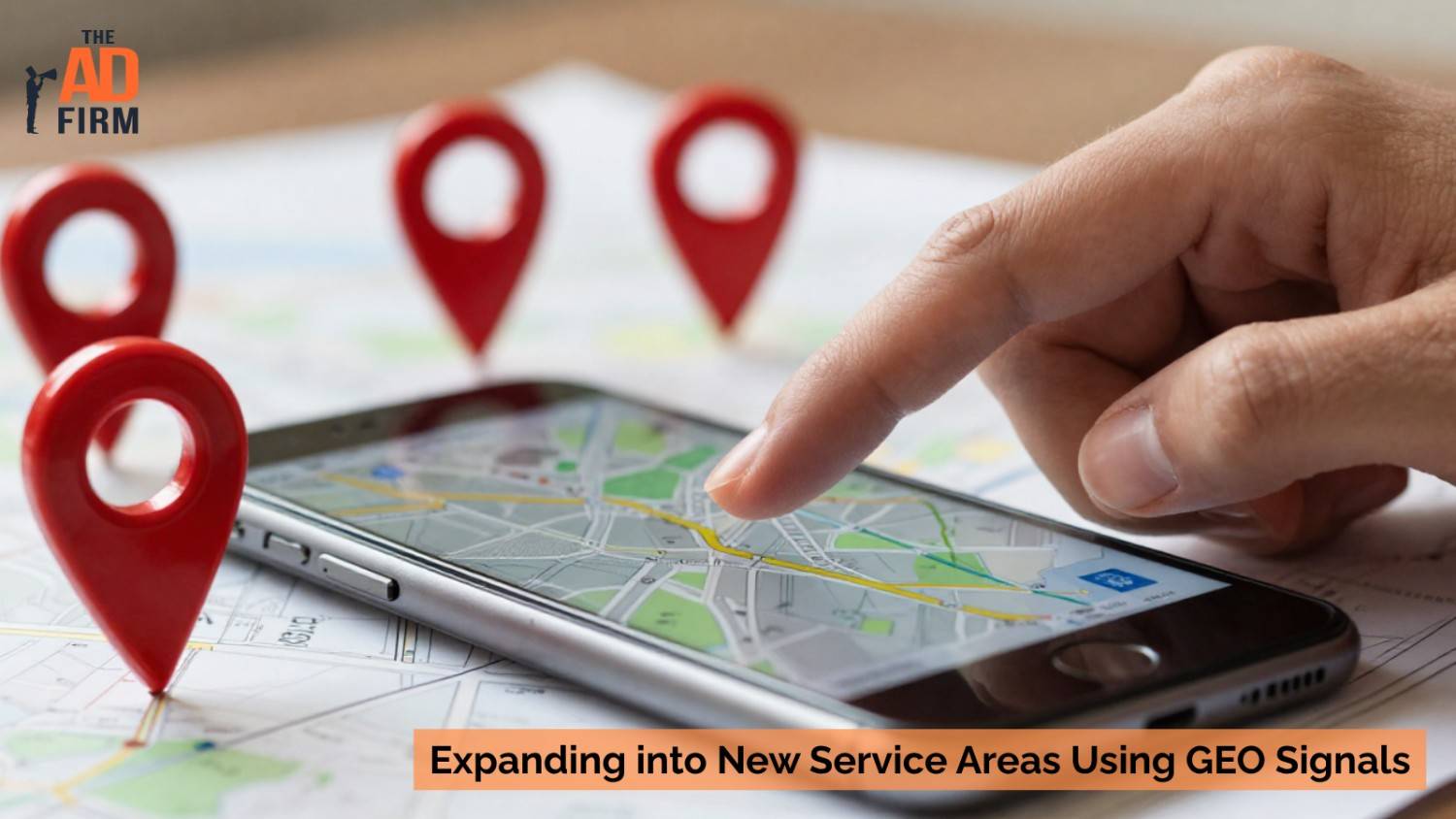
Expanding into a new market does not require a physical location. You can build visibility in new regions by strengthening the geographic signals search engines use to determine relevance. Generative engine optimization (GEO) focuses on creating and managing those signals so your business appears in the areas where your next customers are already searching. When applied to geographic expansion, GEO principles help your business connect with high-intent audiences in new markets without the overhead of opening new offices.
You can use GEO to position your business in the right markets, attract qualified leads, and support measurable growth. By aligning your content, location signals, and search presence with how people search in specific areas, you create a clear path for potential customers to find and choose your services.
How GEO Signals Work and How to Build Them for Expansion
GEO signals are not a single ranking factor. They are a combination of behavioral, location-based, and trust signals that search engines and AI platforms use to decide where your business should appear. GEO focuses on building and aligning these signals so your business shows up in the right markets. When you understand what drives these signals, you can expand your reach with a clear, data-backed approach.
How Location Data Shapes AI and Search Results
Search engines evaluate multiple data points to assign geographic relevance. These include device location, search behavior, your Google Business Profile, and how users interact with your content. When someone searches for a service in a specific city, the algorithm looks beyond proximity. It prioritizes businesses that show consistent, credible relevance to that location.
AI platforms such as ChatGPT, Gemini, and Perplexity follow a similar model. They surface businesses with strong, consistent geographic context across their digital footprint. If your business builds strong GEO signals for local SEO in a target market, you can appear in AI-generated results for that area, even without a physical address there. GEO bridges that visibility gap.
The Role of NAP Consistency and Local Citations
NAP consistency means your business name, address, and phone number match across every platform where your business appears. When this data varies, search engines receive mixed signals and reduce confidence in your geographic relevance. That directly limits your ability to rank in new markets.
Strengthening these signals starts with auditing and standardizing your listings before launching campaigns in a new area. Local citations across trusted directories reinforce your presence and expand how widely your business appears in location-based searches. A strong citation profile is one of the clearest signals you can send that your business serves a specific region.
Configuring Your Google Business Profile for Service-Area Expansion
One of the most direct ways to signal geographic relevance in a new market is through your Google Business Profile. If your business operates without a storefront in the target area, you can set it as a service-area business and define the cities, ZIP codes, or regions you serve. This tells Google exactly where your business provides services, even when no physical address exists there.
Keep your GBP categories, service descriptions, and service areas consistent with what appears on your website and local landing pages. Mismatches between your GBP and your on-site content create conflicting signals that reduce how confidently platforms assign you relevance in new regions.
Geo-Specific Landing Pages: Structure and Elements That Work
Each target location should have a dedicated landing page with a unique URL, a clear city-service headline, and localized content that answers real search intent. Your pages should address common questions directly, such as service availability, process, and experience in that area.
Local testimonials, relevant case examples, and FAQ sections built around question-based headings strengthen these signals. This structure allows AI systems to extract and surface your content in location-based responses, increasing your visibility across both search engines and AI platforms.
On-Site Technical Signals That Support Geographic Authority
Technical signals support how platforms process and validate your content. Structured data, such as LocalBusiness schema and FAQ schema, helps define your service areas clearly. Allowing AI crawlers like GPTBot to access your site, maintaining fast mobile performance, and reinforcing trust through clear author credentials and localized proof points all strengthen how your GEO signals scale across new regions.
ALSO READ: Top GEO Content Formats That Win Visibility in AI Overviews
Identifying the Right Markets Before You Optimize

Not every nearby city offers real growth potential. You need data that shows where demand exists, where competition is weak, and where your business can compete effectively. This step separates strategic expansion from guesswork.
Using GIS Tools and Heatmaps to Find Underserved Zones
Geo-mapping tools such as Local Falcon and Places Scout show how your business ranks across specific neighborhoods and ZIP codes. These heatmaps reveal where your visibility is strong and where gaps exist.
Focus your GEO efforts on areas with demand and low competition. When competitors show weak reviews, inconsistent listings, or low visibility in AI results, you gain a clear entry point to capture market share.
Setting Realistic Service Radii to Avoid Overpromising
Your digital reach can extend beyond your physical footprint, but your operations still define what you can deliver. Targeting areas outside your service capacity leads to poor customer experiences and weakens your reputation.
A hub-and-spoke model works well for controlled expansion. Your main location builds authority, and you extend into nearby areas through localized content, citations, and targeted coverage. This approach aligns your marketing with your actual service capabilities.
Identifying your target markets and setting the right service boundaries is the foundation of a scalable GEO strategy. Once those parameters are clear, every content, citation, and campaign decision becomes easier to execute and measure. Before investing in new landing pages or paid tactics, make sure your market selection is grounded in data, not assumptions.
LEARN MORE: Monitoring Local Visibility Across Maps and AI Search with GEO
How Geo-Targeted Marketing Tactics Complement Organic GEO Signals
Organic GEO signals build long-term authority. Paid strategies help you enter new markets faster and generate early traction.
Geofencing and Geo-Conquesting for High-Intent Entry
Geofencing uses location data to deliver ads to users within a defined area. This approach reaches potential customers already present in your target region. It creates early exposure before your organic visibility fully develops.
Geo-conquesting targets users near competitor locations. This strategy captures users already in a decision-making stage and positions your business in front of active demand. It accelerates entry into competitive areas and shortens the path to initial conversions.
Momentum Triggers: When to Launch a Targeted Campaign
Timing affects campaign performance. Certain events create natural momentum you can amplify: earning your first cluster of reviews from customers in a new area, launching a local initiative, or gaining regional recognition. These moments generate social proof signals and search activity simultaneously.
Building reviews in a new market where you have no existing customer base requires a proactive approach. Ask early customers directly, include a review request in your follow-up process, and make it easy by providing a direct link to your Google Business Profile. Even a small volume of recent, relevant reviews in a new region strengthens your local signals and increases the credibility of your service area pages.
Layering paid campaigns on top of these signals increases reach and accelerates early traction. Early engagement drives reviews and interaction, which feeds back into your GEO signals and supports faster growth in that market.
Measuring Your GEO Expansion Strategy’s Performance
Expanding into new territory without tracking the right metrics means operating without clear direction. GEO signals leave measurable footprints across rankings, engagement, and conversions, and those indicators show where to invest next.
Tracking Rankings, AI Citation Frequency, and Engagement Quality
Heatmap-based rank tracking shows not just where you rank overall, but how your signals spread geographically across a target area. You will see which ZIP codes or neighborhoods respond to your optimization and where coverage remains limited. Tools like RankScale.ai and Semrush support this level of geographic tracking.
AI search visibility introduces a newer metric: AI citation frequency. This measures how often your business appears in AI-generated responses within the new region. Pair citation tracking with engagement quality metrics such as CTR lift, review velocity, and conversion rates by landing page. These indicators reflect the strength of your GEO signals in that area.
Market Penetration Rate and Lead Attribution by Area
Traffic alone does not confirm success. You need to track how many users from a target region convert into leads or customers. Tracking parameters, call tracking, and landing page data connect performance directly to your expansion efforts.
Market penetration reflects how your presence grows within a new area over time. Consistent increases show that your strategy is working. If traffic rises without conversions, refine your targeting or adjust your messaging to better match local intent.
RELATED ARTICLE: How to Structure Internal Links for Better AI Comprehension
Start Expanding Your Service Area With a GEO Strategy Built to Scale
GEO signals connect your current visibility to the markets where your customers are already searching. When you build these signals through structured content, consistent citations, and a strong technical foundation, you create a clear path for expansion. This approach helps your business enter new service areas, strengthen regional visibility, and capture market share over time.
The Ad Firm develops GEO strategies that help your business scale into new markets with precision. You gain a data-driven plan that aligns your visibility with real demand, allowing you to improve regional performance and expand your service area with confidence. Contact us today to start building a strategy that drives measurable results in your next target market.