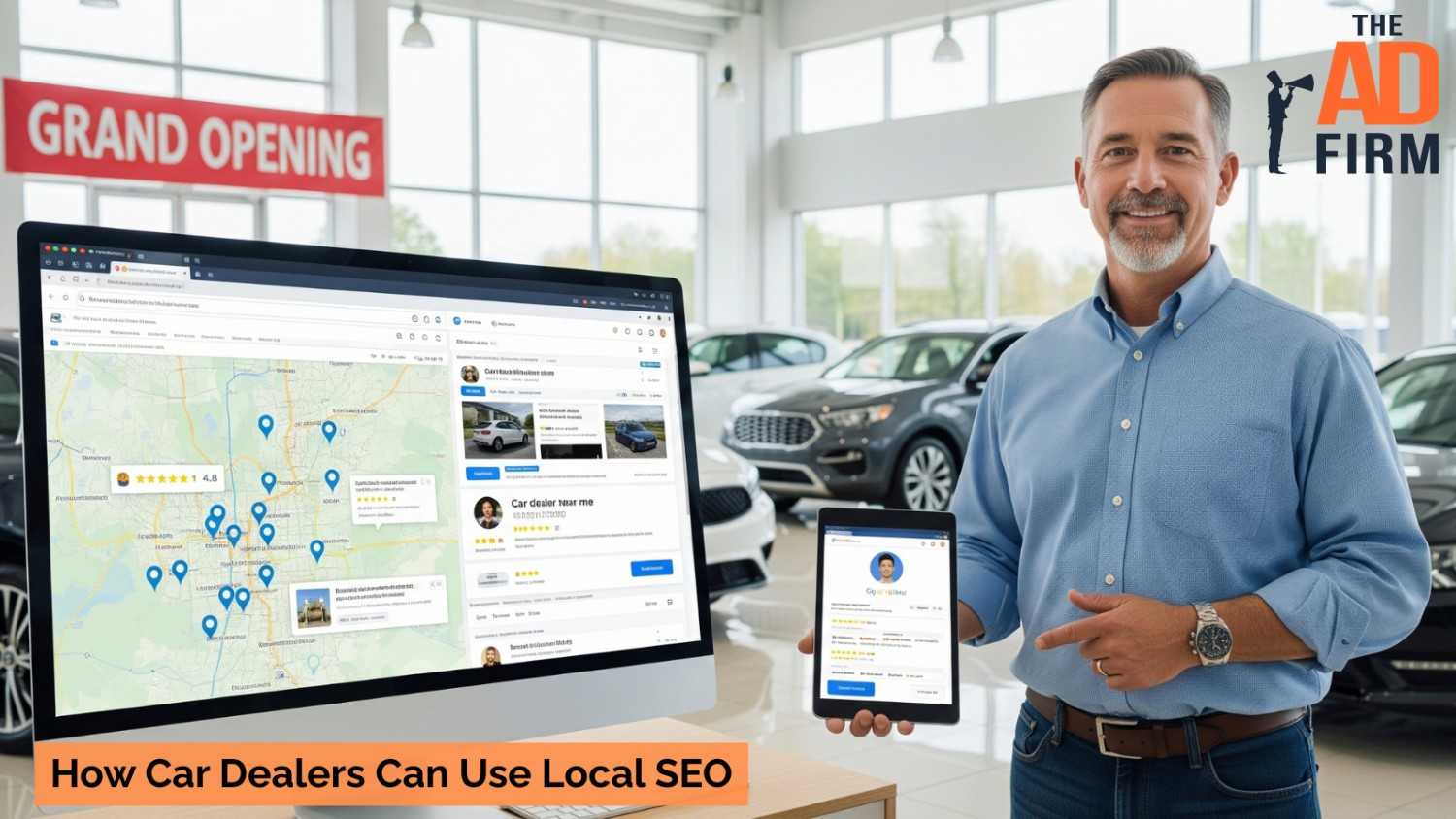
Most car buyers begin their journey online, often typing searches like “car dealerships near me” or “best used trucks in [city].” Many of these searchers already know what they want and are simply looking for the right dealership to visit.
This is where local SEO services make a difference. They help your dealership appear at the top of search results right when buyers are ready to take action.
In this guide, you’ll learn practical ways to attract ready-to-buy customers using local SEO. From optimizing your Google Business Profile to creating local content and tracking performance, you’ll see how to build steady visibility that converts searchers into visitors.
1. Optimize Your Google Business Profile (GBP)
Your Google Business Profile (GBP) is your dealership’s online storefront. It’s the first thing people see when searching for local vehicles, showing your address, phone number, hours, and reviews directly in Google Maps and Search. Optimizing this profile helps your dealership appear where buyers are actively searching for nearby options.
Here’s how to optimize your GBP for better visibility:
- Complete all business information: Fill out your dealership’s name, address, phone number, website, and operating hours. Double-check that everything is correct because even small errors can confuse both Google and your customers. Include your website link so shoppers can explore your inventory immediately.
- Upload high-quality, up-to-date images: Add professional photos of your dealership, showroom, and vehicles currently in stock. Quality images help build trust and attract more clicks. Google often prioritizes listings with fresh and engaging visuals.
- Choose accurate business categories: Select categories such as “Car Dealer,” “Used Car Dealer,” or “Auto Repair” depending on your services. Proper categorization helps Google show your business to people searching for exactly what you offer, like “certified pre-owned cars in [city].”
A well-optimized GBP increases your chances of appearing in the “local 3-pack”, the three listings that appear at the top of Google Maps results. For car dealerships, being in this section can make the difference between earning a walk-in visit or losing a lead to another local competitor.
2. Strengthen Your Local SEO Foundations
Before your dealership can climb the search rankings, you need to build a strong foundation for local visibility. Local SEO success depends on three main elements. You need relevant local keywords, perfectly consistent business information, and trusted citations across the web.
When done right, these steps help search engines verify your dealership’s legitimacy and connect you with high-intent, nearby car buyers.
Use Local Keywords Effectively
Local keywords tell Google where your dealership is located and what you specialize in. They help bridge the gap between your business and the customers searching for your vehicles or services nearby.
- Add city and region names in key on-page elements: Use your location naturally in titles, meta descriptions, and header tags across your site. For example, phrases like “Honda dealership in Austin” or “used trucks in Cedar Park” make your pages locally relevant. The goal here is keyword precision, ensuring your metadata clearly reflects your geographic focus without keyword stuffing.
- Use “near me” naturally: Many potential buyers type searches like “SUVs near me” or “best used cars near me.” Include this phrasing in your content naturally, such as within blog posts or FAQs, to match how people actually search. By mirroring real search behavior, you increase the chances of appearing in localized “near me” results that attract ready-to-buy customers.
- Localize on-page SEO elements: Incorporate your city or region naturally in titles, meta descriptions, and service pages. Use phrases like “Honda dealership in Austin” or “used trucks in Cedar Park” in your headers and descriptions. This signals to Google that your pages serve a local audience without relying on repetitive keywords. The goal is to make each page feel geographically relevant while maintaining readability and authenticity.
Maintain NAP Consistency
Your Name, Address, and Phone Number (NAP) may seem basic, but they form the foundation of your dealership’s online identity. Consistent information across every platform helps Google verify that your business is legitimate and connected to the same entity across the web.
- Keep details identical everywhere: Make sure your NAP is spelled exactly the same on your website, Google Business Profile, and all directories. Even slight differences, like using “Ave.” on one site and “Avenue” on another, can cause confusion. Search engines rely on uniformity to match listings together, so exact consistency strengthens your data reliability and ensures your dealership’s details display correctly in search results.
- Update listings after any change: If your dealership relocates, changes phone numbers, or updates business hours, revise that information on all platforms immediately. Failing to do so can create outdated listings that mislead customers and lower your search credibility. Keeping everything current ensures buyers always have accurate details when they want to reach you.
- Regularly review your listings: Errors can occur when directories pull data from outdated sources. Schedule routine checks every few months to ensure your information stays correct. Maintaining accuracy not only strengthens your SEO performance but also prevents frustrated customers from encountering the wrong contact details.
Build Local Citations
Citations are online references to your dealership’s name, address, and phone number on trusted websites. Each citation helps Google verify your business’s existence, making it easier for your dealership to appear in local search results.
- List your dealership on reputable directories: Focus on high-value platforms like Yelp, Cars.com, DealerRater, and AutoTrader. These are the sites where real customers search for dealerships and read reviews before visiting in person. Accurate listings across these trusted sources signal to Google that your dealership is legitimate and active in the local market.
- Prioritize accuracy and quality: Not all citations carry the same weight. It’s better to have fewer, high-quality listings on reputable sites than dozens of incomplete or spammy ones. Make sure every citation uses your exact business details so search engines can easily connect them to your official website.
- Use management tools or expert support: Tracking every listing manually can be time-consuming and error-prone. Many dealerships partner with a digital marketing agency that specializes in citation management. These experts use automated tools to monitor and correct listings at scale, saving time while ensuring long-term consistency.
3. Create Locally Relevant Content That Answers Buyer Questions
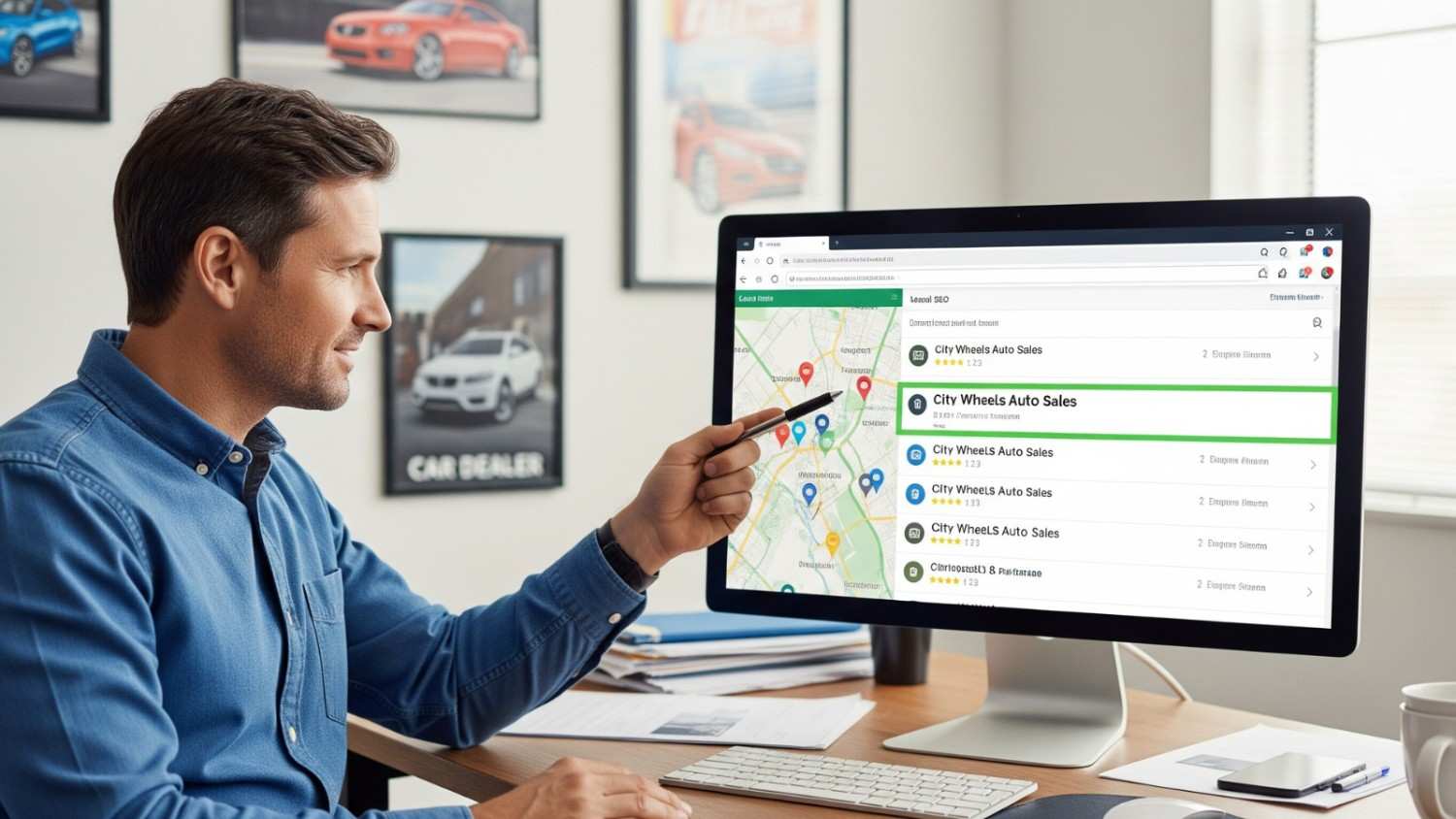
Content is one of the most potent ways to connect with car buyers who are actively searching online. When your website directly answers their questions or matches their search intent, it builds both visibility and trust. The key is to focus on topics that matter to your community and showcase your dealership’s expertise in a helpful, approachable way.
- Write content that reflects real buyer searches: Create blog posts and landing pages around questions your customers are actually asking. For instance, topics like “Best time to buy a used car in [city]” or “Top SUVs for families in [region]” align perfectly with local buyer intent. This type of content helps you appear in search results when people are close to making a purchase decision.
- Build separate landing pages for each service area: If your dealership attracts customers from multiple towns, create a dedicated page for each location you serve. Each page should include locally targeted keywords, inventory highlights, and driving directions from that city. This structured approach helps you capture nearby markets individually, rather than competing for broad regional searches with one generic page.
- Highlight your dealership’s local story: Create blog posts or videos that feature your dealership’s involvement in neighborhood events, partnerships, and local charitable initiatives. Instead of just listing events, demonstrate how your team interacts with real people in your community, such as sponsoring a youth sports team or supporting a local car show. These human-centered stories build emotional trust and differentiate your brand from generic dealership websites.
- Write with voice search in mind: Many users search hands-free, asking questions like “Where can I test-drive electric cars near me?” Structure your content to naturally answer these conversational queries. This improves how your website appears across voice and mobile results. Top ecommerce SEO strategies follow this same best practice, prioritizing clarity and intent to drive search visibility. Taking this approach helps your dealership connect with nearby buyers faster.
4. Build Trust Through Reviews and Reputation Management
For car dealerships, reputation can directly influence a buyer’s decision. A steady stream of genuine customer reviews provides shoppers with insight into your service quality and overall buying experience.
Actively managing and responding to this feedback shows that your dealership values real customer relationships and open communication.
- Encourage happy customers to share their experience: After a sale, politely ask satisfied buyers to leave a review on Google or platforms like DealerRater and Cars.com. These reviews serve as social proof, demonstrating to others that your dealership is trustworthy. More reviews also increase your chances of ranking higher in local searches.
- Respond to all feedback, both good and bad: Thank positive reviewers and address concerns raised in negative reviews professionally and promptly. Showing that you care about resolving issues gives future customers assurance that your dealership listens and acts on feedback. Google also rewards this engagement as a sign of authentic, ongoing management.
- Feature top reviews on your website: Highlighting strong testimonials or video reviews on your homepage serves as powerful social proof. It helps new visitors quickly understand your reputation through real stories, guiding them toward a confident purchase decision.
- Keep your review strategy consistent: Regularly monitor and request feedback to ensure your online reputation stays fresh and relevant. A steady flow of new reviews signals that your dealership is active and reliable, which positively influences both customer perception and search rankings.
5. Track, Measure, and Adjust Your Local SEO Strategy
Local SEO isn’t something you set and forget. To keep your dealership visible, you need to track performance, review insights, and make adjustments based on real data. Regular monitoring helps you understand what’s working and where improvements are needed to keep up with shifting buyer behavior.
- Use Google Analytics and GBP Insights for tracking: Monitor metrics like website visits, calls, direction requests, and search impressions. These insights show how customers are discovering your dealership and which listings or pages drive the most engagement. Understanding this data helps you refine your strategy for maximum impact.
- Track keyword rankings for your area: Check how your dealership ranks for key terms like “used cars near me” or “car dealerships in [city].” Noticing changes early lets you address performance dips quickly, such as updating underperforming pages or adding more relevant local keywords.
- Identify top-performing content: Look for blog posts or landing pages that consistently attract visitors or leads. Keep them updated with fresh details, such as new inventory or promotions, to maintain their visibility. This ensures that your content continues to attract ready-to-buy customers over time.
- Adjust your strategy based on results: If you notice that specific keywords, areas, or content types are performing better, expand your efforts in those directions. Conversely, scale back low-impact tactics. Partnering with a trusted SEO company can make this process easier by helping you interpret analytics and fine-tune your strategy for long-term growth as your dealership and market evolve.
Take your dealership’s local visibility to the next level
At The Ad Firm, we specialize in tailored local SEO services that help car dealerships stand out and capture buyers who are already searching for their ideal vehicle. Our team has industry-specific experience optimizing Google Business Profiles, building locally targeted content, managing reviews, and tracking performance with actionable data.
Reach out today and let us help you create a local SEO roadmap that positions your dealership at the top when ready-to-buy customers are looking.