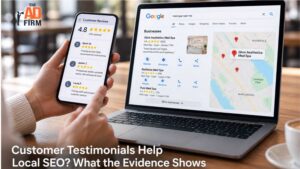
NAP inconsistency is one of the most common and most overlooked reasons local businesses don’t show up where they should online. It refers to the accuracy and uniformity of your business Name, Address, and Phone Number across the web, and it plays a bigger role in local SEO than most businesses realize. When that information is inconsistent, search engines and AI systems lose confidence in your business and your rankings suffer for it. If you are doing everything else right but still not showing up where you should, your NAP information may be the hidden culprit.
Why Does NAP Matter for Local Search?
NAP is one of the most important trust signals in local SEO. Search engines compare your business information across multiple websites to determine whether your business is legitimate, active, and trustworthy.
NAP Helps Search Engines Verify Your Business
Google and other search platforms compare your business information across your website, Google Business Profile, business directories, social media profiles, local citations, and industry listings. The more consistent your information is, the more confidence search engines have in displaying your business. What most businesses don’t realize is that many of these listings were never created by them.
Data aggregators like Data Axle, Neustar Localeze, and Foursquare automatically pull business information from public records and distribute it across hundreds of downstream directories, GPS providers, and AI knowledge bases. That means incorrect information can exist on platforms you have never heard of and never registered with, spreading silently every time an aggregator pushes an update.
Even Small Differences Can Create Problems
These inconsistencies may seem harmless but can hurt local visibility. Search engines and AI platforms treat each variation as a potential mismatch, and enough mismatches create genuine uncertainty about which version of your business is the accurate one.
- “Street” vs. “St.” — Abbreviation differences are among the most common NAP errors and are easy to overlook precisely because they look correct in isolation.
- Different phone numbers — An outdated number on even one directory tells search engines your contact information cannot be trusted, which affects how confidently they surface your listing.
- Old business addresses — A previous location still appearing on third-party sites signals to AI and search engines that your business information is either unmanaged or unreliable.
- Different business names — Variations like “The Ad Firm” versus “Ad Firm LLC” versus “TheAdFirm” fragment your brand identity across the web and dilute the authority signals search engines are trying to consolidate.
- Missing suite numbers — An incomplete address creates ambiguity about your exact location, which matters most for map-based searches where precision directly affects whether you appear.
- Multiple versions of your company name — Inconsistent naming across platforms makes it harder for AI systems to confidently associate all your online mentions with a single, authoritative business entity.
Over time, these discrepancies make it more difficult for search engines to determine which information is correct, and that uncertainty consistently works in your competitor’s favor, not yours.
Enhance Your Brand Visibility with The Ad Firm
- SEO: Enhance your online presence with our advanced SEO tactics designed for long-term success.
- Content Marketing: Tell your brand’s story through compelling content that engages and retains customers.
- Web Design: Design visually appealing and user-friendly websites that stand out in your industry.
How Does Inconsistent NAP Information Hurt Your Rankings?
Search engines want to recommend businesses they trust. Conflicting information weakens that trust.
Search Engines May Lose Confidence in Your Business
When Google finds conflicting information across the web, it may hesitate to rank your business prominently in Local Pack results, Google Maps, organic local search, and AI-generated local recommendations. This is not just about ranking lower. In a local pack with three spots, NAP consistency is often the differentiating factor between two equally qualified businesses.
A competitor with 60 consistent citations and a clean Google Business Profile will reliably outrank an equally capable business with 20 inconsistent ones. You are not just fighting the algorithm. You are fighting a competitor who has already solved a problem you have not addressed yet.
Customers Can Become Confused Too
Incorrect information may cause customers to call the wrong phone number, visit an old location, lose confidence in your business, or choose a competitor instead. Voice search adds another layer of urgency here. When someone asks Siri, Alexa, or Google Assistant to find a business near them, the answer pulls from Apple Maps, Bing, and Google data, all of which source from the same citation ecosystem.
A business with inconsistent NAP risks being given the wrong phone number or location by a voice assistant at the exact moment a customer is ready to act. That is a conversion failure that happens invisibly, and most businesses never know it occurred. Local SEO is just as much about customer experience as it is about rankings.
Can AI Search Be Affected by NAP Inconsistencies?
Absolutely. AI platforms rely on many of the same trusted sources that traditional search engines use when generating answers. When your business information is inconsistent across those sources, AI has no reliable way to verify which version is accurate, and businesses it cannot verify confidently are businesses it will not recommend.
This is one of the reasons AI SEO has become an essential part of any local visibility strategy, because optimizing for AI means giving it accurate, consistent, and credible information to work with from the start.
AI Cross-References Your Business Information Before Making a Recommendation
When a user asks “Best local SEO agency in San Diego” or “Top HVAC company near me,” AI doesn’t pull from a single source. It cross-references your website, Google Business Profile, directories, review platforms, and third-party mentions simultaneously. If your Name, Address, and Phone Number appear differently across those sources, the picture AI assembles becomes fragmented and contradictory. A fragmented picture does not get recommended. A consistent one does.
Elevate Your Market Presence with The Ad Firm
- SEO: Boost your search engine visibility and supercharge your sales figures with strategic SEO.
- PPC: Target and capture your ideal customers through highly optimized PPC campaigns.
- Social Media: Engage effectively with your audience and build brand loyalty through targeted social media strategies.
Inconsistent NAP Signals Lower AI Confidence in Your Business
AI platforms are designed to surface businesses they can present with confidence. When your business information conflicts across sources, that confidence drops. It is not that AI actively penalizes you. It is that AI defaults to the businesses whose information is clear, consistent, and corroborated across multiple trusted platforms. In a competitive local market, that default consistently favors your competitors over you.
NAP Inconsistencies Can Distort How AI Describes Your Business
Beyond recommendations, NAP inconsistencies can affect the accuracy of what AI actually says about your business. If AI pulls an outdated address from one source, an old phone number from another, and a slightly different business name from a third, the answer it generates may contain errors that mislead potential customers. That kind of inaccuracy erodes trust before a customer ever reaches you, and most businesses never know it is happening.
Consistent Business Information Builds the Kind of Authority AI Trusts
When your NAP information is accurate and uniform across every platform AI references, it builds a coherent, verifiable picture of your business. The technical term for this is entity recognition. AI systems and Google’s Knowledge Graph identify businesses as named entities, a single unambiguous record that aggregates information from multiple sources.
When your Name, Address, and Phone Number appear consistently across trusted platforms, your entity record becomes confident and well-defined. When they conflict, your entity becomes ambiguous, AI confidence in citing you drops, and your business may fail to appear in knowledge panels, AI Overviews, and generative responses entirely. Consistent NAP is not just a housekeeping task. It is the foundation of how AI identifies and trusts your business as a real, verifiable entity worth recommending.
Where Should You Check Your NAP Information?
Many businesses update their website but forget dozens of other online listings. The problem is that search engines and AI platforms don’t only look at your website. They pull from every platform that references your business, and outdated information on even one major directory can undermine the consistency you’ve built everywhere else. What makes this particularly difficult is the scale. There are over 70 major business directories in the US that search engines regularly crawl as citation sources, plus hundreds of niche and industry-specific ones beyond that.
Boost Your Business Growth with The Ad Firm
- PPC: Optimize your ad spends with our tailored PPC campaigns that promise higher conversions.
- Web Development: Develop a robust, scalable website optimized for user experience and conversions.
- Email Marketing: Engage your audience with personalized email marketing strategies designed for maximum impact.
A business that moved locations two years ago may have incorrect information on 40 or 50 separate platforms it has never heard of, many of which it never created itself. And because the major data aggregators feed incorrect information to new directories continuously, a one-time audit is not enough. The NAP Trap keeps resetting until the aggregator data is corrected at the source.
Review Every Major Business Listing
Each platform below carries weight with search engines and AI systems, and inconsistencies on any one of them can affect how confidently your business gets recommended.
- Google Business Profile — The single most important listing for local search visibility. Inconsistencies here have the most direct impact on your Google Maps and AI Overview presence.
- Bing Places — Often overlooked but referenced by Microsoft’s AI search tools including Copilot, making it increasingly relevant as AI search expands.
- Apple Maps — A primary source for location searches on iPhone and Siri, where millions of local searches happen daily without a single Google touchpoint.
- Yelp — One of the most heavily referenced review and directory platforms across both traditional search and AI-generated recommendations, particularly for service businesses.
- Facebook — Your business page is treated as a credible third-party source by AI platforms, and an outdated address or phone number here creates a direct conflict with your other listings.
- Industry directories — Niche directories specific to your field carry strong authority signals in your category and are frequently cited by AI when answering industry-specific queries.
- Local chamber websites — Chamber listings are treated as high-trust local sources by search engines and add a layer of community credibility that supports both local SEO and AI visibility.
- Better Business Bureau — A high-authority domain that AI platforms frequently reference when evaluating business credibility and trustworthiness.
- Niche business directories — Depending on your industry, these can be among the most cited sources in AI-generated answers for category-specific searches in your area.
Beyond these platforms, the four major US data aggregators deserve specific attention: Data Axle, Neustar Localeze, and Foursquare feed business information to hundreds of downstream directories, GPS providers, voice assistants, and AI knowledge bases simultaneously. Correcting your listing on Google and Yelp while leaving aggregator data untouched means incorrect information keeps propagating to new directories indefinitely. Fixing the aggregators is what stops the trap from resetting.
Maximize Your Online Impact with The Ad Firm
- Local SEO: Capture the local market with strategic SEO techniques that drive foot traffic and online sales.
- Digital PR: Boost your brand’s image with strategic digital PR that connects and resonates with your audience.
- PPC: Implement targeted PPC campaigns that effectively convert interest into action.
Keep Every Listing Updated
Every time your business changes, every listing that references you becomes a potential source of conflicting information. The longer outdated details remain live, the more damage they do to your consistency signals across search and AI platforms.
Whenever your business changes any of the following, update every listing as soon as possible:
- Address — A location change is the most disruptive NAP error because it affects map results, directions, and every platform that displays your physical presence.
- Phone number — An outdated number doesn’t just frustrate customers. It signals to search engines that your business information is unmanaged, which erodes ranking confidence over time.
- Business hours — Incorrect hours generate negative reviews and reduce trust signals on platforms like Google and Yelp, both of which feed into AI-generated business descriptions.
- Website — A broken or outdated URL across your listings creates a dead end for both customers and search engine crawlers trying to verify your business information.
- Services — Outdated service descriptions across directories create a mismatch between what AI presents about your business and what customers actually find when they reach you.
Read More: Creating GEO Specific Landing Pages That Avoid Duplicate Content Risks
What Else Helps Local Businesses Show Up Online?
NAP consistency is only one piece of the puzzle. Search engines evaluate many other local ranking factors before deciding which businesses to display, and businesses that address all of them together build a visibility advantage that is much harder for competitors to close.
Build a Strong Local SEO Foundation
An effective local strategy goes well beyond accurate listings. Optimizing your Google Business Profile ensures your business appears with complete, compelling information in map results and AI-generated answers. Customer reviews build the social proof that both search engines and AI platforms treat as a credibility signal. Local backlinks from trusted community sources strengthen your domain authority in a geographically relevant way.
Location-specific pages give search engines clear signals about the areas you serve. Schema markup helps AI and search engines understand your business type, services, and location without ambiguity. Helpful local content positions your business as a relevant, knowledgeable resource for the community you operate in. Together, these signals compound over time and build the kind of local authority that consistently earns visibility.
Transform Your Online Strategy with The Ad Firm
- SEO: Achieve top search rankings and outpace your competitors with our expert SEO techniques.
- Paid Ads: Leverage cutting-edge ad strategies to maximize return on investment and increase conversions.
- Digital PR: Manage your brand’s reputation and enhance public perception with our tailored digital PR services.
Keep Your Online Presence Active
An accurate listing that never changes is better than an inaccurate one, but an active presence is better than both. Search engines and AI platforms favor businesses that demonstrate consistent engagement with their online presence, treating activity as a signal that the business is operational, responsive, and worth recommending.
- Respond to reviews — Replying to both positive and negative reviews signals to search engines that your business is attentive and trustworthy, and gives AI platforms more current, credible content to reference about your customer relationships.
- Upload new photos — Fresh visual content on your Google Business Profile and other platforms increases engagement and signals to search engines that your listing is actively maintained rather than set and forgotten.
- Publish fresh content — Regular blog posts, service updates, and local content give search engines new material to index and give AI platforms more current information to pull from when generating answers about your business.
- Update business information — Any change to your hours, services, or contact details should be reflected across every platform immediately to prevent the kind of inconsistency that erodes your local ranking signals.
- Monitor directory listings — Third-party directories sometimes update or alter business information without your input. Regular monitoring ensures your NAP remains consistent across every source that search engines and AI platforms reference.
Think of Your Local Presence as a Living Asset
A local digital presence is not something you build once and leave alone. Search engines reward businesses that treat their online presence as an ongoing investment rather than a one-time setup. Every review response, content update, and listing correction adds to a cumulative body of trust signals that compounds over time. Businesses that stay active and consistent across every platform don’t just rank better today. They build the kind of durable local authority that becomes increasingly difficult for less attentive competitors to displace.
Addressing NAP consistency is the foundation, but it is only the starting point. The businesses that dominate local search and AI-generated recommendations are the ones that combine accurate information with an active, well-optimized presence across every platform their customers use. Building that presence takes strategy, consistency, and ongoing attention, which is exactly what a dedicated local SEO and digital marketing team is built to provide.
Advance Your Digital Reach with The Ad Firm
- Local SEO: Dominate your local market and attract more customers with targeted local SEO strategies.
- PPC: Use precise PPC management to draw high-quality traffic and boost your leads effectively.
- Content Marketing: Create and distribute valuable, relevant content that captivates your audience and builds authority.
Also Read: Building Local SEO Trust Signals That Influence AI Assistants
Can GEO Help Your Business Show Up in AI Search Even With NAP Issues?
It can help, but it works best when your NAP foundation is solid first. Generative Engine Optimization (GEO) is designed to take consistent, credible business information and amplify it across AI platforms so your business doesn’t just get recognized but actively gets recommended. When NAP inconsistencies are still present, GEO has less reliable material to work with, which limits how confidently AI can cite you. Fix the foundation first and GEO becomes significantly more powerful.
Consistent NAP Gives GEO Something Solid to Build On
GEO focuses on making your business recognizable, credible, and citable across AI platforms. But none of that works if the foundational information AI pulls about your business is contradictory. Consistent NAP data across every directory, listing, and platform gives AI a verified, coherent picture of who you are and where you operate. That coherence is what GEO strategies amplify into citations, recommendations, and AI-generated mentions that reach customers before they ever search for you by name.
GEO Helps AI Platforms Move From Recognizing You to Recommending You
There is a meaningful difference between AI knowing your business exists and AI recommending your business in response to a relevant query. Local SEO services and accurate NAP information get you recognized. GEO is what moves you from recognition to recommendation by building the topical authority, entity signals, and content structures that AI platforms use to decide which businesses are worth citing. For local businesses competing in AI search, that distinction is where visibility is won or lost.
AI SEO Connects Your Local Signals to AI Search Behavior
AI SEO bridges the gap between your local presence and how AI platforms interpret it. It ensures your content, your business descriptions, and your service information are structured in ways that AI can extract, understand, and attribute accurately. Combined with consistent NAP data and a strong GEO strategy, AI SEO gives local businesses a complete framework for showing up not just in traditional search but in the AI-generated answers where more and more customers are starting their search.
Strengthen Your Online Authority with The Ad Firm
- SEO: Build a formidable online presence with SEO strategies designed for maximum impact.
- Web Design: Create a website that not only looks great but also performs well across all devices.
- Digital PR: Manage your online reputation and enhance visibility with strategic digital public relations.
Related Article: Local Trust Signals That Drive Recommendations in GEO and AI
How to Escape the NAP Trap Before It Costs You More Customers
The NAP Trap is not a permanent condition. It is a fixable one, and the businesses that address it consistently are the ones that show up where their competitors don’t. Here is where to start.
- Audit every listing your business appears on. Search your business name across Google, Bing, Yelp, Apple Maps, Facebook, and every industry directory you can find. Document every variation in your Name, Address, and Phone Number and treat each discrepancy as a direct threat to your local search visibility. You cannot fix what you have not found.
- Standardize your NAP information and stick to it. Choose one definitive version of your business name, address format, and phone number and apply it uniformly across every platform. That means the same abbreviations, the same suite number format, the same everything. Partial consistency is not consistency, and search engines and AI platforms will treat it accordingly.
- Claim and verify every major business listing. Unclaimed listings are vulnerable to incorrect information, third-party edits, and outdated data that you have no control over. Claiming your profiles on Google Business Profile, Bing Places, Apple Maps, Yelp, and relevant industry directories gives you direct control over what search engines and AI platforms find when they look for you.
- Work with SEO specialists who understand both local search and AI visibility. NAP consistency is the foundation, but sustaining it across dozens of platforms while simultaneously building the authority signals that GEO and AI SEO require is not a one-time project. SEO specialists who understand how local signals feed into AI recommendations can manage that process systematically, catch new inconsistencies before they compound, and build on your clean foundation with strategies that extend your visibility into AI-generated answers.
An experienced digital marketing agency doesn’t just fix the problem you know about. It builds the kind of consistent, authoritative local presence that prevents the problem from returning and turns your visibility into a sustainable competitive advantage. The Ad Firm works with local businesses to audit their NAP consistency, strengthen their local SEO foundation, and implement the GEO and AI SEO strategies that keep them showing up wherever their customers are searching. Contact The Ad Firm today and let’s make sure the NAP Trap is no longer costing you customers.
Streamline Your Digital Assets with The Ad Firm
- Web Development: Build and manage high-performing digital platforms that enhance your business operations.
- SEO: Leverage advanced SEO strategies to significantly improve your search engine rankings.
- PPC: Craft and execute PPC campaigns that ensure high engagement and superior ROI.
FAQs
What does NAP stand for in SEO?
NAP stands for Name, Address, and Phone Number. Keeping this information consistent across the web helps search engines verify your business and improve local rankings.
Can incorrect business information hurt my Google rankings?
Yes. Inconsistent or outdated business information can reduce search engines’ confidence in your business, negatively affecting your visibility in local search results.
How often should I check my NAP information?
Review your listings every few months and immediately after changing your address, phone number, business name, website, or hours of operation.
Can AI search tools use my business listings?
Yes. AI platforms often rely on publicly available business information from trusted sources, making consistency more important than ever.
What’s the biggest NAP mistake businesses make?
Many businesses update their obvious listings like Google and Yelp but never address the data aggregators that feed hundreds of other directories automatically. Until the aggregator data is corrected, incorrect information keeps spreading to new platforms and the NAP Trap keeps resetting.
Is NAP consistency enough to rank locally?
No. NAP is one important ranking factor, but you also need quality content, customer reviews, local backlinks, an optimized Google Business Profile, and strong overall SEO.
How long does it take to see results after fixing NAP issues?
It varies depending on how quickly search engines recrawl your listings and website, but maintaining consistent information over time strengthens trust and improves local visibility. Correcting aggregator data can take 4 to 12 weeks to propagate fully across downstream directories, so patience and ongoing monitoring are both important parts of the process.
What is a data aggregator and why does it matter for NAP?
Data aggregators like Data Axle, Neustar Localeze, and Foursquare collect business information from public records and distribute it automatically to hundreds of directories, GPS providers, voice assistants, and AI platforms. If your information is incorrect in an aggregator’s database, it will keep spreading to new platforms indefinitely regardless of how many individual listings you fix. Correcting your data at the aggregator level is the most important and most overlooked step in fixing NAP inconsistency for good.
Amplify Your Market Strategy with The Ad Firm
- PPC: Master the art of pay-per-click advertising to drive meaningful and measurable results.
- SEO: Elevate your visibility on search engines to attract more targeted traffic to your site.
- Content Marketing: Develop and implement a content marketing strategy that enhances brand recognition and customer engagement.
How does NAP inconsistency affect voice search?
When someone asks Siri, Alexa, or Google Assistant for a local business, the answer is drawn from Apple Maps, Bing, and Google data, all sourced from the same citation ecosystem. Incorrect NAP information in that ecosystem means a voice assistant could give a customer the wrong phone number or location at the exact moment they are ready to act. That is an invisible conversion failure most businesses never trace back to a NAP problem.