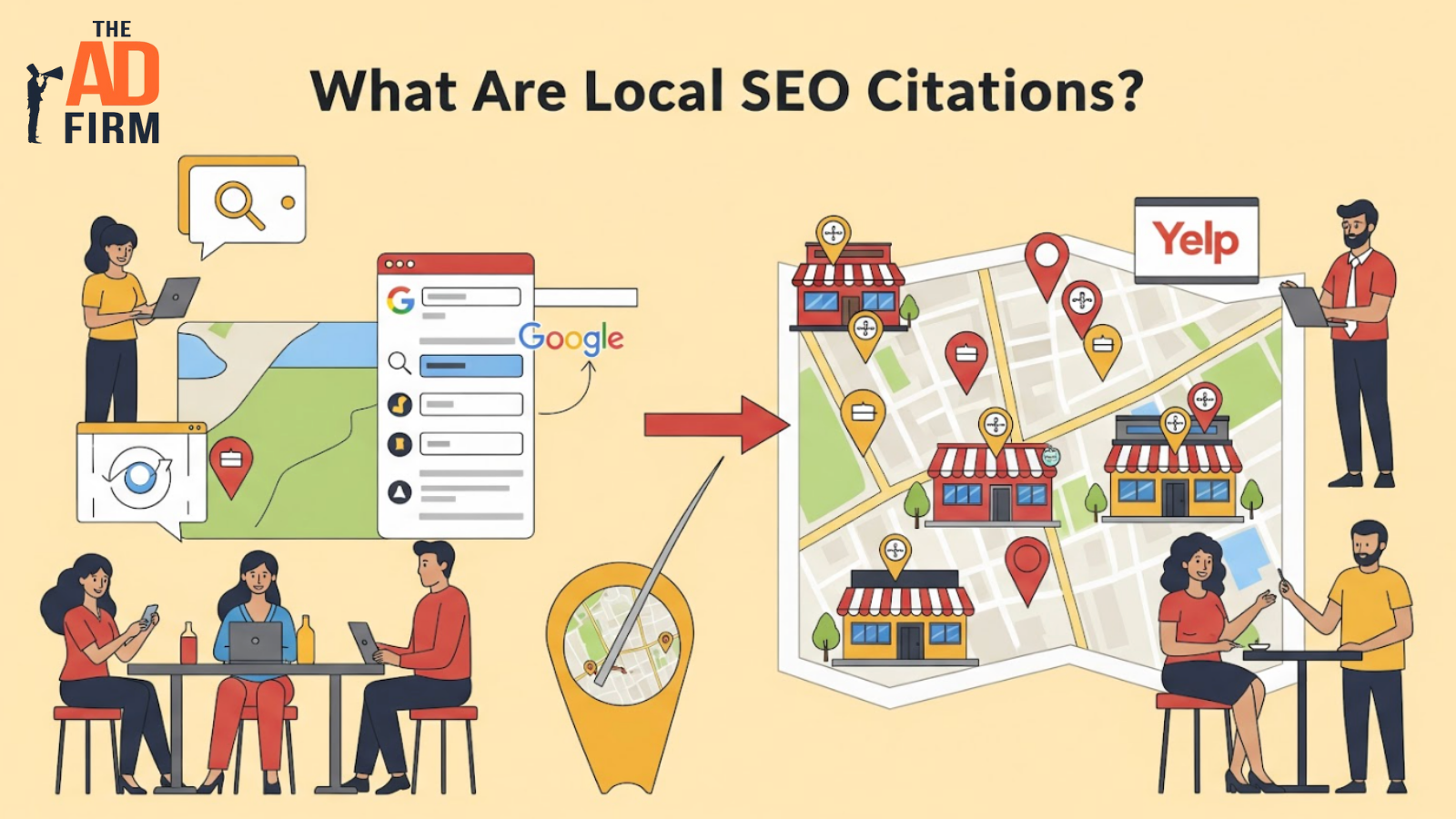
When people search for a business like yours, Google doesn’t just rely on your website; it checks if your business name, address, and phone number show up consistently across the internet. That’s where local SEO citations come in.
In this guide, we’ll break down exactly what citations are, how they work, and why they still matter in 2025. We’ll also cover the biggest mistakes to avoid, and how to start building citations the right way, even if you’re completely new to SEO or working with a local seo service.
What Local SEO Citations Actually Are
If you’ve ever looked up a business online and seen its name, address, and phone number listed, you’ve seen a local citation. These citations help search engines and customers find, verify, and contact your business, even before they visit your website.
A local citation is any online mention of your business’s name, address, and phone number (often referred to as NAP). These can appear with or without a link to your site, but the key is that they clearly identify your business.
You’ll find citations in a variety of places:
- Business directories like Yelp, Yellow Pages, or the Better Business Bureau
- Map services such as Google Maps or Apple Maps
- Review platforms including TripAdvisor or Angi
- Local blogs, news sites, or community pages that talk about your business
There are two main types of citations:
- Structured citations appear on platforms that follow a consistent format, like directory listings. These typically have set fields for your business name, address, phone number, and other relevant information.
- Unstructured citations show up in places like news articles, blog posts, or event listings where your NAP details are mentioned in free-form text.
How Local SEO Citations Actually Work

Citations aren’t just digital mentions, they play a critical role in how search engines measure trust, accuracy, and authority. In this section, we’ll break down the real mechanics behind citations so business owners can understand why they matter and how they help improve visibility.
1. Search Engines Use Citations to Verify Business Legitimacy
Search engines rely on consistent third-party mentions to confirm that a business is real, active, and properly located. When your information appears across multiple reputable sites, it creates a trackable online presence.
This data helps platforms like Google filter out unreliable or fake listings. Essentially, citations form the digital footprint that proves your business exists.
- Trusted citations help shape your business’s online identity: When high-authority websites mention your business, it acts like a form of online endorsement. Google sees that your business is acknowledged by others in the digital space. That kind of digital validation helps search engines trust that your location and services are real. Without these references, Google has less evidence that your business should appear in search results.
- Search engines check if your business info matches everywhere: They don’t just glance at your name, they verify your full NAP (name, address, phone number) against multiple directories. A perfect match reinforces legitimacy and earns trust in rankings. On the other hand, mismatches can weaken your visibility, even if your site looks great. Citations fill in the proof that your website alone can’t offer.
- Google treats widespread consistency as a confidence signal: The more reliable your business info is across sources, the more confident Google becomes in recommending your site. Think of it like multiple people giving the same reference, it becomes harder to doubt. That consistency can boost your presence in local packs, map results, and knowledge panels. It’s how you stand out in crowded industries.
- Citations help newer businesses get discovered faster: If your site is relatively new or low on traffic, citations provide alternate paths for discovery. Instead of waiting for SEO to catch up, citations help you gain presence from directory searches and map listings. This is especially useful for businesses that lack many backlinks or reviews. Local SEO citations make it easier for Google to surface your profile early.
2. Consistency Across Listings Impacts Local Search Rankings
Search engines prioritize reliability, and inconsistent citations send mixed signals. Even tiny differences in formatting or spelling can impact whether Google associates listings with your business. This can cause lost ranking potential or even misdirected traffic. Ensuring total consistency is one of the simplest ways to strengthen local SEO.
- Inconsistent NAP data splits trust across listings: If Google sees “123 Main St.” on Yelp and “123 Main Street” on Apple Maps, it may assume they’re two separate businesses. That means authority is divided instead of concentrated. Over time, this weakens your ability to rank in map and local search. Every small mismatch chips away at your credibility.
- Formatting plays a bigger role than most business owners expect: Using abbreviations, leaving out suite numbers, or changing business names slightly can confuse search engines. These platforms rely on exact data to draw accurate conclusions. They’re not as forgiving as humans when it comes to small variations. That’s why standardizing your listings is essential.
- Consistent citations reinforce your location’s legitimacy: The more your exact address appears across trusted platforms, the more firmly Google places you on the map. This makes it easier for you to appear in “near me” searches. It also improves the accuracy of your location pins in apps and search results. Local accuracy leads to real-world traffic.
- Clean citations do more than boost rankings, they also build user trust: When potential customers see the same details on Yelp, Facebook, and your website, it reduces doubt. This makes them more likely to call, visit, or buy from you. Inconsistencies create confusion and hesitation, especially for first-time customers. That clarity is part of your conversion funnel.
Read also: Local SEO Tips to Rank for ‘Near Me’ Searches
3. Citation Strength Depends on Quantity, Quality, and Relevance
Not all citations are created equal. A few high-quality listings on relevant sites will always outperform dozens of weak or irrelevant ones. Google favors signals that come from trusted, topic-specific sources. That’s why quality and context matter as much as volume.
- Top-tier directories give more SEO value per listing: Sites like Google Business Profile, Apple Maps, and Yelp have high trust with Google. A citation on one of these platforms carries more weight than a lesser-known site. It’s not just about getting listed, it’s about where you get listed. Prioritize credibility over volume to see real SEO gains.
- Industry-specific directories increase contextual relevance: If you’re a lawyer, being listed on Avvo or FindLaw adds niche credibility that generic platforms can’t offer. Google understands the theme of the site and assigns more weight accordingly. These relevant citations align your business with your field, making it easier to match search intent. That’s why niche citations often convert better, too.
- Local mentions from news sites or blogs boost regional authority: A citation from a local newspaper or popular area blog gives geographic context to your business. It indicates that your brand is actively engaged in a specific community. These unstructured citations may not follow a set format but still carry strong local value. Google uses them to tie your presence to real-world locations.
- Too many low-quality listings can actually hurt performance: Spammy directories, outdated aggregators, or irrelevant listings can clutter your profile. Google may discount or ignore those signals, or worse, see them as manipulative. It’s better to have 20 great citations than 100 poor ones. Focus on listings that real users and real search engines both recognize.
Read also: Link-Building Evolution: Quality Over Quantity Strategies for 2025
How to Build and Maintain Strong Local Citations
Strong local citations aren’t about quantity; they’re about accuracy and consistency. While a digital marketing company might use advanced tools to manage them at scale, this section shows how any business owner can handle citations confidently using simple, no-cost methods that actually work.
- Start with major directories that people actually use: Begin by setting up or claiming your listings on Google Business Profile, Yelp, Apple Maps, and Bing Places. These platforms are where most local customers search and where search engines pull your core business info. Having accurate listings on these sites is the foundation of a strong citation strategy.
- Keep one master version of your business info: Write down your official business name, address, and phone number (NAP) in one consistent format. Use this exact version for every listing to avoid mismatches or confusion. Even small differences like “St.” vs. “Street” can affect how search engines see your business.
- Track your listings using a basic spreadsheet: Include the name of the platform, login details if applicable, the status (live, pending, etc.), and the date of your last update. This helps you stay organized and makes it easier to manage changes in the future. It also prevents duplicate submissions or forgetting where you’ve already been listed.
- Set a schedule to review your listings regularly: Revisit your core citations every 3 to 4 months to ensure all details are still accurate. If you’ve changed locations, hours, or services, update those fields immediately. A small, scheduled review can prevent larger problems, such as lost traffic or customer confusion.
- Focus on quality over quantity: You don’t need to be on hundreds of random directories, just the ones that are reputable and relevant to your industry. Niche platforms like Avvo (for lawyers) or TripAdvisor (for hospitality) carry more weight in their respective fields. Select your listings carefully, ensuring each one is complete and accurate.
Let The Ad Firm Handle Your Local SEO Citations
Managing your local citations sounds simple, until you’re juggling dozens of listings, keeping them updated, and trying to avoid mistakes that cost visibility. That’s where The Ad Firm comes in. Our team specializes in local SEO services that don’t just get you listed, they get you found.
We audit, clean up, and optimize your existing citations, then expand your reach across high-impact directories that actually drive results. Whether you’re a single-location business or a multi-site brand, we keep your online presence accurate, consistent, and competitive. Leave the backend work to us so you can stay focused on what you do best.
Talk to our local SEO experts today and let’s make your business easier to find, everywhere it matters.