Yes, AI agents could become a bigger part of how people search in 2027, but they are more likely to work alongside traditional search engines than replace them completely. Instead of simply finding information, AI agents can research, compare options, monitor information, and help users complete tasks.
Google is already moving Search toward a more agentic experience. Its 2026 developments introduced information agents that can work in the background, monitor information across the web, and help users take action, setting the stage for further changes in 2027.
The Ad Firm’s AI SEO services can help businesses prepare for this shift by strengthening how AI-powered systems discover, understand, and evaluate their information.
What Is an AI Agent and How Does It Work?
An AI agent is different from a traditional search engine because it can do more than return information. It is an AI-powered software system that can take a goal, break it into steps, use external tools, and work through those steps to complete the task.
Unlike a standard chatbot that responds to one prompt at a time, an AI agent can operate through a continuous process. It takes in information, determines what to do next, uses a tool or data source, reviews the result, and continues until it reaches the goal or needs the user’s input.
The difference becomes clearest when you look at how each type handles the same request.
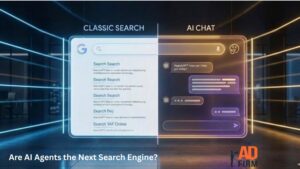
- Traditional search: Finds webpages that may answer your question.
- Generative AI: Processes information and creates a response.
- AI agent: Uses information, tools, and multiple steps to work toward a specific goal.
- Agentic search: Combines search, AI reasoning, and actions within one experience.
AI agent experiences are not limited to Google. Platforms such as ChatGPT, Perplexity, and Microsoft’s AI search experiences can combine web search with AI-generated responses, research, comparisons, and other actions, depending on the tools and features available.
Google’s current Search development already includes information agents that can monitor the web for changes and provide synthesized updates. Google is also expanding agentic capabilities for bookings, shopping, and local services.
That changes the role of search from simply finding information to helping users get something done.
Strengthen Your Online Authority with The Ad Firm
- SEO: Build a formidable online presence with SEO strategies designed for maximum impact.
- Web Design: Create a website that not only looks great but also performs well across all devices.
- Digital PR: Manage your online reputation and enhance visibility with strategic digital public relations.
ALSO READ: Building Local SEO Trust Signals That Influence AI Assistants
How Are AI Agents Changing the Way People Search?
AI agents are changing search by letting users describe the outcome they want instead of running multiple searches and completing each step themselves. An agent can interpret the request, break it into smaller tasks, gather information, compare results, and help move the user toward the desired outcome.
For example, instead of searching:
“Best hotels in Los Angeles”
a user could ask an AI agent:
“Find me a hotel in Los Angeles for three nights, under $800, near downtown, with parking and a pool.”
The agent can then work through the requirements instead of simply returning a page of results.
This shift can affect several parts of search behavior:
- Longer requests: Users can provide more context and requirements.
- Multi-step research: One request can involve several searches behind the scenes.
- Comparisons: AI can evaluate multiple options against the user’s preferences.
- Ongoing monitoring: Agents can watch for new information and notify users when something changes.
- Task completion: Some agentic experiences can move from research toward actions such as booking or purchasing.
That means businesses need to think beyond the keywords people type into Google and consider the goals, requirements, and decisions driving those queries.
Can AI Agents Replace Traditional Search Engines?
No, AI agents are unlikely to replace traditional search engines completely because they still depend on search indexes, websites, databases, product information, reviews, maps, and other sources to complete tasks. They may change how users interact with search, but the underlying information sources remain important.
The future looks less like a competition between search engines and AI agents and more like a combination of search engines, AI agents, websites, and business data working together. That distinction matters for businesses because an AI agent still needs reliable information to make a recommendation or complete a task.
How Will AI Agents Change SEO?
AI agents are changing search by letting users describe the outcome they want instead of running multiple searches and completing each step themselves. An agent can interpret the request, sequence the sub-tasks, gather information, compare results, and help move the user toward the desired outcome.
Elevate Your Market Presence with The Ad Firm
- SEO: Boost your search engine visibility and supercharge your sales figures with strategic SEO.
- PPC: Target and capture your ideal customers through highly optimized PPC campaigns.
- Social Media: Engage effectively with your audience and build brand loyalty through targeted social media strategies.
Consider how this plays out for a business looking for marketing support. Instead of searching:
“SEO agency near me”
that business could ask an AI agent:
“Find a digital marketing agency that handles SEO and PPC for service-based businesses, has verifiable results, and serves clients in California.”
The agent can work through those requirements, pulling from business listings, reviews, third-party coverage, and website content, rather than returning a page of links for the user to sort through manually.
This shift can affect several parts of search behavior:
- Longer requests: Users can provide more context, criteria, and preferences in a single query.
- Multi-step research: One request can involve several searches running behind the scenes.
- Comparisons: AI can evaluate multiple options against the user’s stated requirements.
- Ongoing monitoring: Agents can track changes across the web and notify users when something relevant updates.
- Task completion: Some agentic experiences can move from research into action, such as submitting a contact form or initiating a booking.
Google has already introduced information agents that can monitor the web and send synthesized updates, along with agentic booking capabilities for certain services.
That means businesses need to think beyond the keywords people type into Google and consider the goals, requirements, and decisions driving those queries. A business that is difficult for an AI agent to evaluate is a business that gets left out of the recommendation.
READ MORE: Why Traditional SEO Metrics Don’t Tell the Full Story in AI Search
Will AI Agents Change How Customers Find Businesses?
They can, particularly for searches where customers have several requirements.
A customer may not simply want to find a business. They may want an AI system to find the business that best matches a specific set of needs.
For example:
“Find a digital marketing agency that works with ecommerce companies, offers SEO and PPC, and has experience with businesses in my area.”
The agent needs information about services, expertise, location, reputation, and other factors to produce a useful recommendation.
This creates an important opportunity for local businesses.
A strong Local SEO strategy can help keep business information accurate and relevant across the platforms and sources that contribute to local discovery.
Streamline Your Digital Assets with The Ad Firm
- Web Development: Build and manage high-performing digital platforms that enhance your business operations.
- SEO: Leverage advanced SEO strategies to significantly improve your search engine rankings.
- PPC: Craft and execute PPC campaigns that ensure high engagement and superior ROI.
The Ad Firm’s Local SEO services can help businesses strengthen local search signals, improve location-focused content, and maintain the information customers use when evaluating a nearby business.
What Should Businesses Do to Prepare for AI Agents?
Businesses do not need to build their own AI agent to prepare for agentic search.
They need to make their digital presence easier for AI systems to understand and trust.
Start with the information an AI agent would need to decide on your business.
- Clarify your services: Explain exactly what you offer instead of relying on vague marketing language.
- Strengthen service pages: Create dedicated pages that clearly explain your services, customers, locations, and processes.
- Keep business details current: Make sure contact information, locations, hours, and other important details are accurate.
- Answer decision-making questions: Address pricing factors, comparisons, processes, requirements, and common concerns.
- Build supporting authority: Earn credible mentions and links from relevant websites and publications.
- Maintain your reputation: Reviews and other third-party information can contribute to how customers and AI systems understand your business.
Content should also have a clear information hierarchy, with descriptive headings, direct answers, supporting details, and structured data where appropriate. This gives AI systems clearer signals about what each page covers and how its information is organized.
The goal is to give AI systems enough reliable information to understand who you are, what you offer, where you operate, and why someone should consider you.
Why Could Brand Trust Matter More in Agentic Search?
When a person searches, they can examine several results and decide which one they trust.
An AI agent may have to make that filtering process much faster.
That makes the information surrounding a business increasingly important.
An AI system may encounter:
- Customer reviews: What people say about the business and its services.
- Business citations: How consistently the company’s information appears across directories.
- Third-party coverage: What reputable websites and publications say about the brand.
- Industry mentions: References that establish expertise within a particular field.
- Local signals: Information connecting the business to its service area.
- Original content: Useful information that demonstrates knowledge and experience.
These trust signals also connect with Google’s E-E-A-T framework: experience, expertise, authoritativeness, and trustworthiness. For businesses, demonstrating first-hand experience, relevant expertise, credible recognition, and reliable information can strengthen the overall signals surrounding a brand.
Amplify Your Market Strategy with The Ad Firm
- PPC: Master the art of pay-per-click advertising to drive meaningful and measurable results.
- SEO: Elevate your visibility on search engines to attract more targeted traffic to your site.
- Content Marketing: Develop and implement a content marketing strategy that enhances brand recognition and customer engagement.
This is where Reputation Management and Digital PR can support an SEO strategy.
Reputation Management can help businesses monitor and improve how they are represented online, while Digital PR can help build credible brand mentions and coverage beyond the company’s own website.
In an agentic search environment, visibility is not only about being present.
It is also about giving an AI system enough consistent information to understand why the business belongs in the conversation.
What Does Agentic Search Mean for the Future of SEO?
SEO is unlikely to disappear because AI agents need information to work with.
What changes is the path between the user’s question and the business.
The traditional journey looks something like:
Search → Result → Click → Website → Action
An agentic journey could look more like:
Request → Research → Compare → Recommendation → Action
The website may still be part of that process, but the user may not interact with every source directly.
That makes Generative Engine Optimization increasingly relevant. GEO focuses on making a brand’s information easier for generative search systems to understand, evaluate, and potentially reference.
For businesses, the goal should not be to optimize for one specific AI platform.
It should be to build a strong digital presence that provides clear, consistent, credible information across the web.
How Can a Digital Marketing Agency Help You Prepare for AI Agents?
Preparing for agentic search involves more than adding a few AI-related keywords to your website.
A digital marketing agency can look at the entire online presence of a business and identify the information, content, authority, and technical signals that may affect how AI systems understand the brand.
The Ad Firm can help businesses prepare by:
- Auditing SEO foundations: Identify technical and content issues that could make important information harder to find or understand.
- Improving AI SEO: Strengthen content around the questions, topics, services, and information customers are likely to search for.
- Building Generative Engine Optimization strategies: Organize and strengthen the information AI systems may use when generating answers and recommendations.
- Strengthening Local SEO: Improve local signals and location-specific content for businesses that depend on nearby customers.
- Building online authority: Use Digital PR and content strategies to establish stronger third-party signals around the brand.
- Managing reputation: Monitor how the business is represented through reviews, mentions, and other online sources.
- Creating useful content: Develop original, specific information that helps both customers and AI systems understand the business.
The point is not to try to control what an AI agent recommends. It is to make sure your business has clear, accurate, useful, and credible information available when AI systems are researching your industry.
Maximize Your Online Impact with The Ad Firm
- Local SEO: Capture the local market with strategic SEO techniques that drive foot traffic and online sales.
- Digital PR: Boost your brand’s image with strategic digital PR that connects and resonates with your audience.
- PPC: Implement targeted PPC campaigns that effectively convert interest into action.
Get your business ready for AI-driven search before the search journey changes again. Contact The Ad Firm to get started.
Frequently Asked Questions About AI Agents and Search
Are AI agents the same as search engines?
No. A search engine primarily helps users find information, while an AI agent can use information to reason through a task, compare options, monitor changes, or take certain actions.
Will AI agents replace Google Search?
Not necessarily. Google is currently integrating AI agents directly into Search, suggesting that agents and search engines can work together rather than existing as completely separate systems.
Where Do AI Agents Get Information Online?
AI agents can retrieve information from websites, search systems, databases, maps, reviews, and other sources. The sources they use and how they retrieve information depend on the AI system, the tools available to it, and the task it is trying to complete.
Can AI agents recommend businesses?
Yes. Google is already expanding agentic capabilities for local services and other tasks where users provide specific requirements.
Will AI agents change SEO?
They can change how businesses think about search visibility. SEO may increasingly involve making information easy for AI systems to find, understand, verify, and use alongside traditional ranking strategies.
How can businesses optimize for AI agents?
Businesses can start by keeping their information accurate and consistent, creating useful original content, strengthening their authority, improving technical SEO, and building a clear digital presence across relevant platforms.
Is Generative Engine Optimization important for AI agents?
GEO can be part of a broader search strategy focused on how brands are represented in AI-generated search experiences. It works alongside traditional SEO rather than replacing it.