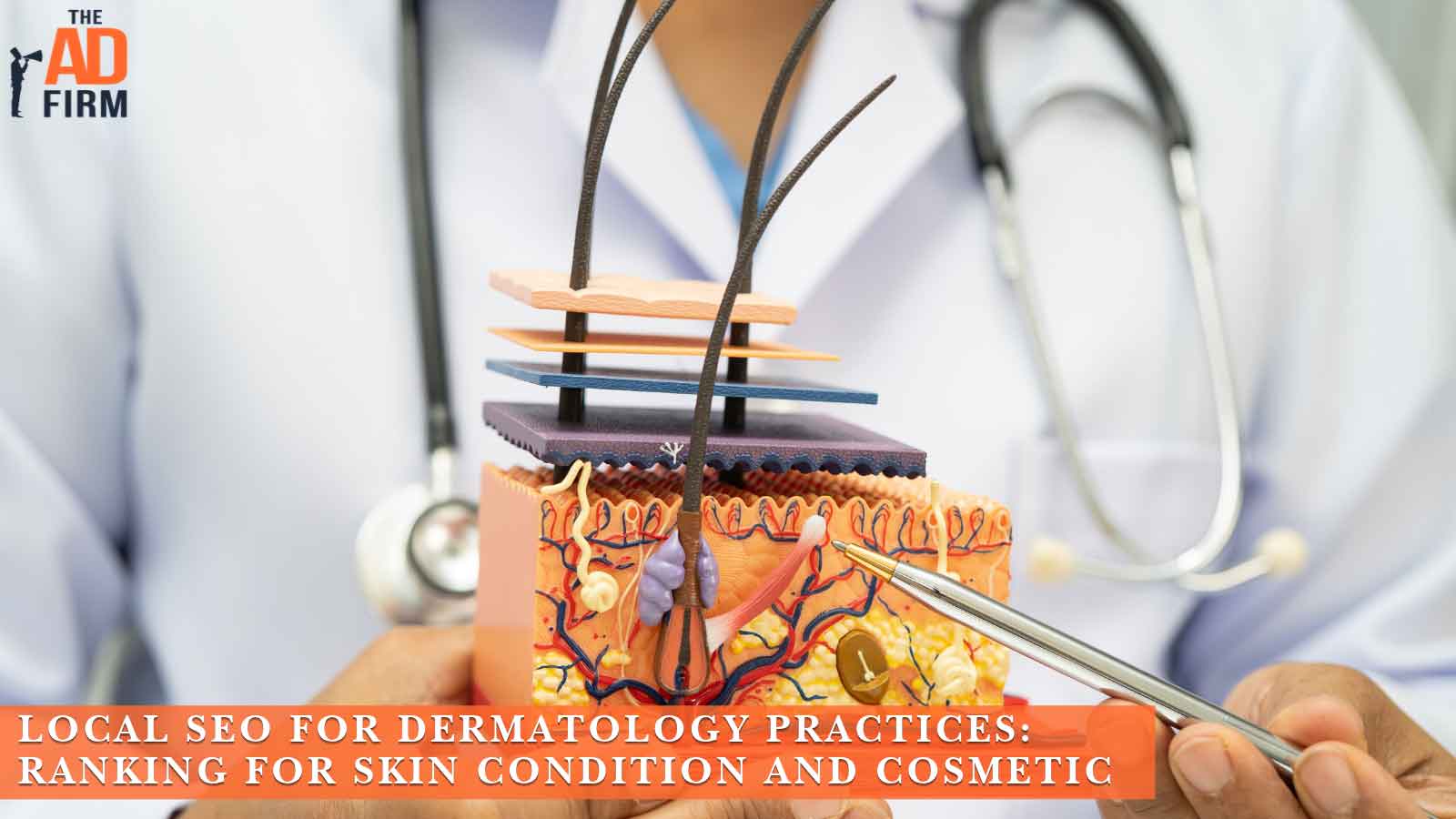
Dermatology occupies a unique position in local healthcare: it serves patients with genuine medical needs alongside patients pursuing elective cosmetic treatments. That distinction matters for local SEO because both groups search differently, respond to different trust signals, and land on different types of content before booking. A patient researching eczema care is looking for clinical credibility and physician-level expertise. A patient considering laser resurfacing is evaluating aesthetic outcomes, patient experience, and practice reputation. Both are searching locally. Both are ready to act. The SEO strategy that serves one does not automatically serve the other.
Why Dermatology Local SEO Requires a Split Strategy
Google evaluates medical and cosmetic content through different quality lenses. Medical skin condition pages are assessed against clinical E-E-A-T standards: physician credentials, the accuracy of condition descriptions, and the practice’s reputation in treating that specific condition all factor in. Cosmetic procedure pages are evaluated more like service pages, where visual social proof, patient experience signals, and pricing transparency carry significant weight. A page that tries to satisfy both query types at once tends to underperform on both.
ALSO READ: E-E-A-T for Local Businesses: What It Means and How to Build It
What Are the Core Local SEO Signals for a Dermatology Practice?
The foundational signals are consistent across local businesses: a fully completed and actively managed Google Business Profile, NAP data that matches across every directory, and a review profile that generates new feedback at a steady rate. For a dermatology practice, the specifics of how each is executed matter more than in most categories, because both medical and cosmetic patients research providers carefully before reaching out.
Google Business Profile Setup and Ongoing Management
Your primary GBP category should be set to “Dermatologist,” with secondary categories added for each major service line: “Cosmetic Dermatologist,” “Skin Care Clinic,” “Laser Hair Removal Service,” and any other accurate descriptions of what your practice does. Practices that list only a primary category miss the query traffic their secondary services generate. Every field deserves attention: hours, booking URL, individual service listings with descriptions, and high-resolution facility and staff photos.
Maximize Your Online Impact with The Ad Firm
- Local SEO: Capture the local market with strategic SEO techniques that drive foot traffic and online sales.
- Digital PR: Boost your brand’s image with strategic digital PR that connects and resonates with your audience.
- PPC: Implement targeted PPC campaigns that effectively convert interest into action.
Completing the profile is the starting point, not the finish line. Dynamic GBP management has become a distinct local ranking factor. Whitespark’s Local Search Ranking Factors report confirms that behavioral and engagement signals have risen sharply in importance. Practices that post updates, respond to questions, add fresh photos regularly, and keep service descriptions current outperform those with static profiles that have not been touched since the initial claim.
Review Velocity and Specificity
Review velocity, the rate at which new reviews arrive over time, now functions as a distinct trust signal for Google’s local algorithm and for AI platforms like ChatGPT and Perplexity. A practice with 80 reviews that earns 6 to 8 new ones per month ranks more competitively than one with 300 reviews and no recent activity. According to Advice Local’s research, GBP signals account for approximately 32% of local pack ranking factors, with active review profiles feeding directly into GBP health scores.
For dermatology specifically, the text of a review carries additional SEO value beyond a star rating. A review that names a specific condition, treatment type, or neighborhood reinforces the practice’s relevance for that combination of signals. Encouraging patients to describe their experience in detail, rather than simply rate it, produces reviews that do more work.
NAP Consistency Across Healthcare Directories
Consistent NAP data, identical name, address, and phone number format across every platform, is foundational. For a dermatology practice, that consistency needs to extend beyond general directories into healthcare-specific platforms: Healthgrades, Vitals, Zocdoc, WebMD’s physician directory, RealSelf for cosmetic services, Yelp, and Apple Maps. A mismatch in suite number, a street abbreviation that varies between listings, or a practice name formatted differently on two platforms creates entity ambiguity that reduces Google’s confidence in both. For a medical practice, healthcare-specific directories carry more authority weight than general business listings.
ALSO READ: A Beginner’s Guide to Crawlability: Why Search Engines and AI Can’t Find Some Pages
How Should a Dermatology Practice Structure Its Service Pages?
Because medical and cosmetic patients are at fundamentally different stages of the decision process, they need different content architectures. Combining their needs into shared pages produces content that serves neither patient well.
Streamline Your Digital Assets with The Ad Firm
- Web Development: Build and manage high-performing digital platforms that enhance your business operations.
- SEO: Leverage advanced SEO strategies to significantly improve your search engine rankings.
- PPC: Craft and execute PPC campaigns that ensure high engagement and superior ROI.
Medical Skin Condition Pages
Build individual pages for every condition your practice treats: acne, eczema, psoriasis, rosacea, skin cancer screenings, warts, hyperpigmentation, and any specialty areas your physicians focus on. Each page should answer the question the patient typed into search, use plain clinical language, and include the city or neighborhood name in the title tag and H1. A page optimized for “eczema treatment in [city]” captures a far more specific and convertible query than a generic dermatology services page that mentions eczema in a list. The geographic signal needs to be in the page itself, not just the domain.
Cosmetic Procedure Pages
Cosmetic patients arrive with a specific procedure already in mind and are in the process of evaluating which provider to trust with it. These pages compete on credibility, transparency, and the quality of information about the patient experience. Build individual pages for Botox, fillers, chemical peels, laser resurfacing, microneedling, and any other treatments your practice offers. Procedure descriptions should address what patients actually want to know: what the appointment involves, expected recovery, how long results last, and what sets your approach apart.
Before-and-after photography is an important trust signal for cosmetic patients but is subject to platform restrictions on GBP and paid advertising channels. On your own website, within the applicable regulatory and compliance standards for your jurisdiction, these images carry meaningful conversion weight for patients comparing providers.
Integrating Location Signals Naturally
Both medical and cosmetic pages should name the city, neighborhood, or service area in the title, the H1, and at least one early body paragraph. The most effective location integration happens when content is written for patients in that specific market, because the local context appears naturally rather than being inserted as a keyword. A page about rosacea treatment written for patients in a particular city will reference local environmental factors, the practice’s geographic context, and the patient community it serves without forcing the location name into every paragraph.
How Do AI Overviews Affect Local Dermatology Search?
AI-generated answers now appear above the map pack on many dermatology queries, particularly for questions like “best dermatologist for acne near me” or “rosacea treatment in [city].” The practices cited in those answers share two characteristics: complete, well-structured entity data across their GBP and website, and condition-specific content that gives the AI retrieval system something concrete to extract and attribute. A practice can hold solid map pack placement and still be absent from AI-generated answers if its content is not structured in a way AI systems can parse.
Elevate Your Market Presence with The Ad Firm
- SEO: Boost your search engine visibility and supercharge your sales figures with strategic SEO.
- PPC: Target and capture your ideal customers through highly optimized PPC campaigns.
- Social Media: Engage effectively with your audience and build brand loyalty through targeted social media strategies.
Google AI Overviews pull from Google’s index, which means GBP signals, structured data, and ranking authority all carry weight. Third-party platforms like ChatGPT and Gemini synthesize from broader web sources, including review platforms and editorial coverage. For a dermatology practice, strong GBP health paired with condition-specific content is the foundation for both traditional local rankings and AI-generated citations.
Build the Local Visibility Your Practice Deserves
Local SEO for a dermatology practice involves sustained, layered work: GBP maintenance, a review acquisition process built into patient workflows, citation consistency across healthcare directories, and content that deepens as your service lines grow. The Ad Firm’s local SEO team manages all of these layers for medical and aesthetic practices, from initial citation audits and GBP optimization to condition-specific content strategy and AI citation signals. Reach out for a free local SEO review to see exactly where your current visibility stands.
Frequently Asked Questions
Should medical dermatology and cosmetic services be on the same website?
Yes, but on clearly separate pages with distinct content depth, structure, and keyword focus. A shared services page that lists both conditions and cosmetic treatments dilutes the ranking signal for each. Practices that build individual pages for each condition and each cosmetic procedure rank more precisely and attract patients with specific needs that the practice is actually positioned to serve.
Which directories matter most for dermatology citations?
Beyond GBP, the highest-priority platforms are Healthgrades, Vitals, Zocdoc, WebMD’s physician finder, RealSelf for cosmetic services, and the American Academy of Dermatology’s Find a Dermatologist tool. If you are starting from scratch, prioritize the ones your competitors have already claimed and filled out completely. Those are the gaps most likely suppressing your entity confidence with Google.
How does review velocity affect a dermatology practice specifically?
Dermatology has inherent review acquisition challenges: patients with skin conditions may be private about their diagnosis, and cosmetic patients may prefer not to publicly identify the treatments they have received. Building the review ask directly into the appointment checkout process, with immediate access to the review link, produces better results than batch follow-up requests. A consistent rate of four to six new reviews per month compounds into a meaningful competitive advantage over 12 months compared to practices with stale profiles.
Strengthen Your Online Authority with The Ad Firm
- SEO: Build a formidable online presence with SEO strategies designed for maximum impact.
- Web Design: Create a website that not only looks great but also performs well across all devices.
- Digital PR: Manage your online reputation and enhance visibility with strategic digital public relations.
Do before-and-after photos help with local SEO?
On your practice website, within the compliance standards applicable in your jurisdiction, before-and-after photos are among the strongest conversion signals for cosmetic patients comparing providers. They do not directly influence map pack rankings, but they significantly improve the rate at which patients who find the site through local search actually reach out. GBP does allow practice photos that include patient imagery in some contexts, but before-and-after sets specifically are restricted on the platform.
Can a dermatology practice appear in AI-generated local answers?
If your practice is not appearing, the most common causes are an incomplete GBP, a stale review profile, or service pages that describe procedures generically rather than specifically. AI retrieval systems look for attributable answers: content tied to a specific condition, treatment, or outcome at a named practice. Auditing those three areas first surfaces the gaps most likely to be keeping your practice out of AI-generated recommendations.