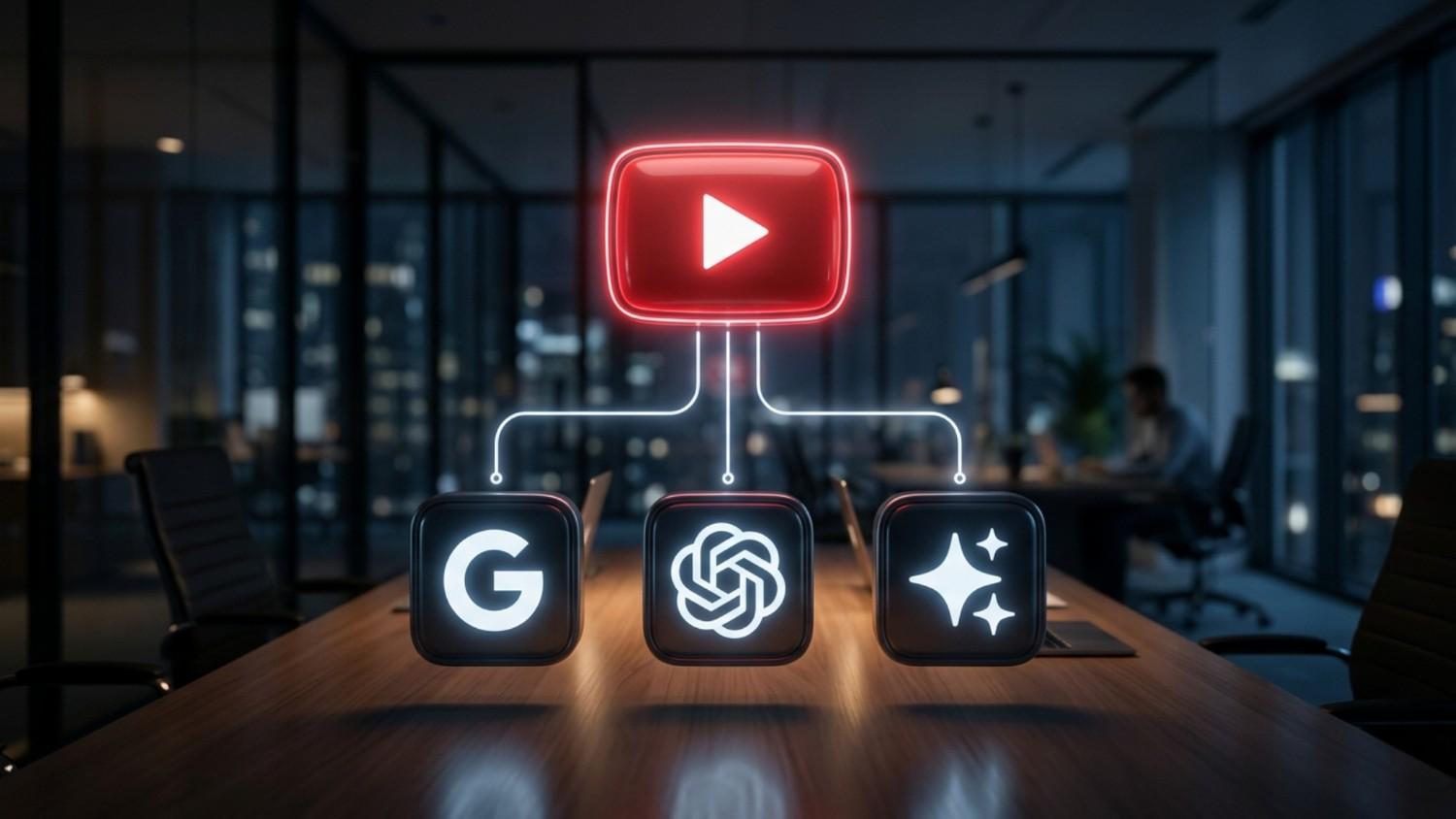
Video content strengthens your generative engine optimization (GEO) strategy by giving AI search engines useful source material for the questions your audience asks. When your videos open with direct answers, use plain language, and include accurate transcripts, you make it easier for platforms like ChatGPT, Perplexity, and Google AI Overviews to cite your content for specific questions.
Why Do AI Engines Pull Answers From Video?
Video works well in AI search since it gives engines several signals at once: spoken explanations, metadata, transcripts, and visible demonstrations. Instead of one page element, your video supplies context from what you say and how the topic connects to intent, which suits prompts where people want a process, comparison, or example they can grasp quickly.
How RAG Turns Video Into Cited Answers
AI platforms such as ChatGPT, Gemini, and Perplexity often use Retrieval-Augmented Generation, or RAG, which retrieves relevant information before the model writes an answer. When your video answers the question directly and gives the model enough context, it has a better chance of being cited.
Video earns citations by connecting topic relevance with proof. Your transcript gives AI systems exact language to process, and your demonstration shows that an outcome text alone cannot. Together, these support your brand’s experience, expertise, authority, and trust.
The Metadata and Demonstration Advantage
Your audience often asks AI engines practical questions like “how do I” or “which option is better.” Video works well for these searches since it can show the process, not just describe it.
Two qualities make video especially useful for AI extraction:
- Rich metadata: Video labels help AI systems identify the topic, format, and section intent without relying only on page copy.
- Visual proof: Tutorials, comparisons, walkthroughs, and demonstrations help AI systems connect your explanation to a real process or example.
Platforms treat these signals differently. Perplexity often surfaces in video as a distinct result and links to the source, so a clean title and transcript improve your odds of a direct citation. ChatGPT leans more on transcript text and metadata than on the visual frames. Google AI Mode, which sits alongside AI Overviews, increasingly blends video into multi-step answers for research queries.
READ MORE: Top GEO Content Formats That Win Visibility in AI Overviews
What AI Overview Data Reveals About YouTube Citations
Marketers once treated video mainly as a brand awareness channel. AI search changed that. Recent data shows video can earn visibility where traditional organic rankings look very different, so your GEO plan should account for video from the start.
AI Overviews Favor YouTube Over Traditional Search
An SE Ranking analysis of 50,807 German-language health queries, captured in a one-time December 2025 snapshot from Berlin, found YouTube was the most cited domain, at 4.43% of citations, even though it ranked 11th in organic results. That gap appeared in German-language health queries, where AI Overviews showed up on 82% of searches, so treat it as a strong signal for that context, not a universal rule.
Read the study as the caution it was meant to be: the same researchers found roughly two-thirds of cited sources lacked formal medical review, so that visibility reflected popularity as much as reliability. The honest takeaway is narrow. A well-structured video can earn citations where a standard page struggles, as long as your content is accurate and genuinely helpful.
Video Accelerates the Entity Authority Behind Citations
Text still earns many direct AI citations, but video strengthens the authority behind them. AI platforms favor sources they can confirm in several places. When your brand appears consistently on YouTube, your website, social media, forums, and review platforms, those signals help AI systems recognize your business as a credible entity.
This is where generative SEO becomes more than keyword targeting. You are building a recognizable brand footprint that AI engines connect to specific services, topics, and expertise.
Multimodal Pages Outperform Text-Only Content
A page that pairs an embedded video with supporting copy, an accurate transcript, schema markup, and a short FAQ gives AI systems several ways to read the same topic. The engine lifts source language from the transcript, reads context from the metadata, and maps section relationships from your structure. A text-only page offers fewer entry points.
The practical rule: treat the page, not the video alone, as the unit AI evaluates. Pair every embedded video with a written summary, key takeaways, and the transcript on the same URL so the asset reads as one complete answer.
How Should You Structure Video for AI Extraction?
Producing a video is only part of the work. Structure determines if an AI engine can pull a concise source passage or skip it for a competitor. The goal is to make every video easy for both people and machines to read.
Answer-First Scripting Makes Video Citable
AI systems and users both need clarity fast. Open every video with a direct answer in the first 30 seconds, then add context and supporting details. This shows viewers the value right away and gives AI engines a concise source passage to extract. Phrase your spoken opening and on-screen headings the way your audience asks the question, so your wording aligns with real prompts. This answer-first structure supports strong generative AI search engine optimization.
Transcripts and Schema Make Video Searchable
A transcript turns spoken content into text that AI engines can read, search, and cite. Upload an accurate, readable transcript for every video so AI can identify definitions, claims, and key takeaways. Tools like Otter, Descript, Rev, or YouTube’s auto-captions handle the first draft; a human edit fixes the names and figures that matter most.
Pair your transcript with on-page and structured elements that define the content’s purpose and topic relationships:
- Titles and descriptions: Set the main topic, target question, and user intent behind the video.
- Chapters and timestamps: Break the video into sections so AI systems can identify where each point appears.
- VideoObject schema: Explains what your video is, what topic it covers, and where it appears.
- FAQ schema: Labels question-and-answer sections so AI engines can match your content to user prompts.
- HowTo schema: Marks step-by-step instructions for tutorials, walkthroughs, and process-based searches.
- Named entities: Identify companies, people, tools, services, and frameworks that tie your content to recognized topics AI already knows.
On YouTube, native features carry real weight. Closed captions feed clean text to both YouTube and AI engines, chapter markers create the timestamped segments models cite, and playlists, cards, and end screens group related videos so the platform sees how your content connects. Together, these reduce guesswork and make your video easier to index and reference.
Quotable Claims Earn Direct Attribution
AI engines favor clear, self-contained statements that explain a fact or define a term. Vague phrases such as “experts agree” give AI little to cite. A statement like “a 2025 SE Ranking study of more than 50,000 German health queries found YouTube cited in 4.43% of AI Overview answers” gives them a specific, attributable claim.
Build quotable statements into your scripts using specific figures, case studies, named sources, and original data. Information AI cannot reproduce from general knowledge, raising the value of your source. That specificity helps generative AI search engine optimization drive stronger visibility and more credible citations.
How to Integrate Video Into Your GEO Ecosystem

One optimized video will not carry your strategy alone. AI citations come from a connected system where each asset supports the next. GEO works best when your video connects to FAQs, service pages, blog content, and social platforms, so AI systems see how every asset supports the same topic and brand entity.
Build a Video-Driven FAQ Ecosystem
AI tools work like question-and-answer engines, so your content should answer what your audience already searches for. Build at least 10 Q&A pairs around each core video, then mark them with FAQ schema so AI systems can read the question, response, and topic relationship.
Start with real questions from People Also Ask results, sales calls, support requests, and search data, not invented keywords. Then cut each long-form video into shorter clips that address follow-up questions, covering more intent and giving engines more passages to extract.
Link Video Pillars to Cluster Content
Use a long-form YouTube video as your pillar asset, then adapt it into native formats for each platform. Your pillar video should link to related cluster pages, and each cluster page should link back, creating a topical map that AI engines can follow.
Guides, comparisons, and tutorials work well here since they help your audience decide and give AI systems organized examples and decision points to summarize. This turns individual assets into stronger answer-ready content systems.
Reinforce Citations Across Platforms
Publishing in more than one place helps AI engines connect your brand, topic, and source footprint. Share native versions on YouTube, TikTok, Instagram Reels, LinkedIn, and your website. Format matters: vertical clips suit TikTok, Reels, and Shorts for quick follow-up answers, and horizontal long-form video on YouTube anchors the deeper explanations AI cites for research prompts.
Keep naming, descriptions, and links consistent across platforms so each version points to the same core topic. Share useful video links in forums, Quora, Reddit, and industry communities only when they genuinely answer the conversation. Add comparison tables, before-and-after visuals, and key takeaways to your descriptions so AI can extract details without guessing. For local businesses, this also supports GEO for local SEO by tying your expertise to specific services and locations.
ALSO READ: GEO for Local SEO to Win AI Overviews and ‘Best Near Me’
How to Measure Video GEO Performance
View counts will not tell you if AI engines cite your work. Citation tracking will. Focus on the signals that show if your video appears in AI-generated answers, drives branded demand, and supports measurable growth.
Track Citations Across AI Platforms
Check how often AI platforms mention or cite your content. Run target prompts in ChatGPT, Perplexity, Google AI Overviews, and Google AI Mode to see where you appear, which content earns citations, and which questions still surface competitors.
Track two supporting signals alongside citations:
- Branded search growth: Shows if more people search for your company after seeing your content in AI-generated results.
- AI referral traffic: Shows if users reach your website from AI-assisted search experiences.
Tools such as Profound, Otterly.ai, Peec.ai, and Ahrefs Brand Radar automate much of this monitoring across engines; our roundup of the top AI visibility tools for GEO compares the options. Strong generative SEO does not rely on impressions alone. It measures if your content earns visibility, supports trust, and moves users closer to action.
Audit Extraction Readiness Regularly
Run your target prompts in ChatGPT and Perplexity before and after you update a video, then record how the results change. That before-and-after view shows how your edits changed citation potential.
Review these items on a regular schedule:
- Bot access: Confirm that GPTBot, ChatGPT-User, OAI-SearchBot, PerplexityBot, and Google-Extended can access your video pages.
- Transcript quality: Make sure your transcripts are accurate, readable, and aligned with how your audience phrases its searches.
- Schema markup: Check that your VideoObject, FAQ, and HowTo schema still match the visible content on the page.
- Content freshness: Update outdated examples, dates, statistics, and recommendations so AI engines have current information to reference.
Understanding the difference between Answer Engine Optimization (AEO) and GEO helps you match each video to the right search experience: AEO answers direct questions clearly, and GEO earns citations across AI-generated results. Our guide to answer engine optimization for content teams covers that distinction in depth.
RELATED ARTICLE: How to Do GEO for Local SEO Content for Ranking on AI Search
Build a Video GEO Strategy That Earns AI Citations
Video now plays a direct role in how AI search surfaces reliable source material. A connected program turns your scattered uploads into a citation asset instead of a set of isolated posts. That is how GEO was built for how search works now.
The Ad Firm connects video strategy, technical optimization, and performance reporting into one GEO program. Contact us today to strengthen your AI search strategy and turn your video library into a source for AI engines reference.
Frequently Asked Questions
Does video work for AI citations outside YouTube?
Yes. TikTok, Instagram Reels, and LinkedIn video can all earn AI visibility, though YouTube holds the strongest citation footprint, since its transcripts and metadata are easy for engines to read. Publish native versions on each platform and keep titles consistent so engines connect them to the same topic.
How long does it take for AI engines to cite a new video?
There is no fixed timeline. Citation depends on indexing, transcript quality, and how often your brand already appears as a trusted source. Videos on established channels with strong entity signals surface faster than the same content on a new channel with little history.
Do I need to host video on my own site or just on YouTube?
Both help. A YouTube upload gives you reach and a transcript engines already index; an embed on your own page with a written summary keeps the citation tied to your domain. Pairing the two gives AI engines two reliable paths to the same answer.
What video length earns the most AI citations?
Length matters less than structure. Short clips answer single follow-up questions, and long-form video supports research prompts, but both need a direct answer early, clear chapters, and an accurate transcript before an engine pulls a clean passage.
Can AI cite a video that has no transcript?
Sometimes, on title, description, and metadata alone, but the odds drop sharply. Without a transcript, the engine has no exact sentences to quote, so it often skips the video for a source it can read in full. A clean transcript remains the highest-value step for video citations.