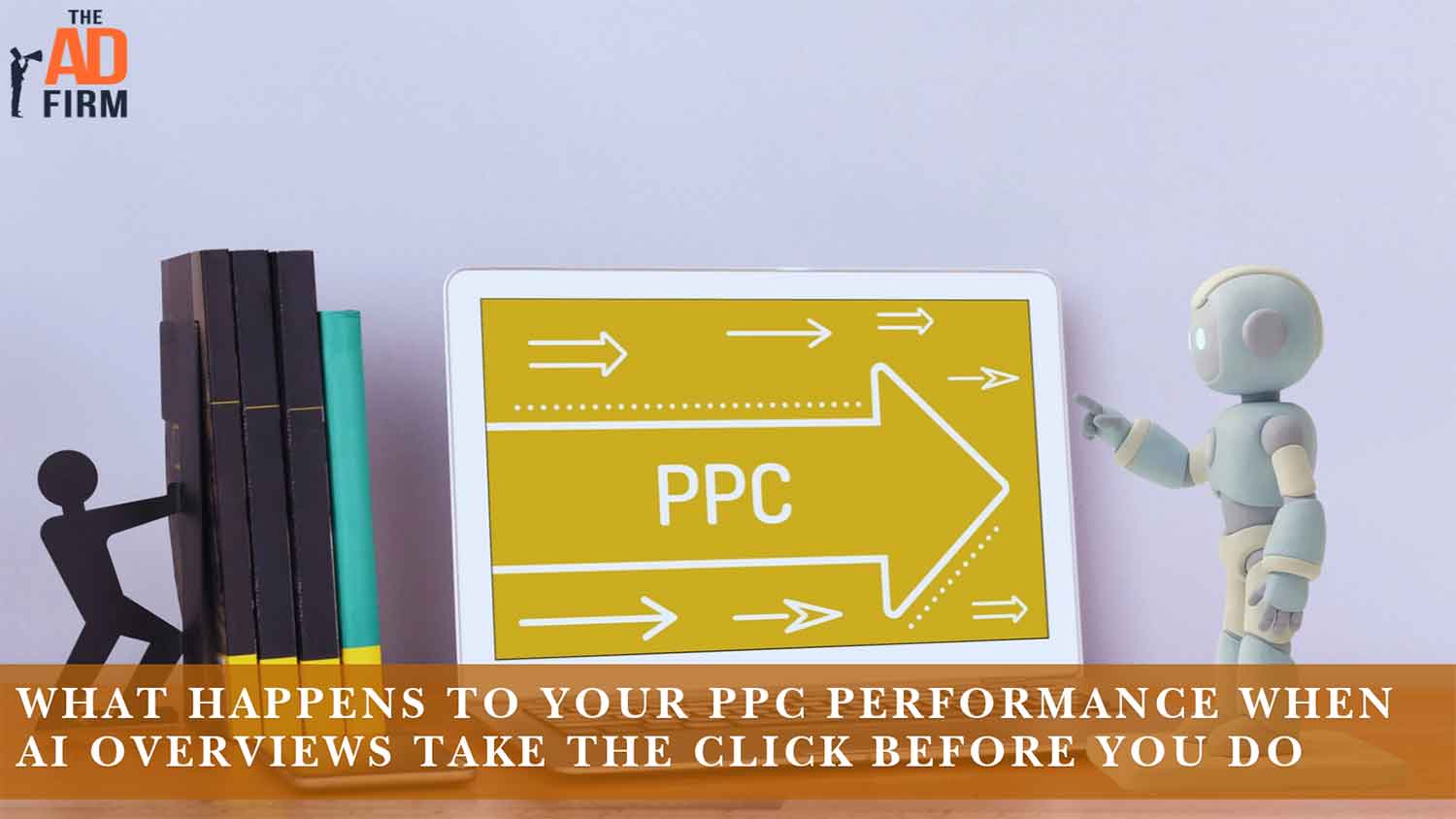
Your ad is showing. The impression is being recorded. And the user already has their answer.
AI Overviews now appear on roughly 48% of tracked Google queries, and SparkToro data puts the zero-click search rate at 58.5% of U.S. Google searches. For paid advertisers, those two numbers create a specific problem: impressions are accumulating against queries where the search result page already satisfied the user before they scrolled past the AI-generated summary to see a sponsored result.
The impact isn’t uniform across all campaign types or all query intents. Which campaigns are most exposed, how to read impression share data for signs of AI Overview interference, and what bid and audience adjustments actually move the needle are the questions this post works through.
What Are AI Overviews and Why Do They Affect Paid Search?
AI Overviews are Google’s AI-generated summaries that appear at the top of search results pages, above both organic listings and paid ads. They pull from multiple sources, synthesize an answer, and present it before the user has any reason to scroll. The result is a search experience where a growing share of queries resolve at the top of the page without the user ever interacting with an ad or an organic result.
For paid search, the problem isn’t that ads stop showing. They still appear. The problem is that the user’s decision journey often concludes before they reach the ad placement. An impression is recorded against a query that was already answered. The click that would have followed in a pre-AI Overview environment doesn’t happen.
The Impression-Without-Intent Problem
Standard paid search metrics assume a functional relationship between impressions and potential engagement. An impression means a user saw the page and had the opportunity to click. AI Overviews break that assumption for a significant subset of queries. The user reached the page, got the answer, and left. The ad was technically visible but functionally invisible to a user whose attention never traveled below the AI summary.
This shows up in performance data as declining click-through rates against stable or rising impression counts. CTR drops, CPC may rise as the remaining clicks become more competitive, and campaign reporting can look like an audience quality problem when it’s actually a page layout problem. Diagnosing the cause correctly determines what the fix should be.
Amplify Your Market Strategy with The Ad Firm
- PPC: Master the art of pay-per-click advertising to drive meaningful and measurable results.
- SEO: Elevate your visibility on search engines to attract more targeted traffic to your site.
- Content Marketing: Develop and implement a content marketing strategy that enhances brand recognition and customer engagement.
Which Query Types Are Most Exposed
Informational queries are the most exposed to AI Overview interference. Searches that ask “what is,” “how does,” “why does,” or “what are” are exactly the query types where AI Overviews are designed to resolve the search without the user needing to click anywhere. If your paid campaigns are capturing impressions on informational keywords, those keywords are producing impressions with a high probability of zero-click resolution.
Transactional and branded queries are less affected. A user searching for a specific brand, a specific product to purchase, or a local service with intent to contact is still likely to scroll past an AI Overview to reach the result they’re actually looking for. The signal here is clear: PPC management strategy that concentrates budget on transactional and commercial keywords is less exposed to AI Overview disruption than strategy built on broad informational keyword capture.
How Do You Read Impressions and Share Data for AI Overview Interference?
Impression share is one of the more useful signals for diagnosing AI Overview impact, but it requires reading it in context rather than in isolation. A drop in impression share typically signals either a budget constraint or an auction competitiveness problem. AI Overview interference looks different: impression share can hold steady or even improve as CTR and conversion volume decline. The ads are showing, but users aren’t engaging.
The metric combination to watch is impression share alongside absolute top impression rate and click-through rate. When absolute top impression rate is high, meaning your ads are showing in the top position, and CTR is still declining, that’s the pattern that points to above-the-fold AI content consuming user attention before the ad gets a chance. A competitor stealing impression share would show up as absolute top rate dropping, not as CTR declining with position held.
Search Term Reports and Zero-Click Query Identification
Search term reports reveal which specific queries are generating impressions without clicks. Running a search term report filtered for impressions above a threshold and clicks at zero exposes the query set where AI Overviews are most likely resolving the search before the user reaches your ad. Queries clustered around informational intent within that zero-click set are candidates for exclusion or bid reduction.
Streamline Your Digital Assets with The Ad Firm
- Web Development: Build and manage high-performing digital platforms that enhance your business operations.
- SEO: Leverage advanced SEO strategies to significantly improve your search engine rankings.
- PPC: Craft and execute PPC campaigns that ensure high engagement and superior ROI.
This isn’t about removing all informational keywords from paid campaigns. Some informational queries sit close enough to commercial intent that paid presence still produces value, particularly for brand awareness in competitive categories. The goal is identifying the subset of informational queries where the AI Overview is answering the question completely, leaving no residual intent for the ad to capture. Those specific queries are where the budget is being spent with no realistic conversion opportunity.
Absolute Top Impression Rate as a Diagnostic Signal
Absolute top impression rate measures how often your ads appear in the very first ad position. In a pre-AI Overview environment, the top ad position was premium real estate with strong CTR performance. Post-AI Overview, the top ad position still exists but now sits below an AI summary that may have already answered the query. An ad in absolute top position is getting maximum visibility on a page where maximum visibility doesn’t guarantee user attention.
Tracking absolute top impression rate alongside CTR over time creates a diagnostic view. If the absolute top rate is steady and CTR is falling, the page environment changes, not your ad position. If both are falling, a competitive or budget issue is more likely. The distinction shapes the right response: bid strategy adjustment or campaign restructuring.
Which Campaign Types Are Most Vulnerable to AI Overview Disruption?
Broad match campaigns that capture wide informational query sets are the most exposed campaign type. AI Max migrations, which push broad match behavior into intent-based serving, compound this vulnerability: the AI serves to a broader range of queries, including more informational ones, and the search results page increasingly resolves those informational queries above the fold before the ad is ever visible.
Dynamic Search Ad campaigns face a similar exposure. DSA generates targeting from website content, which means it often captures informational query traffic related to the topics your site covers. If your site has content on product categories or service types, DSA will bid on informational variations of those topics, many of which are prime AI Overview territory.
Brand Campaigns in an AI Overview Environment
Brand campaigns are less exposed to zero-click disruption but face a different pressure. AI Overviews occasionally include brand entity information, competitor comparisons, or category summaries that reference competing brands in the same response that appears above your paid brand ad. A user searching for your brand may see an AI summary that mentions your competitors before they see your ad.
Maximize Your Online Impact with The Ad Firm
- Local SEO: Capture the local market with strategic SEO techniques that drive foot traffic and online sales.
- Digital PR: Boost your brand’s image with strategic digital PR that connects and resonates with your audience.
- PPC: Implement targeted PPC campaigns that effectively convert interest into action.
Brand campaign impression share monitoring becomes more important in this context. Users don’t stop searching for specific brands. The page environment between the search and your ad is simply more crowded than it was. Protecting brand terms with strong ad copy, sitelinks, and structured snippets means that when a user does scroll to the ad, the sponsored result is substantive enough to pull the click.
Local and Ecommerce Campaign Exposure
Local PPC management campaigns are partially insulated from AI Overview disruption. Searches with local intent, “near me” queries, business type searches with geographic modifiers, tend to trigger map packs and local results rather than AI Overviews. Local intent queries carry transactional and directional intent that AI Overviews don’t resolve as completely as they resolve informational queries.
Ecommerce PPC campaigns face a split exposure. Shopping campaigns targeting specific product queries with strong commercial intent are less affected: a user searching for a specific product to buy isn’t satisfied by an AI summary the way a user asking a general research question is. Ecommerce campaigns that use broad matches to capture product category research queries are more exposed to AI Overview interference at the top of the funnel.
What Bid and Audience Adjustments Actually Help?
The most effective structural adjustment is concentrating budget on queries with clear transactional or commercial intent and reducing spend against informational keyword sets where AI Overviews are most active. The goal isn’t a blanket reduction in reach. It’s a reallocation toward the query types where user intent survives the AI Overview layer to produce clicks and conversions.
Target CPA and target ROAS bid strategies benefit from explicit conversion signal quality at this point. If AI Overviews are pushing more qualified users toward clicks, the conversion rate on remaining clicks may rise even as volume falls. Users who arrive at your ad having already read the AI summary are further along in their decision than a cold click. Bid strategies that optimize toward conversion value rather than click volume are better aligned with this dynamic.
Audience Targeting as a Click Quality Filter
Audience layering helps filter toward users who are more likely to convert after seeing an AI Overview answer rather than stopping there. Remarketing lists for search ads applied to your paid campaigns prioritize users who have already visited your site, meaning they’ve demonstrated interest beyond a single informational query resolution. These users are less likely to be satisfied by an AI summary and more likely to click through to evaluate your specific offer.
Strengthen Your Online Authority with The Ad Firm
- SEO: Build a formidable online presence with SEO strategies designed for maximum impact.
- Web Design: Create a website that not only looks great but also performs well across all devices.
- Digital PR: Manage your online reputation and enhance visibility with strategic digital public relations.
Customer match lists work similarly. A user already in your CRM has a relationship with your business that an AI Overview doesn’t interrupt the way it interrupts a cold user’s decision journey. Adjusting bids upward for remarketing and customer match audiences, and adjusting down for cold audiences on informational queries, is a practical response to the intent quality shift that AI Overviews create.
Ad Copy and Extension Strategy for AI Overview Environments
Ad copy that performs in an AI Overview environment needs to justify the scroll. The user has just seen a synthesized answer at the top of the page. A generic ad headline that restates the category doesn’t compete with an AI summary the user already read. Ads need to lead with what the AI summary couldn’t provide: a specific offer, a price point, a differentiated claim, or a next step that requires human action.
Ad extensions carry more weight in this environment. Sitelinks that point to specific product pages, pricing pages, or case studies give the user a reason to engage with the ad beyond what the AI Overview already told them. Structured snippets that surface specific services or differentiators add specificity that general AI summaries don’t provide. Conversion rate optimization on the landing page matters proportionally more when the user arriving from a click has already been pre-qualified by the AI Overview interaction above the fold.
Does Organic Search Face the Same Disruption?
Yes, and in some respects organic SEO faces more direct disruption than paid search. Organic results that were previously in positions one through three now sit below an AI Overview that may be synthesizing content directly from the pages that hold those positions. The irony is that ranking well enough for Google to cite your content in an AI Overview can produce visibility without the click that ranking used to guarantee.
For advertisers running both paid and organic strategies, AI Overviews affect the two channels differently. Paid ads maintain a defined position in the auction and show on most queries, even below AI Overviews. Organic results face more variable displacement depending on query type. Queries where AI Overviews appear consistently are producing compounding pressure on organic traffic from the same positions that previously drove reliable click volume.
Elevate Your Market Presence with The Ad Firm
- SEO: Boost your search engine visibility and supercharge your sales figures with strategic SEO.
- PPC: Target and capture your ideal customers through highly optimized PPC campaigns.
- Social Media: Engage effectively with your audience and build brand loyalty through targeted social media strategies.
How GEO Fits Into the Response
Generative engine optimization addresses the visibility question from the AI layer directly, working to make content citable and surfaceable within AI-generated answers. For advertisers, this creates a dual-track approach: paid search for transactional queries where click intent survives the AI Overview, and GEO signals for informational queries where the AI is likely to resolve the search before the user reaches an ad or an organic result.
This isn’t about replacing paid search with GEO. It’s about recognizing that the two channels now address different moments in the same user journey. An AI Overview may answer the user’s research question and surface a brand in the process. That same user, now further down the decision path, may then convert through a paid search interaction when they’re ready to act. The informational query that once drove paid traffic now feeds brand familiarity that converts through a paid search or direct visit later.
What Should You Monitor Going Forward?
The metrics that matter most in an AI Overview environment are the ones that separate impression volume from engagement quality. Absolute top impression rate paired with CTR is the core diagnostic. Search term report zero-click query concentration identifies where AI Overviews are most active against your keyword set. Conversion rate on remaining clicks tells you if the click quality shift is real.
Impression share lost to rank is still useful, but impression share lost to budget becomes less informative if the impressions being lost were against zero-click queries to begin with. Chasing impression share on queries where AI Overviews are answering the user isn’t a recovery strategy. It’s spending more to lose more quietly.
Setting Benchmarks Before Further AI Overview Expansion
AI Overview coverage is increasing, not contracting. Setting current performance benchmarks now, before the next expansion of AI Overview query coverage, creates the baseline needed to measure impact as it compounds. Tracking CTR, conversion rate, and cost per conversion by campaign and match type across a defined query window gives the before picture that AI Overview expansion comparisons will need.
An SEO audit that includes an AI Overview presence check on your core keyword set surfaces which queries are already producing AI summaries and which aren’t yet. That query map tells you where your current paid campaigns are most exposed and where organic and paid investment is likely to face compounding pressure as AI Overview coverage expands. Running that audit before the next AI Overview expansion window puts you ahead of the disruption rather than responding to it.
Advance Your Digital Reach with The Ad Firm
- Local SEO: Dominate your local market and attract more customers with targeted local SEO strategies.
- PPC: Use precise PPC management to draw high-quality traffic and boost your leads effectively.
- Content Marketing: Create and distribute valuable, relevant content that captivates your audience and builds authority.
The Click Gap Is Real. The Response Is Precision, Not Volume.
AI Overviews haven’t made paid search ineffective. They’ve made impressions less reliable as a proxy for reach and CTR less reliable as a proxy for campaign health. The campaigns that will perform well in this environment are the ones built around transactional intent, supported by audience signals that filter for conversion likelihood, and measured against conversion outcomes rather than click volume.
The adjustment isn’t retreating from paid search. It’s concentrating paid investment on the query types and audience segments where the click still means something and produces actual business results. For advertisers ready to audit which parts of their current campaign structure are most exposed and where reallocation makes sense, The Ad Firm’s AI SEO and PPC team starts with exactly that analysis. Contact The Ad Firm to begin.
Frequently Asked Questions
Do AI Overviews show on every Google search?
No. AI Overviews appear on an estimated 48% of tracked queries, with higher concentration on informational and research-oriented searches. Transactional queries, brand searches, and local intent queries produce AI Overviews less frequently. The distribution is uneven, which means campaign exposure to AI Overview disruption varies significantly by keyword set and industry.
Will Google eventually show ads inside AI Overviews?
Google has been testing ads within AI Overview panels, and some advertisers have reported sponsored placements appearing inside the AI-generated summary itself. This remains in limited testing and the format is not yet broadly available. If ads inside AI Overviews scale, the click-through dynamic would shift again: placement within the summary itself would be closer to the user’s attention than current below-summary ad positions.
Should I reduce my PPC budget due to AI Overviews?
Not necessarily. The right response is reallocation rather than reduction. Budget concentrated on transactional and commercial intent keywords, where AI Overviews are less likely to resolve the query, continues to produce value. Budget spread across broad informational keywords where AI Overviews are consistently appearing is the portion worth reviewing. An audit that maps your keyword set against AI Overview appearance rates surfaces where reallocation makes sense.
Boost Your Business Growth with The Ad Firm
- PPC: Optimize your ad spends with our tailored PPC campaigns that promise higher conversions.
- Web Development: Develop a robust, scalable website optimized for user experience and conversions.
- Email Marketing: Engage your audience with personalized email marketing strategies designed for maximum impact.
Does AI Overview disruption affect all industries equally?
No. Industries with high informational query volume, health, finance, technology, legal, see more AI Overview interference in their paid search environments. Industries where searchers predominantly use commercial and transactional queries, ecommerce, local services, B2B software purchasing, face less disruption on the queries that drive most of their conversion volume. The exposure is proportional to how much of your keyword set overlaps with query types where AI Overviews resolve searches completely.