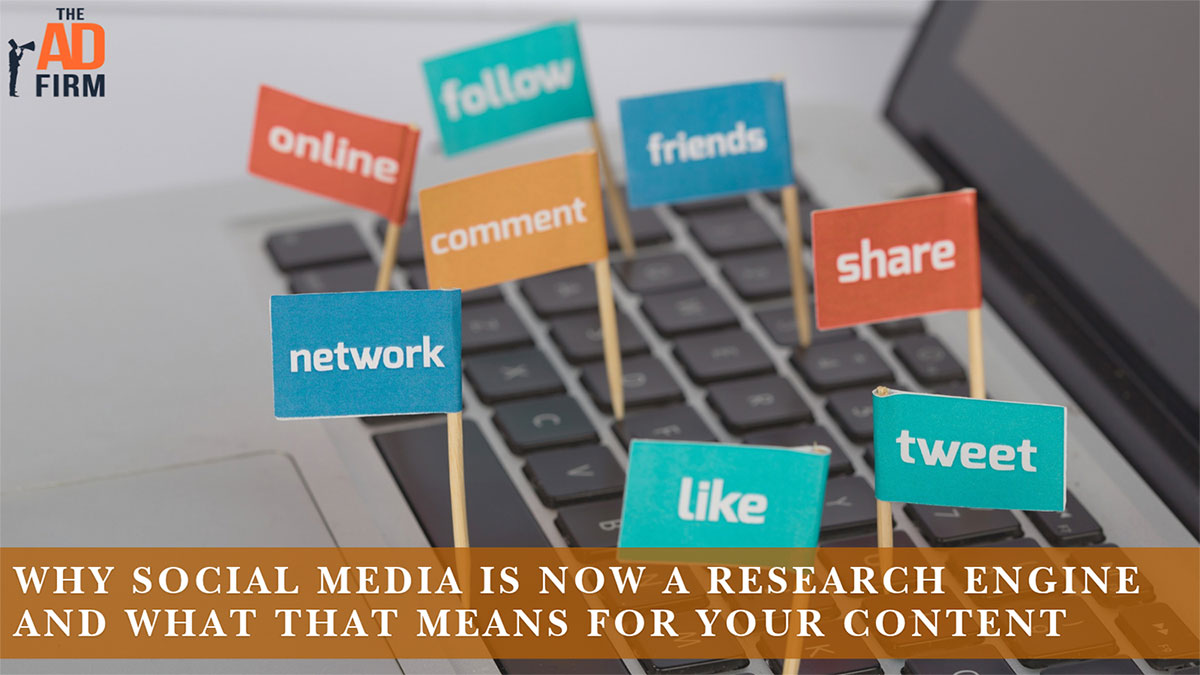
People aren’t just scrolling social media. They’re searching it. When someone wants to know which local restaurant is actually worth visiting, how a skincare product performs on real skin, or what a digital marketing agency’s work looks like in practice, a growing number of them go to TikTok, Instagram, or YouTube before they ever open Google.
This isn’t a fringe behavior. It’s a documented shift in how people find information, evaluate options, and make decisions. For businesses, it means the content strategy built entirely around traditional search is no longer reaching everyone who’s looking.
How Did Social Media Become a Search Engine?
The mechanics behind this shift aren’t complicated. Social platforms have always had search bars, but users started relying on them differently once the content being indexed shifted from text posts to short-form video. A text answer requires reading and interpretation. A 60-second video answer from a real person doing the thing, reviewing the product, or walking through the process delivers something text rarely can: visible proof.
Platform algorithms reinforced the change. TikTok, Instagram Reels, and YouTube Shorts are optimized to surface relevant content based on topic signals, not just follower relationships. A user searching “how to set up Google Ads” on TikTok gets results similar in intent to a Google search, but delivered as a practitioner walkthrough rather than a listicle. The content is faster to consume, easier to trust, and harder to fake.
The Role of Authenticity in Social Search
One reason social media has gained ground as a research tool is the trust gap that grew around polished brand content. Users learned to recognize corporate messaging dressed up as educational content. They started seeking out creators who had actually done the thing, bought the product, or experienced the service. That preference for authentic, peer-level information mirrors exactly what people have always wanted from word-of-mouth but delivers it at scale.
For businesses, this creates a specific challenge. Audiences are sophisticated enough to recognize when content is performance rather than substance. The businesses building reach on social search aren’t necessarily the ones with the biggest budgets. They’re the ones producing content that demonstrates real expertise or genuine experience in the service area.
Advance Your Digital Reach with The Ad Firm
- Local SEO: Dominate your local market and attract more customers with targeted local SEO strategies.
- PPC: Use precise PPC management to draw high-quality traffic and boost your leads effectively.
- Content Marketing: Create and distribute valuable, relevant content that captivates your audience and builds authority.
Which Platforms Are Being Used as Search Engines?
TikTok is the clearest example of the trend, used by a significant portion of younger audiences as a first-stop research tool for product discovery, service comparisons, and local recommendations. Instagram functions similarly through Reels and keyword-indexed captions. YouTube has operated as a search engine for over a decade, and its short-form product has pulled even more discovery-intent traffic onto the platform.
Pinterest remains a strong research engine for visual categories like design, home renovation, and style. Reddit surfaces in social search behavior differently, operating more like a peer-review forum that users reach through traditional search engines and then use as a research layer. The platforms aren’t interchangeable. Each one attracts distinct intent types and audience segments, which means a blanket social presence doesn’t automatically translate to social search visibility. That’s the gap between having a social presence and having social search visibility, and it’s where content strategy decisions start to matter.
What Does the Shift to Social Search Mean for Your Content Strategy?
A content strategy designed for traditional search prioritizes keyword-matched written content, backlinks, and on-page optimization. Those elements still matter for Google, but they do almost nothing for social search visibility. Social search has its own ranking signals: engagement rate, save volume, shares, video completion rate, caption text, on-screen text, spoken audio, and how consistently a creator or brand publishes in a specific topic area.
The practical implication is that content built purely to rank on Google won’t automatically surface in a TikTok or Instagram search. The format is wrong, the signals are different, and the trust mechanism is different. A business that has invested in SEO content creation for traditional search now needs to think about how its expertise translates into a format that social search platforms can index and surface.
Conversational Keywords Over Keyword Targeting
Traditional keyword research identifies the phrases people type into search bars. Social search behavior tends to be more conversational, more question-based, and more specific to lived experience. A user doesn’t search “digital marketing agency services” on TikTok. They search “does social media marketing actually work for small businesses” or “what does an agency actually do for your brand.”
Maximize Your Online Impact with The Ad Firm
- Local SEO: Capture the local market with strategic SEO techniques that drive foot traffic and online sales.
- Digital PR: Boost your brand’s image with strategic digital PR that connects and resonates with your audience.
- PPC: Implement targeted PPC campaigns that effectively convert interest into action.
That conversational specificity should inform captions, video titles, and on-screen text. Captions that mirror how a real person would ask the question give the platform’s algorithm clearer signals about what the content answers. For businesses offering social media marketing services, this means the captions accompanying client results videos or process explainers should use language that matches how a potential client would phrase the question, not how a brand would phrase the answer.
Content Format and Indexability
Social platforms index more than the visible text of a caption. TikTok and Instagram index on-screen text overlays, auto-generated captions from spoken audio, and hashtags. YouTube indexes both the video transcript and the written description. This means spoken words carry search weight. A practitioner walking through a process on camera is generating indexable text with every sentence, which is why tutorial-style content consistently surfaces in social search results.
Longer-form content serves a different function. YouTube videos that run 8 to 15 minutes can target question-based queries with the depth that earns strong placement in YouTube search and increasingly in Google search as well. The format decision should follow the query: fast how-to questions fit short-form, complex comparisons or process explanations benefit from longer formats. Medium-length video, roughly 3 to 8 minutes, works for topic explanations where the audience is ready to invest time. A specific enough query signals that level of intent.
Is Social Media Replacing Google?
No, but it’s capturing a layer of search intent that Google used to own by default. Younger audiences, particularly Gen Z, show a documented preference for social platforms as the starting point for local business discovery, product research, and service comparisons. That doesn’t mean they stop using Google entirely. It means the first-touch point for discovery has shifted for certain query types and certain demographics.
For businesses, the more useful framing isn’t replacement but fragmentation. Search intent is now distributed across more surfaces than it was five years ago. A potential client might find a business first through a YouTube walkthrough, cross-reference it on Instagram, check Google reviews, and then visit the website. Every surface in that chain is a research moment. Missing from social doesn’t mean invisible everywhere, but it does mean missing the first impression for a growing share of the audience.
Enhance Your Brand Visibility with The Ad Firm
- SEO: Enhance your online presence with our advanced SEO tactics designed for long-term success.
- Content Marketing: Tell your brand’s story through compelling content that engages and retains customers.
- Web Design: Design visually appealing and user-friendly websites that stand out in your industry.
Where Google Still Dominates
Transactional queries, high-stakes decisions, and searches requiring authoritative documentation still route heavily through Google. Someone looking for a contract lawyer, a medical specialist, or a government service is not starting their search on TikTok. Organic SEO and paid search remain the dominant channels for capturing this type of intent.
The overlap matters too. Google increasingly indexes social content. YouTube videos appear in Google search results. Google’s own AI Overviews pull from editorial and social sources. A piece of content that performs well in social search can develop traditional search traction over time, which gives well-structured social content compounding value that pure social engagement alone doesn’t produce. That cross-platform compounding effect is exactly why adaptation looks like expansion rather than replacement.
How Should Businesses Adapt Their Content Strategy?
The starting point isn’t abandoning what’s working in traditional search. It’s identifying the query types and audience segments that are shifting to social and building content that reaches them there. For most businesses, that means producing video content in the formats native to the platforms their audience uses, treating captions and on-screen text with the same keyword intentionality applied to written SEO content, and publishing consistently enough to build topical authority within the platform’s algorithm.
Brand management across social search surfaces requires consistency in how the business presents its expertise. A brand that publishes inconsistently across topic areas, or that shifts from educational content to promotional content without establishing credibility first, won’t build the algorithmic standing that earns it.
High-Intent Content That Earns Saves and Shares
The engagement signals that social platforms weight most heavily for search visibility aren’t likes or comments. Saves signal that a user found the content useful enough to return to. Shares go a step further: they tell the platform the content was worth putting in front of someone else. Both signals tell the platform’s algorithm that the content provides genuine utility, which is exactly the behavior search surfaces try to reward.
Strengthen Your Online Authority with The Ad Firm
- SEO: Build a formidable online presence with SEO strategies designed for maximum impact.
- Web Design: Create a website that not only looks great but also performs well across all devices.
- Digital PR: Manage your online reputation and enhance visibility with strategic digital public relations.
Content built around specific how-to queries, honest comparisons, and process explanations earns saves: it answers a question the audience wanted answered. For a social media marketing for small business strategy, that might look like short videos explaining what a content calendar actually does for a business, how to measure if a social post is working, or what realistic results from paid social advertising look like over 90 days. Each of those answers a specific question a business owner would search.
Building Topical Authority Across Platforms
Social search algorithms, like traditional search algorithms, reward consistent expertise in a defined topic area. A business that publishes 30 videos on one subject builds stronger platform authority than one that publishes five videos across six unrelated topics. Topical concentration signals to the algorithm that the account is a reliable source for a specific subject.
That principle applies to generative engine optimization as well. AI models that synthesize recommendations across the web give more weight to sources with a consistent, recognizable expertise signal. A business building topical depth in social search content is simultaneously building the kind of cross-web authority that influences AI citation and recommendation. The signals converge more than they diverge.
Does Social SEO Work Differently for B2B vs. B2C Businesses?
The platforms and formats differ, but the underlying logic is the same: social search surfaces content that matches what users are actively looking for, weighted by engagement signals and topical consistency. B2C businesses tend to find social search traction faster. The query types that dominate social platforms, product discovery, local recommendations, and lifestyle decisions, map naturally to their offer.
B2B businesses face a different distribution of query intent. The questions a business owner or marketing manager searches on social tend to be process-oriented and outcome-specific. “What does an SEO agency actually do” and “how to know if your social media is working” are the types of searches that bring B2B service businesses social search visibility. LinkedIn also functions as a social search engine within professional contexts, indexing posts and articles in ways that surface relevant content to professionals researching solutions.
Transform Your Online Strategy with The Ad Firm
- SEO: Achieve top search rankings and outpace your competitors with our expert SEO techniques.
- Paid Ads: Leverage cutting-edge ad strategies to maximize return on investment and increase conversions.
- Digital PR: Manage your brand’s reputation and enhance public perception with our tailored digital PR services.
What Content Formats Work Best for Social Search?
Format follows intent. Short-form video, specifically clips running 30 to 90 seconds, performs well for direct how-to queries and fast comparisons. The answer needs to fit the attention window of someone actively searching, which is narrower than the window of someone passively browsing a feed. Medium-length video, roughly 3 to 8 minutes, works for topic explanations where the audience is ready to invest time. A specific enough query signals that level of intent.
Static image carousels on Instagram function as visual listicles and earn strong save rates when each slide delivers a standalone piece of information. Text-based posts on LinkedIn index well for professional queries when they use the same conversational language structure that characterizes strong social search content. Across all platforms, the format that consistently underperforms is the one built for brand promotion over audience utility. Promotional content gets scrolled past in social search. Users searching for information are not in a receptive state for advertising. The formats that win are the ones that answer a question, not the ones that interrupt someone mid-search.
Social Search Is a Visibility Layer, Not a Replacement Strategy
The businesses treating social search as a separate, optional channel are making the same mistake brands made in the early days of mobile optimization: assuming a channel is too new to matter yet. Search behavior has fractured. The people looking for what you offer are now looking in more places than they were before.
A content strategy that accounts for social search doesn’t require abandoning what works in traditional search. It means taking those same principles (authority, relevance, and utility) and applying them to the formats and surfaces that a growing portion of the audience now uses as their primary research tool. For businesses ready to build that kind of multi-surface visibility, The Ad Firm builds the content presence that earns it. Contact The Ad Firm to start.
Frequently Asked Questions
Does social media search affect a business’s Google rankings?
Not directly, but the relationship is real. Social signals are not a confirmed Google ranking factor. Content that earns engagement on social platforms tends to earn backlinks and brand mentions as a downstream effect, both of which do influence Google rankings. A business with strong social search presence also builds online reputation management signals across platforms, which feeds into how Google evaluates entity credibility.
Streamline Your Digital Assets with The Ad Firm
- Web Development: Build and manage high-performing digital platforms that enhance your business operations.
- SEO: Leverage advanced SEO strategies to significantly improve your search engine rankings.
- PPC: Craft and execute PPC campaigns that ensure high engagement and superior ROI.
Should every business be on every social platform?
No. Platform selection should follow audience research. A business serving other businesses will find more search-relevant reach on LinkedIn and YouTube than on TikTok. A retail business with a strong visual product will find more utility in Instagram and Pinterest. Spreading content thinly across every platform produces weak topical authority on all of them. Concentration on two or three platforms where the target audience actually searches is more effective than nominal presence everywhere.
How often does a business need to post to build social search visibility?
Consistency matters more than volume. Platform algorithms reward accounts that publish regularly within a defined topic area over accounts that post in bursts and then go quiet. For most businesses, three to five posts per week on a primary platform is enough to build algorithmic recognition of topical authority, provided the content stays within a focused subject area rather than spreading across unrelated topics.
Can social media content replace a website for search visibility?
No. Social platforms control the distribution of content posted on them and can change their algorithm, restrict reach, or suspend accounts at any point. A website remains the owned asset that anchors search visibility. Social content should drive awareness and discovery, with the website serving as the destination where intent converts. A business investing in social search content without a strong website is building on rented ground.