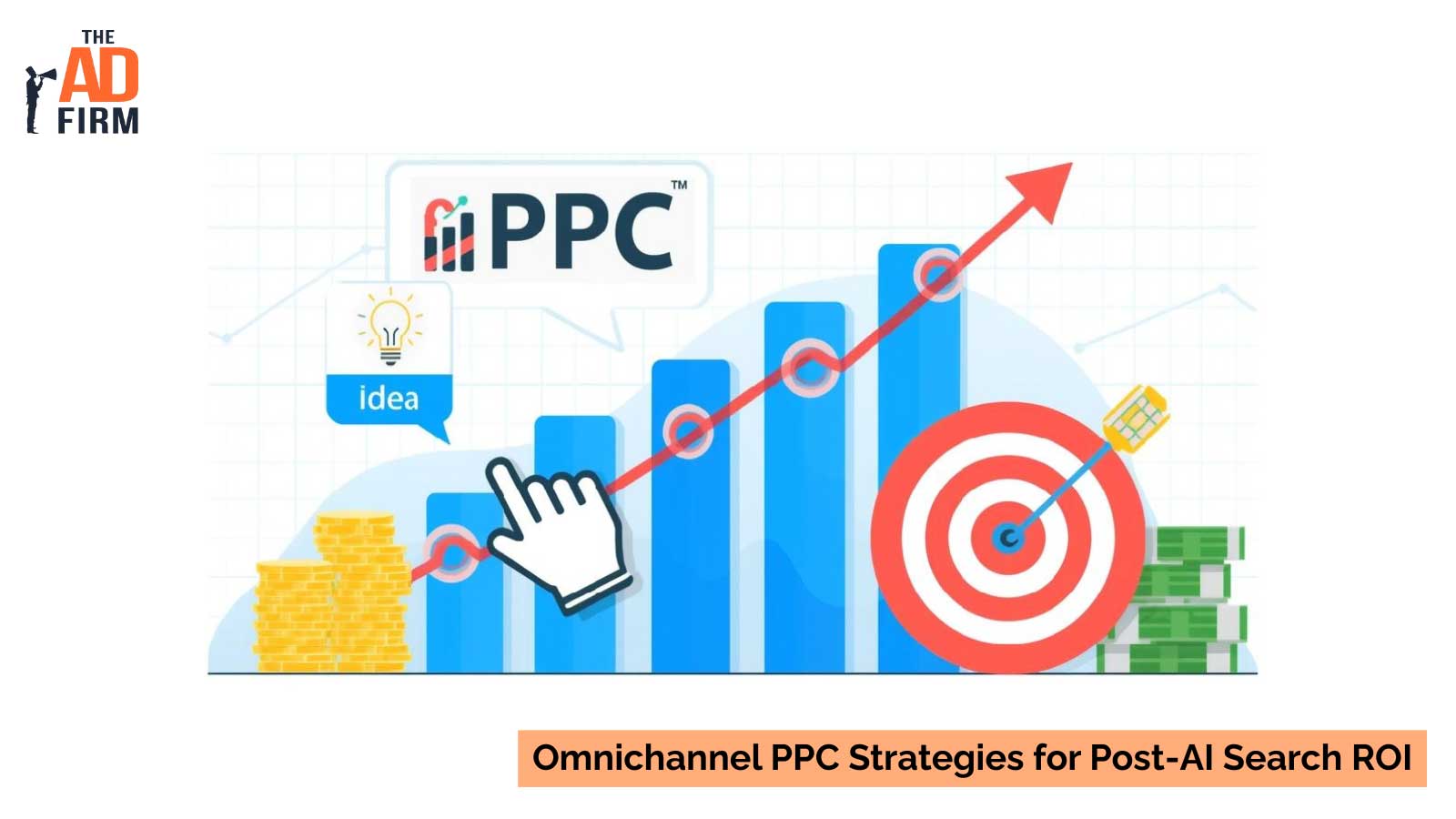
Omnichannel PPC improves post-AI search ROI by aligning paid media across platforms where buyers research, compare, and convert. Single-channel campaigns no longer keep pace with Google’s Search Generative Experience and AI Overviews. These changes reduce traditional click dependency and reward advertisers who influence decisions across multiple touchpoints. Brands running siloed Google Ads or isolated social campaigns now see higher acquisition costs and stalled conversion growth.
This approach relies on shared data, automation, and intent signals to control spend, reinforce messaging, and guide users through purchase journeys shaped by AI-driven search behavior. A performance-driven PPC agency applies these inputs to coordinate decisions across channels, align exposure with buyer readiness, and maintain consistency as users move between discovery and conversion. By influencing demand earlier and supporting it across touchpoints, this structure protects ROI in competitive markets shaped by machine-led results.
What Omnichannel PPC Means in the Age of AI Search
Omnichannel PPC means your paid media operates as a single buying experience rather than a collection of disconnected campaigns. Each platform contributes intent signals and engagement data that support the same objective, allowing paid media to advance buyers deliberately through discovery, evaluation, and conversion.
In an AI-driven search environment, this approach is no longer optional. AI summaries and predictive results shape decisions before a click happens, which raises the bar for coordination. A strong PPC company builds campaigns that account for how you are discovered, evaluated, and chosen across channels.
When someone searches for your product, an AI-generated response may appear before any ad. That same user may later encounter your brand through a paid social impression, watch a YouTube pre-roll, and convert days later through remarketing. Omnichannel PPC structures these interactions into a deliberate sequence so each touchpoint builds context, reinforces relevance, and moves the buyer closer to action.
Unified Campaigns Across Google, Meta, YouTube, and Beyond
Platforms now support shared optimization across formats and placements. Google Ads Performance Max illustrates this shift by distributing budgets across Search, Display, YouTube, Gmail, and Maps based on real-time conversion signals rather than isolated channel performance.
This model works when PPC services operate on shared inputs that AI can evaluate together. Unified structures allow algorithms to sequence messages, adjust bids based on downstream behavior, and shift spend as users move between discovery and intent stages. Instead of competing campaigns, you gain a system that prioritizes the next most effective touchpoint for each user.
Within this framework, PPC strategies align inputs such as:
- Search campaigns: Capture high-intent demand when users signal readiness to buy, protecting efficiency as AI reduces organic visibility.
- Social ads: Build awareness and consideration earlier in the journey, lowering friction when users encounter your brand again.
- Video pre-roll: Reinforce trust and clarity through repeated exposure, improving recall during later conversion moments.
- Display retargeting: Re-engage interested users who did not convert initially, shortening the path back to purchase.
- Shopping feeds: Surface product-level intent with pricing and availability to support faster decisions from ready buyers.
How AI Search Changes Ad Visibility and Attribution
Search Generative Experience (SGE) and AI Overviews now resolve many searches directly within results pages. Traditional ad placements appear lower, and visibility depends on relevance, message consistency, and brand familiarity built across channels. PPC strategies must account for this shift by reinforcing search exposure with upstream demand signals rather than relying on isolated clicks.
Attribution has changed alongside visibility. Last-click models fail to reflect how people convert in AI-influenced journeys. A buyer may interact with a search ad, engage with a retargeting impression, watch a video, and convert later through branded search. Multi-touch attribution clarifies which channels introduce demand, which support consideration, and which close conversions. This insight guides budget allocation and creative prioritization across the full funnel.
ALSO READ: How AI Is Changing A/B Testing in PPC Campaigns
Building a Data Foundation for AI-Powered PPC
AI-driven PPC succeeds or fails based on data quality. Machine learning systems optimize when they receive accurate, complete signals tied to revenue outcomes. When inputs lack clarity or consistency, automation prioritizes volume over value. Strong performance starts with a deliberate data foundation that reflects how buyers actually convert.
Data infrastructure should be addressed before scaling spend. Clean, connected inputs allow bidding systems to prioritize revenue, qualified leads, and long-term value instead of surface-level engagement metrics.
Integrating CRM, GA4, and Conversion Pixels
Disconnected systems create blind spots that inflate costs. When your Customer Relationship Management (CRM), Google Analytics 4 (GA4), and conversion tracking operate independently, AI cannot see the full customer journey. This limitation weakens optimization and obscures which interactions contribute to revenue.
The best PPC agency will help you:
- GA4 + Google Ads integration: Share conversion and engagement data with Google Ads so bidding decisions reflect real user behavior.
- CRM data imports: Attribute offline sales and qualified leads back to paid campaigns, which improves revenue tracking.
- Server-side tracking: Preserve data accuracy as browsers restrict client-side cookies and scripts.
- Unified customer profiles: Connect touchpoints across channels, so AI recognizes patterns that signal high-value buyers.
This structure replaces assumptions with measurable inputs. Campaigns gain clearer insight into which users drive value, allowing AI to prioritize similar profiles during optimization.
Creating First-Party Audiences That Fuel AI Targeting
Third-party cookies continue to fade, and reliance on deprecated tracking methods limits performance. Advertisers maintaining efficiency invest in first-party data that informs targeting without external identifiers.
First-party audience development focuses on:
- Customer match audiences: Use your CRM data to reconnect with known buyers and leads across ad platforms.
- Lookalike audiences: Reach new prospects who share traits with your highest-value customers.
- Behavioral segments: Group users by on-site actions and engagement signals that indicate intent.
- Predictive audiences: Let AI identify users most likely to convert based on historical outcomes.
These assets compound over time. As audience quality improves, bidding systems identify higher-value prospects earlier in the funnel, improving efficiency without expanding reach indiscriminately.
LEARN MORE: How to Structure a Winning PPC Campaign From Scratch
AI Automation as Your Campaign Co-Pilot
AI automation now drives the most efficient PPC programs. Manual bidding and isolated creative testing cannot respond fast enough to auction-level signals. AI evaluates intent, device, location, timing, and predicted conversion value in real time. This capability directly influences how efficiently your budget converts into revenue.
As automation handles execution, strategy defines outcomes. Campaign performance improves when objectives, inputs, and constraints remain clear and consistent.
Real-Time Bidding and Dynamic Creative Optimization
AI-assisted optimization performs best when campaigns supply the right inputs consistently. Clear conversion goals tell bidding systems what success looks like. Reliable tracking allows algorithms to prioritize revenue signals instead of surface-level engagement. Sufficient conversion volume stabilizes learning, while creative variety gives AI the flexibility to match intent with relevance. Short-term volatility during learning phases gives way to efficiency once models adapt.
Automated bidding strategies such as Target ROAS and Maximize Conversions optimize each auction against defined outcomes. These systems shift spend toward users most likely to convert profitably rather than evenly distributing budget across traffic sources.
Dynamic creative optimization extends this logic to messaging. Responsive formats test headlines, descriptions, and visuals simultaneously, serving combinations that align with user intent. Performance improves when campaigns introduce fresh creative inputs that AI can evaluate against real conversion data.
Governance, Measurement, and Platform Adaptation
Automation performs best within defined constraints. Guardrails help AI prioritize efficiency without sacrificing scale or brand integrity.
Effective governance includes:
- Budget caps: Control spend during learning phases so automation does not overextend.
- ROAS thresholds: Protect profitability by signaling acceptable efficiency levels.
- Audience exclusions: Reduce low-quality exposure and wasted impressions.
- Placement controls: Maintain brand standards across display and partner networks.
Micro-conversions strengthen optimization by giving AI earlier quality signals. Actions such as email signups, content engagement, and product page views help systems identify high-intent users before purchase. Platforms continue to release AI and privacy updates throughout the year, making regular review and adjustment necessary to maintain performance.
RELATED ARTICLE: How AI-Powered Keyword Targeting Is Revolutionizing PPC Campaigns
Cross-Channel Orchestration for Full-Funnel Coverage

Each paid channel serves a specific role within the buying journey. Google Search captures active demand. Meta and Instagram influence interest and consideration. LinkedIn reaches professional decision-makers. YouTube builds familiarity through narrative and repetition.
Cross-channel orchestration aligns these roles so channels reinforce one another rather than compete. Sequencing logic, shared audiences, and consistent positioning create momentum as users move from discovery to conversion.
Aligning Google Intent with Meta Lifestyle and LinkedIn Professional Context
Users arrive on each platform with different expectations. Messaging performs best when it matches that context. What converts on search differs from what influences consideration on social or credibility on professional networks.
Effective execution adapts positioning by channel:
- Search: Direct response messaging that answers specific queries, which converts users already looking for a solution.
- Meta / Instagram: Visual storytelling that highlights emotional or lifestyle outcomes, which builds desire before intent peaks.
- LinkedIn: Professional framing that speaks to efficiency, growth, or risk reduction, which resonates with B2B buyers.
- YouTube: Longer-form narratives that build familiarity and trust, which support future conversion moments.
When these messages follow a deliberate sequence, engagement builds naturally. Retargeting and reinforcement feel relevant rather than repetitive because each touchpoint advances the same objective.
Video and Display Amplification of Search Campaigns
Search captures demand, while video and display expand it. Users exposed to brand messaging before searching often convert at higher rates when they encounter search ads later. Familiarity reduces friction and improves performance across metrics.
Layered strategies typically include:
- Pre-roll video: Introduce your brand to qualified audiences, which builds recognition before intent forms.
- In-feed video: Educate users with demonstrations or use cases, which strengthen consideration.
- Display remarketing: Maintain visibility with past visitors, which shortens the return path to conversion.
- Discovery ads: Reach users researching related topics, which expands your demand pool.
AI coordinates delivery across these channels by identifying which users are most likely to convert and when. Budget allocation adjusts automatically to prioritize paths that lead to revenue.
Personalization at Scale Without Privacy Violations
Buyers expect relevance when they interact with ads. Personalized messaging consistently outperforms generic creative, yet privacy standards limit how data can be used. Performance depends on delivering relevance through compliant signals rather than invasive tracking.
Personalization strategies now rely on first-party data and contextual indicators that respect user preferences.
Dynamic Ads Using Behavior, Location, and Device Indicators
Dynamic formats adjust creative elements automatically using permitted signals. Product feeds reflect browsing behavior. Location cues tailor messaging. Device indicators optimize layouts and calls to action.
Effective personalization includes:
- Abandoned cart retargeting: Reconnect with users who showed purchase intent, which recovers revenue without intrusive tracking.
- Location-based messaging: Serve offers tied to proximity, which increases relevance for local searches and visits.
- Device-optimized creative: Match layouts and CTAs to how users browse, which improves engagement rates.
- Behavior-based triggers: Respond to on-site actions like page depth or repeat visits, which signal readiness to convert.
These elements allow AI to assemble personalized ad experiences at scale without manual intervention.
Balancing Personalization with First-Party Data Compliance
Privacy-safe targeting supports both performance and trust. Transparent data practices reduce regulatory risk and strengthen long-term relationships.
Execution focuses on:
- Server-side tracking: Preserve measurement accuracy while honoring browser and platform privacy controls.
- Consent-based remarketing: Engage only users who opt in, which aligns targeting with user expectations.
- Contextual targeting: Match ads to content themes instead of personal identifiers, which maintains relevance without personal data.
- Privacy-compliant modeling: Use AI-driven conversion modeling within Google Analytics 4 to fill gaps responsibly.
These methods preserve personalization capability while keeping campaigns adaptable as privacy standards evolve.
Build Your Omnichannel PPC Strategy for Lasting ROI
AI-driven search has reshaped paid advertising. Businesses relying on single-channel execution face rising acquisition costs and diminishing returns. Sustainable growth now depends on systems that align data, automation, sequencing, personalization, and measurement.
The Ad Firm builds omnichannel PPC strategies designed for this environment. Our pay-per-click agency connects Google Ads, Meta, YouTube, and LinkedIn into unified frameworks that support how buyers research, evaluate, and convert. We implement the data foundations AI requires and optimize continuously as platforms evolve.
If you want stronger returns from paid media, aligning your strategy with how AI-driven advertising works today is the next step. Contact The Ad Firm today to discuss how our pay-per-click services can support your omnichannel goals and protect long-term ROI.