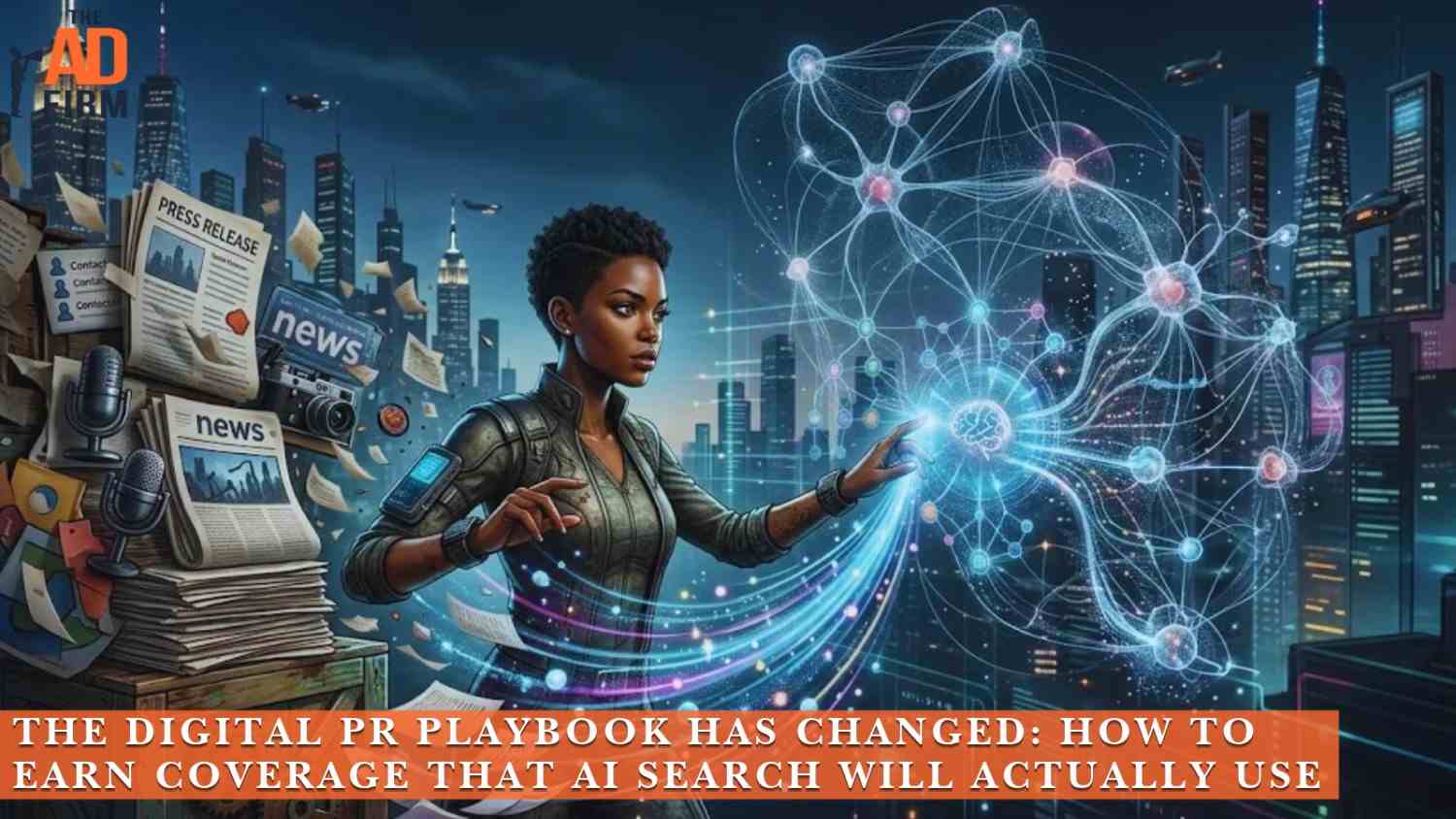
Digital PR used to be a fairly linear game. Pitch a journalist, earn a mention, collect a link, watch domain authority climb. That model hasn’t disappeared, but it now misses the bigger opportunity. The question brands need to answer in 2026 isn’t only “did we get a link?” It’s “will an AI engine cite us when someone asks about our industry?”
Those are different goals. They require different tactics. And most PR strategies haven’t caught up yet.
What Changed in How AI Engines Source Information?
Large language models don’t browse the web in real time the way a search crawler does. They’re trained on large bodies of text, then updated through retrieval systems that pull from sources they’ve already learned to trust. When someone asks ChatGPT, Gemini, or Google AI Overviews to recommend a service or explain a concept, the models surface brands and experts they’ve encountered consistently across independent, high-authority sources.
That’s the key shift. It’s not about any single article or any single link. What moves the needle is how often your brand name, your experts’ names, and your specific claims appear across the sources AI engines already treat as credible. A brand mentioned in three independent analyst reports, two trade publications, and a widely cited roundup carries more weight in an LLM’s training data than one brand with a hundred lower-tier backlinks.
Why Unlinked Mentions Now Matter
Traditional SEO heavily depended on hyperlinks as signals of authority. An unlinked mention in a top-tier publication used to feel like a wasted opportunity. AI search flips that calculus. Large language models read text, not link graphs. A brand name cited in a Forbes analysis, attributed in a Gartner report, or quoted in an industry roundup all contribute to what the model understands about that brand’s credibility, with or without a link accompanying the mention.
This doesn’t make links irrelevant. Backlinks still drive referral traffic and contribute to traditional search rankings. The point is that unlinked editorial mentions in trusted sources now carry real weight in the AI visibility equation, and most brands aren’t pursuing them deliberately.
ALSO READ: Local Sponsorship Links That Improve Local SEO Trust
Advance Your Digital Reach with The Ad Firm
- Local SEO: Dominate your local market and attract more customers with targeted local SEO strategies.
- PPC: Use precise PPC management to draw high-quality traffic and boost your leads effectively.
- Content Marketing: Create and distribute valuable, relevant content that captivates your audience and builds authority.
The Sources AI Engines Trust Most
Not all coverage is equal in this context. AI models weight sources based on editorial standards, topical authority, and institutional credibility baked into their training data. Industry analyst reports from firms like Forrester, structured expert roundups in trade publications, and academic or research-adjacent sources all tend to carry more influence than generalist news placements or brand-controlled content.
A mention in Search Engine Journal, an attribution in a B2B software review roundup, or an expert quote in a marketing trade piece will do more for AI visibility than a dozen press release syndications. The coverage needs to exist in places the model already treats as authoritative on your topic.
How Is Digital PR Strategy Different for AI Search?
The old playbook was built around journalists and links. The new one centers on ecosystems and attributed expertise. That’s a meaningful shift in where you invest time and what you optimize for.
Under the traditional model, a single high-profile placement was a clear win. Under the AI search model, a single placement is a starting point. The real signal is a pattern of coverage: your brand name appearing across multiple independent sources, your experts quoted in context, your specific claims referenced and attributed. AI engines look for consensus. One strong article doesn’t create it.
Attributed Expert Quotes Over Generic Brand Mentions
A generic brand mention tells a language model that your company exists. An attributed expert quote tells it something more specific: that a named person at your company holds authority on a given topic. That distinction matters because AI models are built to surface expertise, not just brand recognition.
When your SEO director is quoted by name in a marketing publication explaining a specific tactic, and that same quote appears in two or three independent outlets, the model starts to associate that person with your brand and your topic. Generic press mentions don’t build that association. Named, context-specific quotes do. Media training for subject-matter experts, and a clear process for getting them in front of journalists with something specific to say, sits at the center of a modern digital PR operation.
Review Platforms and Structured Roundups
Industry analyst reports and structured review platforms have outsized influence on AI citation because of how they’re constructed. They’re categorical, comparative, and authoritative by design. When a model is asked to recommend a service provider, it leans heavily on sources that already organize information in that format.
Elevate Your Market Presence with The Ad Firm
- SEO: Boost your search engine visibility and supercharge your sales figures with strategic SEO.
- PPC: Target and capture your ideal customers through highly optimized PPC campaigns.
- Social Media: Engage effectively with your audience and build brand loyalty through targeted social media strategies.
Getting your brand into legitimate review ecosystems, earning verified client reviews on credible platforms, and being included in analyst-driven comparison roundups all contribute more directly to AI visibility than most traditional earned media placements. The goal is to appear in the sources a model would naturally consult if it were trying to give a thorough, balanced recommendation.
ALSO READ: Unlinked Brand Mentions for Local SEO and GEO
Does Traditional Link Building Still Matter?
Yes. The shift toward AI visibility doesn’t erase the value of backlinks for traditional search. Google’s ranking systems still use links as a core signal, and organic search from traditional results remains a significant traffic source for most businesses. The argument isn’t to abandon link acquisition. It’s to expand what you’re optimizing for.
A high-authority editorial link that includes an attributed expert quote, appears in a publication with topical credibility, and sits within content that gets referenced by others is doing double duty. It contributes to traditional domain authority and to AI visibility. The best digital PR strategies in 2026 are designed to earn that kind of placement, not one or the other.
What Low-Quality Link Building Costs You Now
The downside of low-quality link building has always been limited to modest SEO risk. In the AI search context, it carries an additional cost: it consumes budget and effort that could be spent building the kind of coverage that actually influences AI citations. A thousand links from low-authority directories do nothing for your brand’s presence in LLM training data. Fifty attributed mentions in credible editorial outlets do.
Digital PR strategy, then, needs to be evaluated against two outcomes: traditional ranking performance and AI citation frequency. Tactics that only serve one without the other are a partial solution.
How Do You Know If Your PR Is Working for AI Visibility?
Measurement is the part of this shift that most teams haven’t solved yet. Traditional PR metrics like domain rating lift, referring domain count, and referral traffic are still valid but incomplete. Knowing if your earned coverage is translating into AI visibility requires a different set of signals.
Media intelligence platforms like Meltwater let you track where brand mentions and expert quotes are appearing across editorial sources, giving you a clearer picture of the coverage ecosystem your brand is building. On the AI side, tools like Otterly.AI and similar LLM monitoring platforms let you query AI engines directly for branded and category-level searches and track how often your brand surfaces in responses over time. Running those queries on a consistent schedule, across ChatGPT, Gemini, and Perplexity, gives you a working benchmark.
Transform Your Online Strategy with The Ad Firm
- SEO: Achieve top search rankings and outpace your competitors with our expert SEO techniques.
- Paid Ads: Leverage cutting-edge ad strategies to maximize return on investment and increase conversions.
- Digital PR: Manage your brand’s reputation and enhance public perception with our tailored digital PR services.
The Metrics That Actually Reflect AI Citation Potential
Brand mention volume in high-authority editorial sources is one signal worth tracking alongside traditional link metrics. Expert quote attribution frequency across independent publications is another. Share of voice in AI-generated responses for your core topic categories is the most direct measure, even if the methodology is still maturing.
None of these replace traditional SEO reporting. They sit alongside it. The brands that will lead in AI search visibility over the next few years are the ones building measurement infrastructure now, before the space becomes more competitive and before the tools for tracking it become widely standardized.
Is Your Brand Showing Up Where AI Engines Are Looking?
Building coverage that AI search actually uses takes a different approach than most brands are running today. It requires a shift toward ecosystem thinking: earning mentions across a cluster of trusted independent sources, prioritizing attributed expert commentary over generic placements, and tracking brand presence inside AI-generated responses as a real metric.
The Ad Firm’s digital PR services are built around exactly that standard. Operating since 2009 with a 4.9-star rating across more than 1,400 reviews and Google Premier Partner status, we work with brands that want visibility in both traditional search and the AI engines that are reshaping how buying decisions get made. If you want to know how your brand is currently showing up in AI search, or you’re ready to build a PR strategy designed for it, our generative engine optimization team is ready to dig in.
Frequently Asked Questions
What is digital PR for AI search?
Digital PR for AI search is the practice of earning editorial coverage across trusted, independent sources in a way that increases how often AI engines like ChatGPT, Gemini, and Google AI Overviews cite your brand. It prioritizes attributed expert quotes, unlinked brand mentions in high-authority publications, and placements in review ecosystems and analyst reports over traditional link-volume metrics.
Do unlinked brand mentions help with AI visibility?
Yes. Large language models read and weight text, not just hyperlink signals. An unlinked brand mention in a credible editorial source contributes to how an AI model understands your brand’s authority on a topic. Pursuing editorial placements specifically for mention value, not just link value, is now a core part of an effective digital PR strategy.
Boost Your Business Growth with The Ad Firm
- PPC: Optimize your ad spends with our tailored PPC campaigns that promise higher conversions.
- Web Development: Develop a robust, scalable website optimized for user experience and conversions.
- Email Marketing: Engage your audience with personalized email marketing strategies designed for maximum impact.
Which publications matter most for AI search visibility?
Publications with strong topical authority, editorial standards, and institutional credibility carry the most weight. Industry analyst reports, verified review platforms, trade publications with clear editorial criteria, and research-adjacent sources carry more influence over AI citation than general news outlets or lower-authority media. The specific publications that matter most vary by industry and topic area.
How is AI search visibility measured?
The most direct method is querying AI engines like ChatGPT, Perplexity, and Gemini with brand-specific and category-level prompts, then tracking how often your brand appears in the responses over time. Media intelligence tools like Meltwater track brand mention volume and placement quality across editorial sources. LLM monitoring platforms like Otterly.AI are purpose-built for tracking citation frequency across multiple AI models.