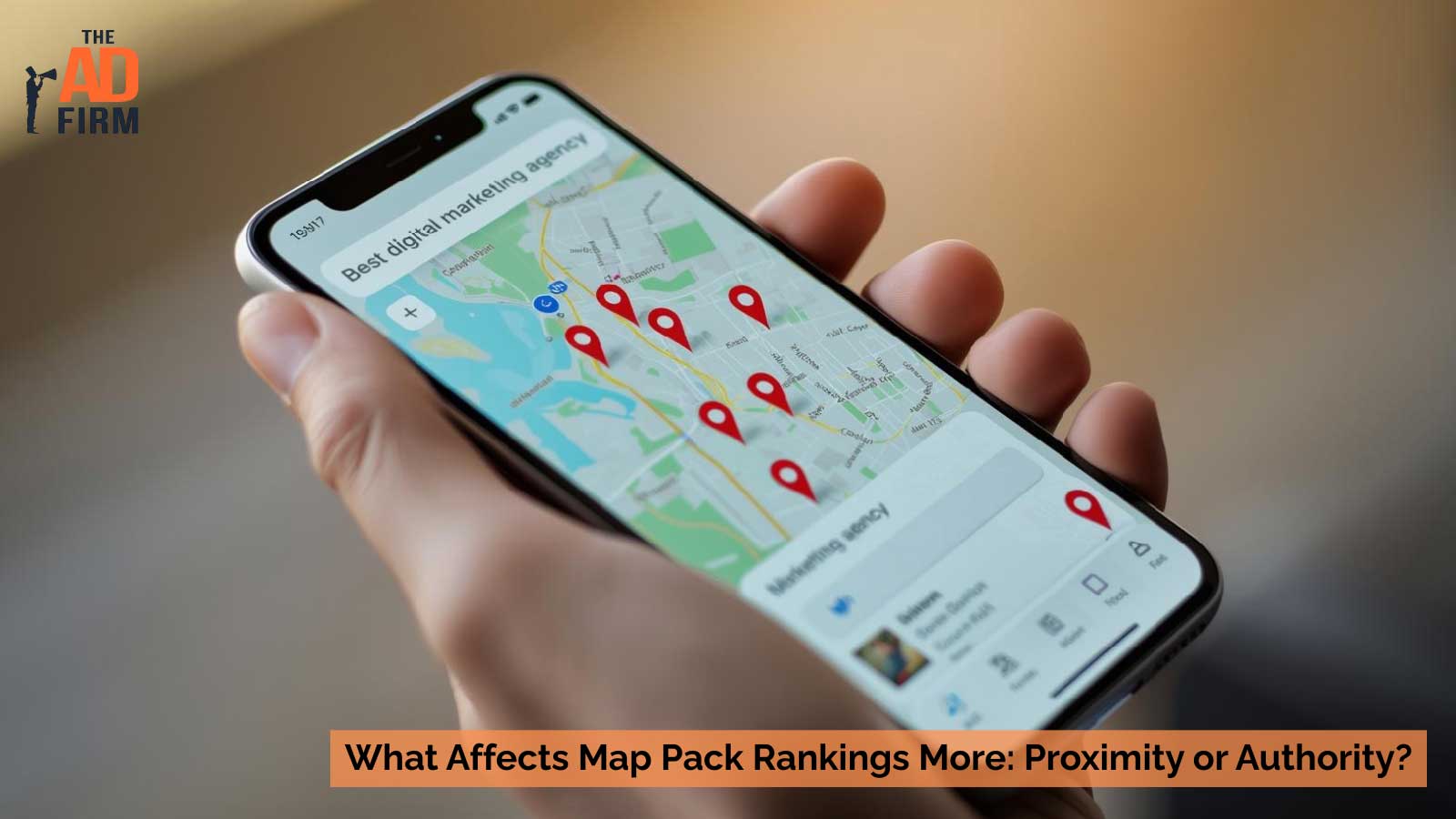
Authority carries more weight than proximity in map pack rankings.
Many businesses assume distance alone determines who appears at the top of local results. That assumption leads to confusion when a competitor farther away outranks a closer location. Google does factor proximity into map pack placement, yet it rarely acts as the deciding signal.
Authority signals drive consistent visibility. Reviews, citation accuracy, business prominence, and overall online reputation shape how Google evaluates trust and relevance. Businesses with stronger authority often outrank closer competitors. A skilled local SEO company understands how these work together and how to strengthen them systematically.
This blog breaks down how map pack rankings work, clarifies which factors influence visibility, and outlines practical ways to compete more effectively in local search.
How Google Decides Who Ranks in the Local Pack
Google’s local algorithm evaluates businesses using a defined set of ranking signals before displaying map pack results. Understanding these helps direct optimization efforts toward the factors that influence visibility and lead generation.
The Three Pillars of Local Search Rankings
Google ranks local businesses using three connected criteria:
- Relevance: Measures how closely a business matches the search intent. Google Business Profile categories, on-site keywords, service pages, and business descriptions drive these indicators.
- Proximity: Measures the physical distance between the searcher and the business location. Searches with geographic intent or “near me” language increase proximity influence.
- Prominence: Measures authority and trust. Reviews, citation consistency, backlinks, brand mentions, and overall digital footprint strengthen this dimension.
These criteria work together. Weak relevance limits visibility regardless of location. Strong prominence offsets distance gaps. Effective local SEO services prioritize balanced optimization across all three pillars rather than relying on proximity alone.
Why These Factors Don’t Carry Equal Weight
Industry studies and ranking analyses show a clear imbalance in how Google evaluates these signals. Proximity typically accounts for roughly 15–20% of ranking influence, while prominence often represents 50% or more of the algorithm’s weighting.
This helps explain why authority-driven strategies outperform location-based assumptions in competitive markets. Businesses that strengthen prominence and relevance compete effectively even when distance is not in their favor.
ALSO READ: Knowing More about How the Local Search Algorithm Works
The Proximity Factor: What You Can and Can’t Control
A business address anchors location, but proximity does not operate in isolation. Understanding its limits helps clarify where distance matters and where it quickly fades as a differentiator.
How Distance Influences Local Search Visibility
Google calculates proximity using the searcher’s location at the time of the query. Desktop searches rely on IP-based location or a defined city or area. Mobile searches rely on GPS data, which provides precise coordinates.
Distance differences matter most when competitors operate miles apart. When businesses sit only blocks from each other, proximity creates little separation, and other ranking elements determine order.
Expanding Your Perceived Service Area
Although a physical address stays the same, Google’s understanding of where a business operates can expand. Several actions support visibility beyond an immediate address:
- Google Business Profile service areas: Define coverage zones for service-based businesses.
- Location-specific landing pages: Demonstrate experience and results in target cities or neighborhoods.
- Geographic content signals: Mention service areas naturally within site content.
- Localized citations and reviews: Earn mentions that include specific service locations.
These efforts help narrow the gap in bordering areas where distance differences remain minimal. A local SEO agency can identify which nearby markets present the strongest opportunity.
How Authority Signals Influence Map Pack Rankings
Authority creates the strongest competitive advantage in local search. These elements shape trust, relevance, and long-term visibility.
Review Volume, Quality, and Response Patterns
Reviews act as public trust indicators, and Google evaluates them closely. In competitive markets, top-ranking businesses commonly maintain a 4.5+ star average supported by substantial review volume.
Recent reviews influence rankings more than older ones. Detailed written feedback carries more weight than star-only ratings. Natural mentions of services or locations within reviews reinforce relevance.
Google also evaluates review growth patterns. Steady, organic activity signals legitimacy, while sudden spikes can raise quality concerns. Sustainable authority depends on consistent, authentic feedback.
Citation Consistency Across Directories
Business listings act as validation points across the web. Consistent name, address, and phone information across trusted directories reinforces legitimacy.
Inconsistencies weaken authority. Formatting variations, outdated information, or duplicate listings fragment citation value. Accuracy delivers more impact than volume, with clean listings on reputable platforms outperforming mass placement on low-quality sites.
Internal Linking and Local Authority
Internal linking strengthens topical relevance and distributes authority across a site. Linking service pages to related city pages, neighborhood content, and case studies signals depth and expertise.
Links perform best when placed naturally within relevant content. Anchor text should describe the destination clearly without forcing keywords. Strategic internal linking elevates priority pages and reinforces local relevance across the site.
LEARN MORE: Local Citation Management (Local SEO Guide)
When Proximity Wins vs. When Authority Dominates

Search intent determines which ranking factor carries more influence in a given query.
Immediate-Need Searches Favor Closeness
Urgent searches, such as emergency services late at night, place greater emphasis on proximity. Mobile searches and explicit “near me” queries amplify distance considerations due to precise GPS data.
Even in these scenarios, poor reviews or a weak reputation limit visibility. Proximity affects eligibility, but reputation still influences which businesses appear prominently.
Research-Mode Queries Reward Reputation
Searches using comparison language, such as “best digital marketing agency in Irvine,” indicate evaluation intent. Users prioritize credibility and quality over convenience.
In these cases, reputation-driven signals shape rankings. Businesses with strong reviews, consistent citations, and established prominence separate themselves from closer competitors.
Execution and Performance Tracking
Understanding when proximity or authority matters sets the foundation. Execution determines whether those insights translate into measurable gains.
Google Business Profile Mastery
An optimized Google Business Profile supports relevance and engagement by reinforcing trust and accuracy at the primary data source Google references.
Effective management includes:
- Completing every available field, including hours, services, attributes, products, and your business description.
- Selecting accurate primary and secondary categories that reflect what you actually offer.
- Publishing regular posts with updates, promotions, or announcements.
- Uploading high-quality photos of your exterior, interior, team, and completed work.
- Monitoring and responding to questions in the Q&A section.
- Enabling booking or appointment features when applicable.
Active management signals legitimacy and keeps information aligned with user expectations.
Review and Citation Execution
Apply review strategies discussed earlier through structured requests, simplified submission paths, and timely responses. Maintain citation accuracy by prioritizing data aggregators, major platforms, and industry-specific directories. Regular audits help prevent dilution.
Measuring Local SEO Performance
Track metrics that reflect real progress:
- Map pack rankings: Position changes for primary keywords across target areas.
- Google Business Profile insights: Review search impressions, direction requests, calls, and profile interactions.
- Review performance: Track review volume growth, rating stability, and velocity trends.
- Citation accuracy: Measure consistency and coverage using citation audit tools.
- Local organic traffic: Analyze visits to the city and location-specific landing pages.
- Conversions: Attribute calls, form submissions, and bookings to local traffic sources.
Consistent tracking reveals performance trends and guides refinement. A data-driven SEO company uses these insights to scale results responsibly.
RELATED ARTICLE: Advanced Internal Linking Tactics to Deepen Local Topical Relevance
Strengthen Your Map Pack Position Today
You cannot control physical distance, but you can build authority that drives visibility. Businesses that invest in reviews, accurate listings, content structure, and profile optimization consistently improve map pack performance.
Top-performing local strategies prioritize long-term prominence over short-term tactics. A focused local SEO service aligns execution with measurable growth.
The Ad Firm applies these principles through data-driven local SEO services designed to improve rankings, leads, and measurable growth. Request a local SEO audit to see how an experienced local SEO company can help strengthen your map pack presence and sustain local growth.