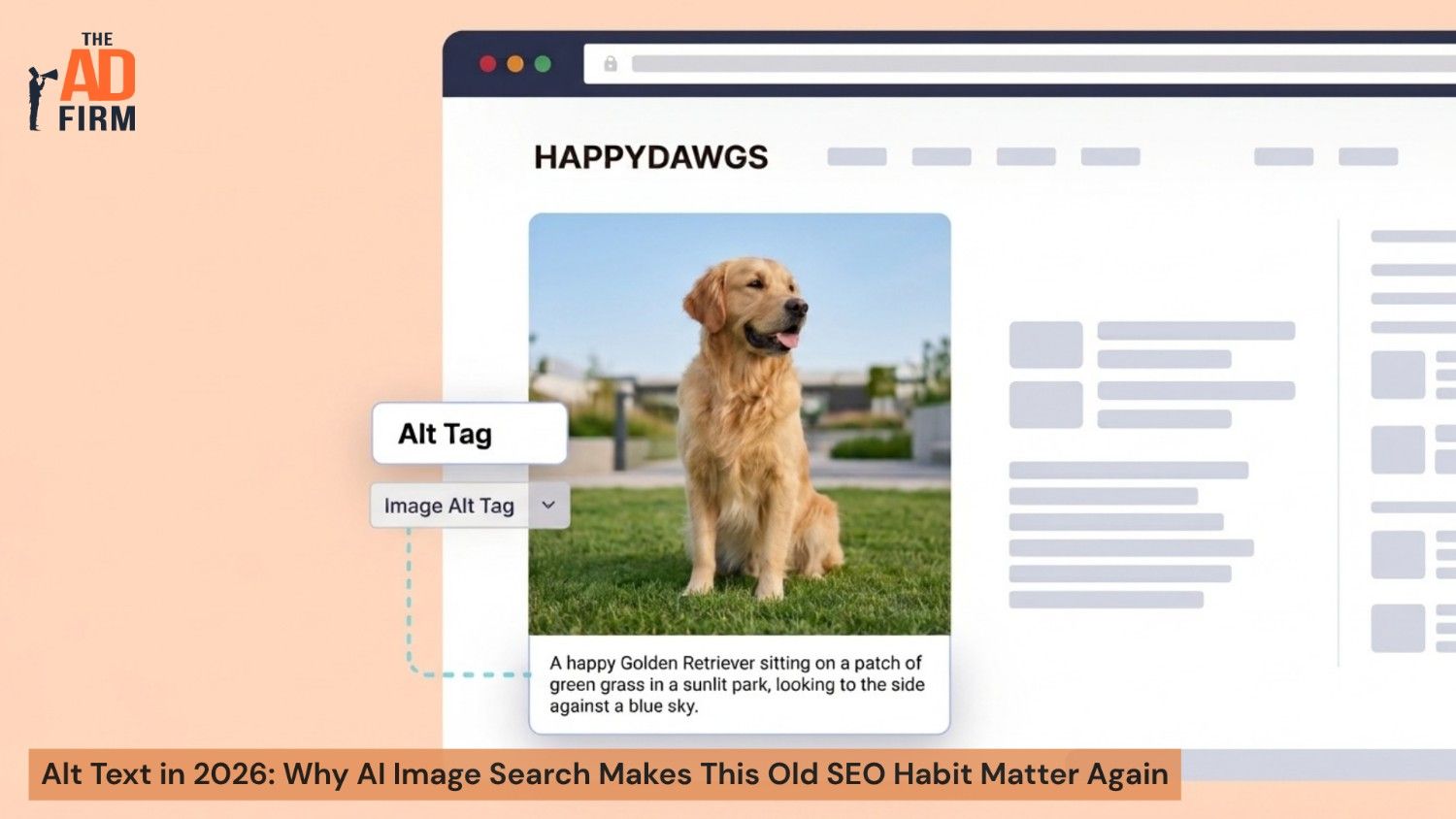
Modern AI search systems don’t just index what a page says. They analyze what it shows. Image alt text gives those systems the written context they need to connect your visuals to the right searches, visual results, and AI-generated answers. That’s why it carries more weight in AI SEO than it did when search was purely text-based.
For your website, that means alt text supports accessibility while also helping search systems interpret your visual content. As AI layers into search, the clearer your image signals are, the more accurately search systems can classify your content and surface it in the right contexts.
How Does Traditional Image SEO Compare to Multimodal AI Search?
Traditional image SEO focused mainly on accessibility and helping search engines understand images. Today, AI SEO adds another layer. Multimodal search systems can evaluate images together with other page signals to understand how visual content fits into the page as a whole.
That changes how you should approach alt text. Modern image optimization prioritizes accurate descriptions over keyword-led alt text while keeping accessibility at the center.
| Feature | Traditional Image SEO | Multimodal AI Search in 2026 |
| Primary goal | Support accessibility and help search engines understand an image | Support accessibility while helping AI systems connect visual content with the wider page topic |
| Keyword strategy | Include relevant terms when they naturally describe the image | Focus on accurate descriptions rather than keyword-led alt text |
| Length | Keep descriptions concise and useful | Use enough detail to describe the image clearly, then place added context in nearby copy |
How Do Search Engines Interpret Image Alt Text in AI Search?
Search engines interpret your image alt text alongside the image itself and the content around it. Computer vision can identify visible objects, colors, shapes and patterns, while alt text gives those visual signals clearer written context.
For example, an image may show a black office chair. Computer vision can recognize the chair and some of its visible features. Descriptive alt text can identify details such as black mesh, adjustable lumbar support and ergonomic design. That helps search systems connect what they see with relevant topics such as office furniture, posture support or product features.
Search engines may also look at signals such as:
- Your image filename
- The caption
- Nearby page copy
- The overall page topic
- Relevant structured data
The strongest AI SEO setup comes from making these signals consistent. Your alt text should describe what the image actually shows, while the surrounding content explains why that image matters to the page.
Alt text does not guarantee that your image will rank, appear in an AI-generated answer or earn a citation. Search engines use many signals when deciding which images best match a query.
This also matters for visual search. When someone uploads an image or searches with a camera, the search engine compares visual features with indexed content. Specific descriptions can help connect visible objects with relevant products, services or topics.
ALSO READ: Your Images Are Invisible to AI Search. Here’s What Google Says to Fix That
What Is the Standard Framework for Writing Machine-Readable Alt Text?

A useful framework for alt text is simple: subject + relevant detail + context. Start with what your image actually shows, then add details that help someone understand why it matters.
Instead of alt=”digital marketing team”, use alt=”The Ad Firm SEO specialists reviewing a client’s local search performance dashboard.” You also do not need to start with “image of” or “photo of” because screen readers already identify the element as an image.
Google does not set a strict character limit for alt text. Keep your description as short as the image allows while still communicating its meaning. A simple product image may need only a short phrase. A detailed chart or diagram may require more explanation in the surrounding copy.
A useful test is to ask yourself whether someone could understand the important part of your image without seeing it. If the description gives them that information naturally, you are on the right track.
What Details Should You Include in Alt Text?
Add only the details that help distinguish the image or connect it to your page.
Useful details may include:
- Material or color
- Action taking place
- Product or equipment type
- Relevant setting
- Stage of a service or process
- Visible feature or result
Add entity context only when it accurately describes what appears in the image. A brand, service, equipment type or location can add useful information when it is visible and relevant.
Avoid forcing keywords into the description. Google warns against stuffing alt attributes with keywords because it creates a poor user experience and may make a page appear spammy. Your alt text should describe the image first. The AI SEO benefit follows from accuracy, relevance and accessibility.
That same principle supports multimodal SEO, where your images, text and video reinforce the same topic instead of sending mixed signals.
When Should You Use Empty Alt Text for Decorative Images?
Use an empty alt attribute, written as alt=””, when an image is purely decorative and adds no information your reader needs.
Examples may include decorative shapes, background graphics or visual separators. An empty alt attribute tells assistive technology that it can skip the image.
Empty alt text is different from leaving the alt attribute out. Using alt=”” intentionally identifies the image as decorative.
Do not use empty alt text for images that communicate useful information. Your product photos, service images, charts, diagrams and process visuals should have descriptive alt text when they add meaning to the page. Removing those descriptions takes away useful context for both accessibility and search understanding.
How Should You Audit Visual Metadata on High-Value Pages?
Start your audit with a site crawl or CMS export. Look for common issues that weaken image understanding, including:
- Missing alt text
- Generic filenames such as jpg
- Duplicate alt text across multiple images
- Images used as Cascading Style Sheets (CSS) backgrounds instead of standard HTML image elements
- Alt text that does not match what the image actually shows
Pay close attention to CSS background images. Search engines have fewer signals to work with when important visuals appear only through CSS, and screen readers may not receive meaningful information from them. If an image carries useful content, use an appropriate HTML image element and provide descriptive alt text.
Next, prioritize the pages that have the strongest connection to revenue. Your service pages, location pages, product pages, case studies and comparison content should come first. Focus on images that show:
- Services being performed
- Products or equipment
- Key process steps
- Completed results
- Relevant local details
For example, a case study image with alt text that describes the completed work gives both users and search systems more useful information than a generic label such as “project photo.” The commercial laundry case study shows how visual content can support a page built around a specific service and business outcome.
Check for conflicts between the image description and the page around it. An accurate description should support the page topic rather than introduce unrelated terms or details.
After making changes, track image impressions, Google Images traffic, accessibility issues and engagement on pages that rely heavily on visuals. These metrics can help you see which updates improve visibility and where your image strategy still needs work.
READ MORE: 5 Ways Image Metadata Helps Improve Search Rankings
Modernize Your Visual AI SEO Strategy With The Ad Firm
Images are part of your site’s authority signals now, not just decoration. When your alt text, filenames, and page context all reinforce the same topic, AI search systems have a clear, reliable picture of what your content covers and who it serves.
An experienced AI SEO agency can help you identify where image optimization fits into your broader strategy and where technical, content or structured data improvements may also support visibility.
Contact The Ad Firm to audit your visual search readiness and strengthen your image strategy for 2026.