Google’s March 2026 Core Update rolled out from March 27 through April 8, 2026, lasting 12 days. It affected more than 55% of websites and roughly 80% of top-ranked results, with about 24% of pages in the top 10 dropping out of the top 100. Google rewarded sites with original insight, strong E-E-A-T signals, and clear topical authority. Sites with weak, low-value content and scattered topical coverage lost the most ground. Recovery starts with a Google Search Console audit, not site-wide edits.
If your traffic shifted in late March or early April, you are not imagining it. In this post, we break down what changed, why your site may have gained or lost visibility, and what an experienced SEO company would review before recommending major changes. The goal is to help you understand the update, protect your organic traffic, and make decisions based on data instead of panic.
A Quick Look at the Google March 2026 Core Update
The Google March 2026 Core Update rolled out over 12 days, starting March 27 and ending April 8, 2026, coming in slightly under Google’s two-week estimate. Early reporting described it as one of the more disruptive updates in recent years, with noticeable movement across traditional search rankings and AI-powered results.
Rollout Window and Scope
Google announced the update through its Search Status Dashboard. Independent tracking reported that it affected more than 55% of websites and about 80% of top-ranked results, with roughly 24% of pages in the top 10 dropping out of the top 100. This was Google’s first announced core update of 2026, following a spam update earlier in March and the February 2026 Discover update, so some sites may have felt several changes close together rather than one isolated shift.
Where This Update Sits in Google’s Recent Pattern
The December 2025 core update ended on December 29. The June 2025 update ended July 17. The March 2025 update ended on March 27. The gap before March 2026 was longer than the SEO industry expected, and longer gaps often produce broader re-evaluations. A sudden drop does not always signal a content failure, and a sudden gain does not always mean the work is done.
What Google Is Actually Rewarding This Time
Across early reporting and Google’s own guidance, one theme stands out: quality now has a higher bar. Sites gaining visibility are giving users something more useful, more specific, and harder to copy at scale.
Information Gain and Original Insight
Pages with new data, fresh perspectives, or firsthand experience performed better than pages that simply summarized what already ranked. Google has pointed in this direction for years through its helpful content guidance, but this update made the difference visible in search results. Content with proprietary research, original case studies, or expert commentary has a stronger chance of gaining visibility. Roundup-style posts that mostly reword the current top-ranking pages are more likely to lose ground.
E-E-A-T as a Site-Wide Signal
Expertise, experience, authority, and trust (E-E-A-T) now matter beyond traditional Your Money or Your Life topics. Specialized, expert-led sites are gaining ground against generalist publishers in many industries. Strong trust signals include detailed author bios, relevant credentials, expert quotes, cited firsthand data, and a clear history of publishing around a defined topic. Sites that hide authors or rely on generic “staff” bylines weaken those trust signals at the moment they matter most.
Topical Authority Over Keyword Coverage
Sites with deep coverage around one core topic outperformed sites with scattered content across unrelated subjects. Google is looking for clear topical ownership, not just keyword coverage. A strong content structure includes a main pillar page supported by related articles that answer specific questions, explain subtopics, and guide users through the decision process. For your content strategy, depth matters more than volume.
Why Some Sites Dropped (And Why It Wasn’t a Penalty)
Core updates are broad re-evaluations, not targeted penalties. Recovery requires a stronger quality strategy, not a quick fix.
Low-Value Content Became More Vulnerable
This update does not mean AI content is banned. It means low-value content is easier to spot and harder to rank, regardless of how it was created. AI-assisted workflows can still work when real expertise, editorial review, and human judgment shape the final piece. The problem starts when sites publish large amounts of generic content without subject matter input or a clear reason for the page to exist. If your content reads as if it could appear on any competitor’s site, it needs stronger insight, dated examples, named sources, or process detail.
Scattered Topical Coverage and Weak Authority Signals
Sites that publish across unrelated categories make it harder for Google to understand where they have true expertise. Cannibalization makes the problem worse: when several weak pages target similar queries, they compete with each other instead of building authority together. Consolidating those pages into one stronger resource creates a better experience for users and clearer signals for search engines.
Technical Friction as a Quality Floor
Technical SEO still matters as a foundation. Core Web Vitals, crawl issues, duplicate content, weak internal linking, and poor site structure can limit performance even when the content is strong. Fast, stable pages help Google evaluate your site efficiently, but technical cleanup alone will not recover rankings if the content lacks depth, originality, or trust.
How the Update Connects to AI Search and AI Overviews
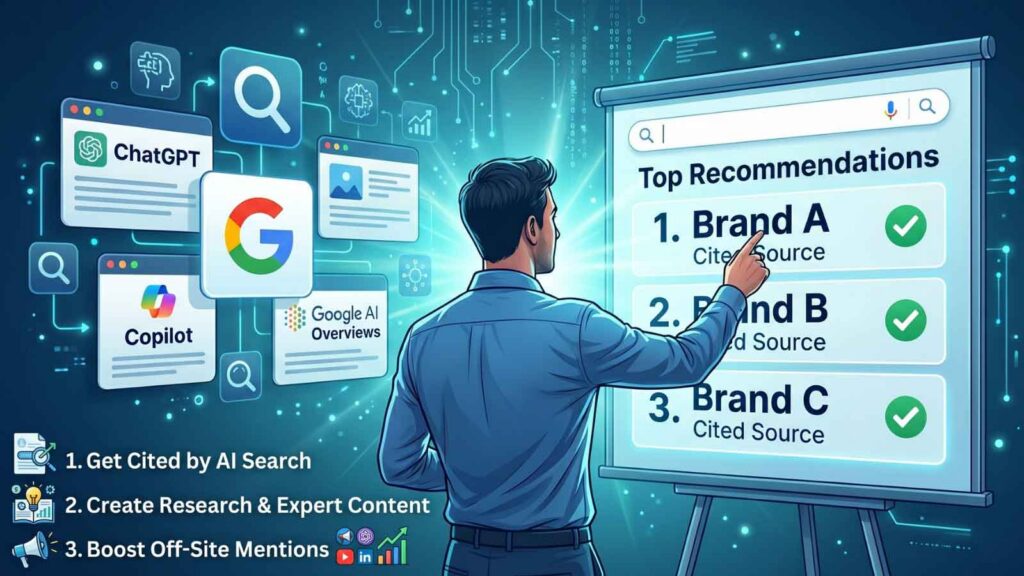
In 2026, ranking in the standard search results is no longer the only goal. AI Overviews and AI-driven search experiences shape what your audience sees before they ever click a result.
Why Citation-Worthy Content Now Matters as Much as Ranking
AI systems are more likely to use content that is specific, balanced, and easy to understand. For AI Overviews, proof works best when it sits close to the answer it supports. Place statistics, named sources, definitions, and examples near the claims they clarify instead of burying them in paragraphs later.
To make your content easier to evaluate and cite, focus on:
- Clear headings that organize the page logically
- Concise answer blocks near the top of important sections
- Supporting details placed near the claims they explain
- Focused sections that avoid padding or repeated points
Search Is Becoming More Intent-Dense
Google’s AI features are shaping results around user intent, including the follow-up questions someone may ask next. A page can no longer focus on one keyword phrase and ignore the larger search journey. Anticipate the next question a reader is likely to ask after the first answer. This is where traditional SEO, GEO, and AEO begin to overlap, and the same qualities that help a page rank also help it appear in AI-generated answers.
READ MORE: How Back Button Hijacking Could Tank Your Google Rankings in 2026
A Practical Recovery Plan If Your Rankings Dropped
There is no instant fix, but there is a smart way to respond. Diagnose the issue before making changes, so you do not make your site harder to evaluate during an already volatile period. A reliable SEO agency or internal team should follow a clear sequence: review the data, identify patterns, prioritize high-value pages, and improve the areas that show real weakness.
Audit Before You Edit
Hold off on sweeping changes until rankings stabilize, then prioritize your audit by business value and traffic loss. Mid-rollout edits confuse the data and slow recovery.
Use Google Search Console to Map the Damage
Google Search Console is one of your first stops after a core update. Compare performance from late March 2026 forward against the prior period and look for patterns.
Focus on:
- Pages with the largest drops in clicks and impressions
- Queries that lost ranking position
- Pages that gained visibility
- Pages marked as crawled but not indexed
- Pages newly excluded from Google’s index
The pages that gained matter as much as the pages that dropped. They show what Google now prefers for your topic, format, structure, or depth.
Strengthen Content Proof and Differentiation
Pages with shallow coverage need more than the extra word count. Add one or two concrete proof elements to each: a short expert quote, a before-and-after example, a dated statistic, a customer scenario, or a clearer process explanation. Answer the main question early, then address related questions readers are likely to ask next.
Build Around Topic Clusters, Not Disconnected Keywords
Strong SEO in 2026 depends on more than publishing separate pages for separate keywords. Choose the pillar pages that matter most to revenue, then map supporting articles to each pillar, remove overlap, consolidate weak pages, and use internal links to show how the topics connect. Organize content so each page supports a larger topic and builds authority over time. This is the kind of structured process a top SEO company should prioritize over volume alone.
ALSO READ: Local SEO Link Building for Stronger Local Authority
What This Means for Your 2026 SEO Strategy
For 2026, your SEO strategy should treat each major page as both a ranking asset and a source that Google’s answer systems can understand. Every priority page needs a clear purpose, visible expertise, supporting proof, and a structure that helps users find answers quickly.
Treat Core Updates as Quality Reviews, Not Surprises
Core updates re-evaluate if your site still deserves its current visibility compared with other results in the market. Instead of asking what Google “changed,” ask what your competitors now prove better than you do.
Invest in Content Google Can Trust, Extract, and Reuse
The strongest content works for both traditional results and AI Overviews when it gives users useful information in a format that search systems can interpret.
Four inputs matter most:
- Depth: Cover the topic fully, not lightly.
- Originality: Add insight that your competitors do not have.
- Structure: Use clear headings, direct answers, and logical flow.
- Credentials: Connect content to real expertise, experience, or sources.
Content that includes all four gives your site a stronger chance to hold visibility through future updates.
Start With a Clear Post-Update SEO Audit
Recovery after a core update takes more than quick edits or guesswork. Rankings can shift because of content quality, topical structure, technical SEO, AI search visibility, or a mix of several issues. A post-update audit shows which pages lost visibility, which competitors gained ground, and what changes will likely have the strongest impact.
If your traffic shifted after April 8, The Ad Firm can help you start with a data-backed review before making major updates. If you are comparing the best SEO company, the best SEO agency, or managing the work in-house, the next step is the same: identify what changed, understand why, and prioritize the fixes that protect your organic visibility.
Contact our team today to schedule a post-update SEO audit and get a clear plan for where to start.