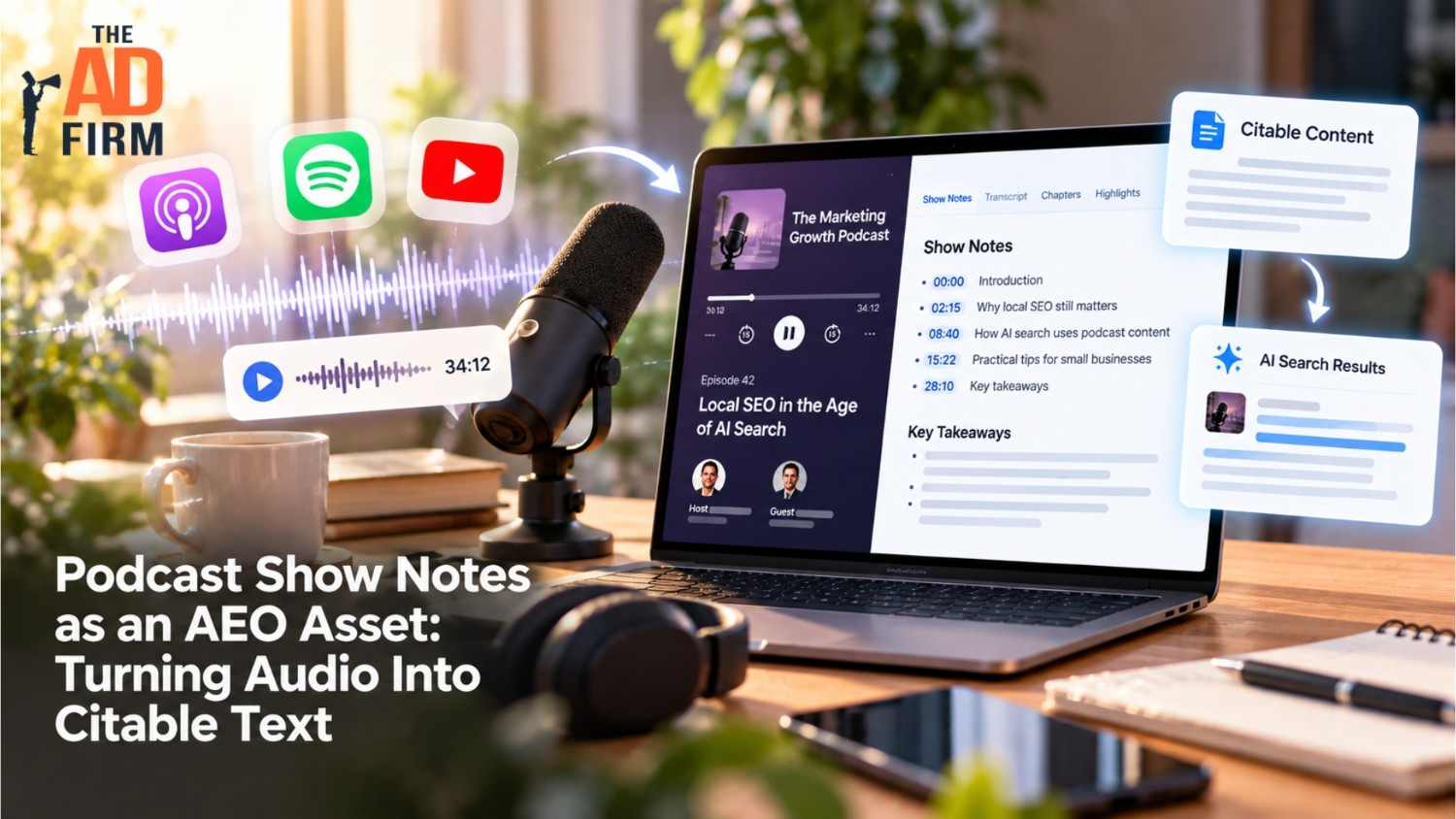
Podcast show notes become an answer engine optimization (AEO) asset when they turn what was said in an episode into clear, structured text that AI engines can find, understand, and cite. Most answer engines work from text, so audio on its own is largely out of reach. A well-written show notes page with summaries, key answers, and a transcript gives them something to quote.
For businesses that already produce a podcast, this is one of the most underused content opportunities available. Each episode is a recorded conversation full of answers to customer questions, and show notes turn those answers into pages that can be searched and cited. That makes them a natural extension of AI SEO.
Why Audio Alone Is Hard for AI Engines to Cite
When someone asks ChatGPT, Perplexity, or Google’s AI features a question, those systems look for passages of text that answer it. A podcast player embedded on a page offers little of that. Unless the words spoken in the episode exist as text on a crawlable page too, an AI engine has nothing to pull from.
This creates a gap. A home inspector might spend ten minutes on a podcast explaining the warning signs of foundation problems in older homes. That segment could be one of the best answers available on the topic, but if the episode page only says “In this week’s episode, we talk about foundations,” none of that expertise can be found or cited.
Show notes close that gap by converting spoken answers into written ones.
What Makes Show Notes Useful for AEO?
Most show notes are written as a quick teaser for listeners. AEO-focused show notes serve a second audience: search systems looking for clear answers.
It helps to know what “citable” means in practice. AI engines tend to pull short, self-contained passages that answer a specific question directly. A paragraph that only makes sense after reading the three before it is hard to quote, but a two- or three-sentence answer that stands on its own is easy to extract and attribute.
Useful show notes usually include:
- A specific episode title that names the topic, not just the episode number
- A summary paragraph that states the main takeaway in plain language
- Question-based headings that reflect what listeners actually ask
- Direct answers under each heading, written as short standalone paragraphs
- Guest details, including their name, role, company, and area of expertise
- Timestamps that connect each topic to its place in the audio
- A full transcript, cleaned up for readability
- Links to related resources, services, and earlier episodes
How to Turn a Podcast Episode Into Citable Text
Turning an episode into citable text is mostly a matter of process. The six steps below take you from a raw recording to a structured page that readers can skim and AI engines can quote.
Strengthen Your Online Authority with The Ad Firm
- SEO: Build a formidable online presence with SEO strategies designed for maximum impact.
- Web Design: Create a website that not only looks great but also performs well across all devices.
- Digital PR: Manage your online reputation and enhance visibility with strategic digital public relations.
1. Start With the Questions the Episode Answers
Before writing, list the questions the episode actually answers. Review the transcript or your recording notes and pull out every point where the host or guest explains something clearly.
For an episode of a payroll software company’s podcast, those questions might include:
- How should small businesses classify contractors versus employees?
- What payroll records do businesses need to keep, and for how long?
- What are the most common payroll mistakes during tax season?
Each question can become a heading on the show notes page.
2. Write Direct Answers Under Each Heading
Under each question, write a short paragraph that answers it directly, based on what was said in the episode. Lead with the answer, then add the supporting detail or example the guest gave.
These answers should make sense on their own. An AI engine may quote a single paragraph without the rest of the page, so avoid phrases like “as we discussed earlier” that depend on surrounding context.
Learn More: How to Write a Direct Answer Paragraph That AI Engines Can Extract
3. Clean Up the Transcript
Automatic transcription tools produce a useful first draft, but raw transcripts are full of filler words, false starts, and misheard terms. Industry jargon, product names, and guest names are especially easy to get wrong.
A light edit for accuracy and readability makes the transcript far more useful. You don’t need to rewrite the conversation, only correct errors and remove distractions so the meaning comes through clearly.
Label every speaker consistently as you edit. Use a clear format such as “Host: [Full Name]” and “Guest: [Full Name]” throughout the transcript, rather than switching between first names, initials, or “Speaker 2.” Consistent labels let AI engines attribute each statement to the right person, which matters most when the guest is the expert you want quoted.
4. Identify the Guest Clearly
Expert attribution matters. When show notes name the guest, their title, their company, and what they’re known for, an AI engine has a clearer basis for connecting that expertise to a specific person and topic.
A line such as “Maria Lopez, a licensed structural engineer with 15 years of residential inspection experience” carries much more weight than “our guest Maria.”
Maximize Your Online Impact with The Ad Firm
- Local SEO: Capture the local market with strategic SEO techniques that drive foot traffic and online sales.
- Digital PR: Boost your brand’s image with strategic digital PR that connects and resonates with your audience.
- PPC: Implement targeted PPC campaigns that effectively convert interest into action.
Those details should match how the guest appears everywhere else online. Use the same spelling of their name, the same title, and the same company name found on their website, LinkedIn profile, and other places they’re cited. AI engines build authority associations from consistent signals across the web, so a single well-structured mention carries less weight if the name or title differs on every other platform.
5. Structure the Page With Clear Headings
Use a logical heading hierarchy: one main title for the episode, then headings for each major question or topic. Clear headings help readers skim and help search systems understand how the page is organized.
Read More: How to Write Header Tags That Help Both Readers and Search Engines
6. Link to Related Content
Each episode page should connect to the rest of your website. Link to relevant service pages, blog posts that expand on the topic, and earlier episodes on related subjects. Those links help readers find more information and show search systems how your content fits together.
Content Marketing helps plan this connection, so podcast topics support the same subjects your website and blog cover.
Where Should Show Notes and Transcripts Live?
Hosting platforms and podcast apps usually display a short description, but that text sits on someone else’s site. For AEO, the full show notes and transcript should live on your own website, on a dedicated page for each episode.
A few technical details make a difference:
- Put the text in the page’s HTML. Transcripts hidden in tabs, collapsed panels, or players that load content through JavaScript may not be visible to every crawler.
- Give each episode its own URL. A single page listing every episode makes it hard to rank or cite any one of them.
- Avoid PDF-only transcripts. A downloadable PDF is less convenient for readers and less useful as a page-level resource.
- Add structured data where it fits.org includes types for podcast episodes, and video podcasts can use VideoObject markup, which gives search engines more context about the content.
Your RSS feed deserves the same attention. Podcast feeds expose episode titles and descriptions publicly, and many hosting platforms now support adding transcripts to the feed as well. Apple Podcasts, Spotify, and other directories pull from that feed, and crawlers can read it directly. Instead of a one-line teaser, write each episode description to mirror the structured summary on your website, so the feed works as a second text source for the same answers.
Boost Your Business Growth with The Ad Firm
- PPC: Optimize your ad spends with our tailored PPC campaigns that promise higher conversions.
- Web Development: Develop a robust, scalable website optimized for user experience and conversions.
- Email Marketing: Engage your audience with personalized email marketing strategies designed for maximum impact.
A thoughtful web design setup makes this easy to repeat with every new episode, using a consistent template for summaries, headings, transcripts, and links.
Related Article: Server-Side Rendering vs. JavaScript: Why AI Bots Can’t Read Some Websites
How to Get More Value From Each Episode
A single episode can support several pieces of written content beyond its own show notes page. Repurposing the strongest segments puts the same expertise in front of readers and search systems in more places.
- Blog posts: Expand one strong segment into a full article on that topic.
- FAQ sections: Add the clearest answers to related service pages.
- Quotes and statistics: Pull standout points for social posts or newsletters, linking back to the episode.
- Topic hubs: Group episodes on the same subject into a resource page.
Each piece gives search systems another clear, text-based version of the expertise shared in the episode.
Also Read: How to Answer “People Also Ask” Questions to Win AI Citations
Track How Your Episodes Are Being Found and Cited
Publishing show notes is only half the job. Google Search Console confirms if each episode page has been indexed and which searches bring visitors to it. AI search monitoring goes a step further by tracking when tools like ChatGPT, Perplexity, and Google’s AI features mention or cite your content. Reviewing both regularly shows which episodes are earning visibility and which pages need stronger answers.
Learn More: How to Monitor If AI Engines Are Citing Your Brand
What About Guest Appearances on Other Podcasts?
Appearing as a guest on someone else’s podcast can build authority, but the value depends partly on what the host publishes afterward. A show notes page that names you, describes your expertise, and summarizes your key points creates a third-party record connecting you with a topic.
When you appear as a guest, it’s reasonable to ask the host whether they publish transcripts or detailed show notes, and to share accurate details about your title and company. Digital PR can help identify podcasts in your industry and prepare experts to speak on specific subjects.
Turn Your Podcast Into Content AI Engines Can Use
Your podcast already holds expertise your customers are searching for. The Ad Firm helps businesses turn episodes into structured show notes, transcripts, and supporting content that search engines and AI platforms can understand, and connects that work with a broader Generative Engine Optimization strategy.
Transform Your Online Strategy with The Ad Firm
- SEO: Achieve top search rankings and outpace your competitors with our expert SEO techniques.
- Paid Ads: Leverage cutting-edge ad strategies to maximize return on investment and increase conversions.
- Digital PR: Manage your brand’s reputation and enhance public perception with our tailored digital PR services.
Contact The Ad Firm to find out how your podcast content can support your visibility in AI search.
Frequently Asked Questions About Podcast Show Notes and AEO
What is AEO?
AEO, or answer engine optimization, is the practice of structuring content so AI-powered tools and search features can find it, understand it, and use it to answer questions. It focuses on clear answers, strong structure, and trustworthy sources.
Do I need a full transcript, or are show notes enough?
Both serve different purposes. Show notes give readers and search systems a structured summary with clear answers, while a transcript captures everything that was said. Publishing both gives you the most complete text version of each episode.
Can AI tools listen to podcast audio directly?
Some AI tools can process audio, but answer engines generally rely on text they can find on the web. Publishing your content as text is the most reliable way to make it available for citation.
How long should podcast show notes be?
There’s no fixed length. A short episode might need a few hundred words, while a long interview could support a much longer page. Focus on covering each main question clearly rather than hitting a word count.
Should I update show notes for older episodes?
Yes, for episodes covering topics that still matter to your audience. Adding a cleaned-up transcript and question-based headings to a strong older episode can give it new value without recording anything new.