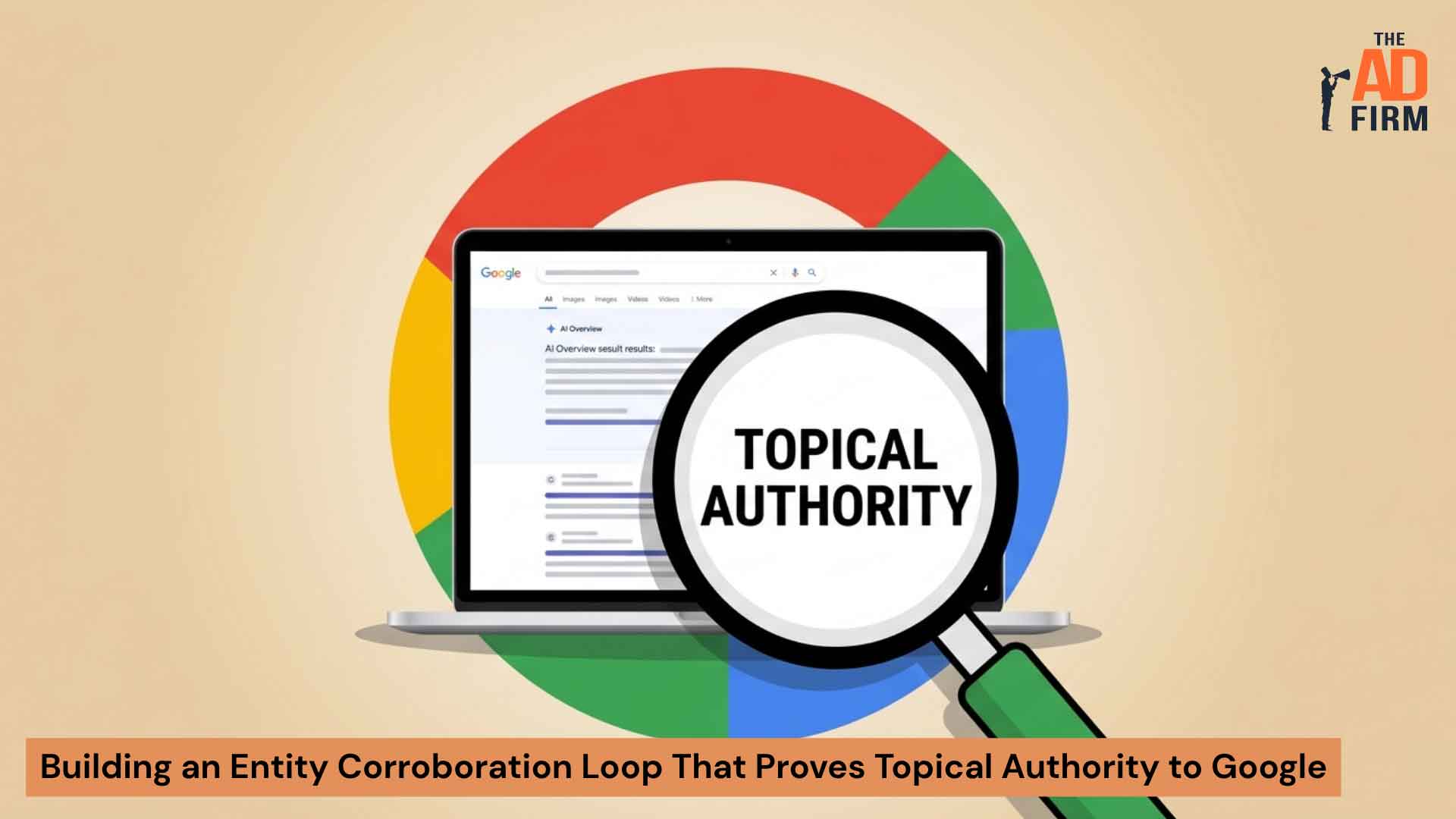
Building an entity corroboration loop helps you show Google exactly who your brand is, what topics you cover, and why your business deserves to be trusted. Instead of publishing content and hoping it ranks, you create a structured process where your website defines your brand identity, then sources Google can cross-check to reinforce the same message.
Google evaluates more than individual pages. It looks at how well your domain covers a topic and whether other signals across the web support your claims. A strong SEO company builds these entity signals into your strategy so your content, brand mentions, profiles, and authority markers all work together to strengthen topical authority.
Why Google Needs More Than One Source of Truth
Two businesses can compete for the same keyword with equally well-optimized pages, yet one consistently outranks the other. Often, the difference isn’t on-page quality. It’s that Google has far more external evidence confirming one brand’s expertise in that topic space. That cross-source verification gap is exactly what entity signals are designed to close.
That is where entity signals matter. Google looks for consistent information across your website, verified business profiles, industry mentions, and other sources it can cross-check. When those signals align, they help confirm who you are, what you offer, and why your brand should be trusted.
The Shift from Keyword Signals to Entity Signals
Google does not rely on keyword use alone. Its systems analyze named entities, including brands, people, organizations, services, and related concepts. This helps Google understand the meaning behind your content, not just the words on the page.
When your brand appears with the same details across multiple credible sources, Google can recognize it as a more reliable entity. AI Overviews and generative search tools also depend on this entity layer when deciding which sources are useful enough to reference.
What Topical Authority Actually Means to Google
Topical authority is not about publishing the longest page or collecting links without a strategy. It comes from building enough consistent evidence for Google to associate your brand with a defined topic cluster.
Your site can strengthen authority by answering related questions, organizing those answers into connected content hubs, and earning mentions from recognized industry sources. When these signals work together, Google has more confidence in your expertise. Teams that build this well treat topical authority as a system, not a single-page optimization task.
ALSO READ: How Page Experience Influences Local SEO Engagement Metrics
How Does an Entity Corroboration Loop Work?
An entity corroboration loop has three parts: your website, external corroboration sources, and ongoing Knowledge Graph reinforcement. Your website defines the entity, outside sources confirm it, and regular monitoring keeps those signals accurate over time.
Each part supports the others. Your Entity Hub gives Google a source of truth, your external footprint adds independent verification, and your governance process helps correct outdated or inaccurate information before it weakens your authority.
How Do You Build an Entity Hub That Google Can Trust?
Your external authority signals only work when your internal foundation is clean. If your own website describes your brand inconsistently, every outside mention has to work harder to support your credibility. Google needs a consistent profile before it can confidently connect your business to a topic.
Write One Canonical Entity Profile
Start with one canonical Entity Home, usually your About page. This page should clearly state who you are, what you do, who you serve, and which services you want your brand to be known for. Use that same language across your service pages, schema markup, directory listings, partner bios, and social profiles. Standardizing this language early ensures your brand sends the same signal everywhere it appears.
Implement JSON-LD Schema for Machine Readability
JSON-LD (JavaScript Object Notation for Linked Data) schema helps search engines and AI systems understand your brand in a structured way. It tells them what your business is, what it offers, and how it connects to other verified sources. Google’s Search Central documentation confirms JSON-LD as its preferred format for structured data, noting that it keeps markup separate from the HTML and is easier to implement and maintain across page templates. This matters when competitors, similar business names, or unrelated organizations could create confusion.
Use Organization, Person, Product, or Service schema where appropriate. Then use sameAs markup to help search engines match your website to verified brand profiles, such as LinkedIn, Crunchbase, industry directories, and other confirmed brand pages. These connections give Google a direct path to confirm your identity across the web.
Audit Your Entity Baseline Monthly
Audit your entity baseline every month. Check your website, key directories, social profiles, partner pages, and major citation sources for consistent brand names, service categories, descriptions, and links.
You can also use the Knowledge Graph Search API to see whether your brand appears as a clean entity match. If a directory lists your company under the wrong service category, or a partner page uses outdated positioning, fix it before the error spreads. Including this monthly review in your SEO workflow matters because entity accuracy directly supports long-term topical authority.
ALSO READ: Trust Factors That Influence GEO Performance in AI Search
How Do You Expand Corroboration Sources Across the Web?

Once your Entity Hub is accurate, focus on sources that add independent context: industry publications, trade directories, podcast mentions, expert profiles, and partner pages. These sources help Google connect your brand to the right category, audience, and topic area.
Map Your First-, Second-, and Third-Party Sources
First-party sources are properties you own directly: your blog, service pages, and connected microsites. Second-party sources are social media profiles where you control content but not the platform. Third-party sources carry the strongest corroboration weight: independent industry publications, trade directories, news sites, and expert databases already recognized by Google within your topic area.
Wikipedia and Wikidata entries flagged as promotional are regularly removed, so focus on industry-specific directories and sources that already belong in your topic’s semantic neighborhood. A relevant industry directory or expert publication can support your authority more effectively than a generic listing with little context.
Which External Signals Help Confirm Your Entity?
Co-citation is one important signal. When your brand appears in expert interviews, editorial placements, guest articles, or industry features alongside established names, Google gains more context about where your business fits in the market.
Unlinked brand mentions can also support entity recognition. A podcast transcript, news article, expert roundup, or industry blog can mention your brand without linking to your site and still provide useful context. The link is valuable, but the mention itself can also help reinforce your brand’s connection to a topic.
Build the Hub-and-Wheel Connection Loop
Build visible links and mentions between your website and verified external sources so users and crawlers can verify the relationship. Link from your Entity Home to external corroborative sources where appropriate, and secure links or mentions from those sources back to your Entity Home.
The bidirectional structure creates a verification loop that Google’s crawlers can follow in both directions. Whoever manages this work should maintain both the machine-readable markup and the visible source relationships, treating it as evidence-building, not link-building alone.
ALSO READ: Google UTM Tracking to Attribute Local SEO Leads
How Do You Structure Content for AI Citations?
Getting Google to recognize your brand is only part of the equation. Your content still needs to be easy for AI Overviews and generative answers to extract, summarize, and cite. If your answer is buried under long introductions or vague explanations, it becomes harder for search systems to use your page as a source.
Use PAA Data to Find Citation Intent Clusters
People Also Ask boxes reveal the exact questions users ask after an initial search. Group subtopics by intent type, such as learning about a topic, comparing options, or getting ready to contact a provider. Then build dedicated pages or sections for each cluster.
Winning multiple People Also Ask positions on a single topic can strengthen topical association and expand the entity’s recognized coverage area.
Put Direct Answers Near the Top of Each Section
AI Overviews and generative answers often rely on clear, specific statements with supporting detail. A page that buries its definition after multiple paragraphs of background is harder to cite.
Put the clearest answer near the top of each section, then support it with context, examples, data, or process details. Use explicit definitions, clean H2 and H3 heading hierarchies, in-sentence data references, and FAQPage schema when appropriate. Clear structure helps readers, search engines, and AI systems find the answer quickly.
Build Bidirectional Internal Links Within Clusters
Cluster pages should link up to the parent pillar page. The pillar page should link down contextually to all supporting clusters within the body copy. Lateral links between sibling cluster pages build horizontal topical association. Supporting content should also link to the parent service pages it reinforces.
ALSO READ: Building Local SEO Trust Signals That Influence AI Assistants
How Do You Monitor and Govern the Loop Over Time?
Building the entity corroboration loop is only the start. You need an ongoing governance process to keep your entity signals accurate, current, and aligned with your content strategy.
Track AI Citations and Topical Share of Voice
Track where AI citations mention your brand, where they cite your content, and where they confuse your company with a competitor. Also monitor your topical share of voice, or how often your brand appears in relevant AI-generated answers compared with competing sources.
That data shows exactly where to expand, update, or correct your content.
Validate Schema and Refresh Content Quarterly
Every quarter, confirm that your schema still matches your current services, brand descriptions, leadership details, and external profiles. This keeps your structured data aligned with what users and search engines see on the page.
Update cluster pages with current People Also Ask questions, newer examples, stronger explanations, and fresh supporting details. Outdated content can weaken trust, especially when search systems rely on current information to generate answers.
Fix Misattributions Before They Compound
Review AI citations regularly to find incorrect brand descriptions, outdated service details, or facts that AI systems have assigned to your company by mistake. When you find an issue, correct the source content, update the schema, and recheck the entity signals tied to that page.
Misattributions can spread when inaccurate information appears across multiple sources. Fixing them early protects your brand identity and keeps your corroboration loop clean. An SEO company should include misattribution checks in its quarterly governance process so your authority signals continue to support measurable growth.
LEARN MORE: Combining CRM Data and GEO Metrics for Smarter AI SEO Forecasting
How Do You Know Your Entity Loop Is Working?
Your entity loop is working when your brand information becomes more consistent across search results, business profiles, industry sources, and AI-generated answers. You should see fewer incorrect brand associations, stronger visibility across related topic clusters, and more accurate descriptions of your services.
You can also look for practical signs of progress across four measurable areas:
- Branded search volume: Open Google Search Console and filter by branded queries. A steady month-over-month increase in branded impressions signals your brand is surfacing in more AI-generated answers and discovery searches.
- Knowledge Graph recognition: Search your brand name directly in Google. A Knowledge Panel on the right side of the results page confirms that Google has enough corroborating evidence to build a confident entity profile. An absent or sparse panel means the loop still needs more external reinforcement.
- Cluster content rankings: Track keyword positions for your supporting cluster pages at 30, 60, and 90-day intervals after publishing or updating. Pages gaining traction within 60 days typically indicate a functioning topical authority structure.
- AI citation tracking: Run manual AI Overview searches for your target queries, or use tools like Semrush or BrightEdge to monitor when your brand appears in AI-generated answers.
- On timeline: Most brands begin seeing initial Knowledge Graph signals within 60 to 90 days of establishing a clean entity foundation. Consistent AI citation appearances typically take three to six months, depending on how competitive your topic cluster is and how quickly external corroboration sources get indexed.
Start Building Your Entity Corroboration Loop
Building an entity corroboration loop isn’t a one-time project. As your content cluster grows, your external corroboration deepens, and your governance process matures, Google’s confidence in your brand compounds. The businesses that build this infrastructure early become the default citations in AI-generated answers, not occasional mentions.
The Ad Firm builds entity-first SEO strategies that help your brand become easier to recognize, verify, and cite across traditional search and AI-generated results. Our process starts with a full entity audit that maps where your brand signals are consistent, where they conflict, and which corroboration gaps are costing you visibility. As an experienced SEO company, our team connects schema architecture, PAA cluster development, co-citation outreach, and governance audits into one strategy focused on measurable digital growth.
Ready to make your brand easier for Google and AI engines to trust? Contact The Ad Firm to schedule your strategy consultation to learn how a structured entity strategy can support long-term search visibility.
Frequently Asked Questions
What Is an Entity Corroboration Loop in SEO?
An entity corroboration loop is a structured process where your website defines your brand identity and external sources across the web reinforce it. It has three components: your Entity Hub, which gives Google a source of truth; external corroboration sources, such as industry publications, directories, and expert profiles; and an ongoing governance process to keep those signals accurate. When all three align, Google has enough cross-referenced evidence to associate your brand with a specific topic with confidence.
How Long Does It Take for Entity SEO to Show Results?
Most brands see initial Knowledge Graph signals within 60 to 90 days of building a clean entity foundation. Consistent appearances in AI-generated answers typically take three to six months. Results come faster for businesses that already have some entity presence and are correcting inconsistencies, rather than starting from scratch.
How Does Topical Authority Connect to Entity Signals?
Topical authority is what Google assigns when it has enough evidence to trust your brand as a reliable source on a specific subject. Entity signals, including consistent brand descriptions, schema markup, co-citations, and verified external mentions, are the building blocks of that evidence. You can’t reliably earn topical authority without establishing the underlying entity layer first.
What External Sources Matter Most for Entity Corroboration?
Third-party sources carry the most weight: independent industry publications, trade directories, news sites, and expert databases that Google already recognizes within your topic area. Co-citations in expert interviews, editorial placements, and guest articles are also valuable. Even unlinked brand mentions in podcast transcripts or news roundups can reinforce your entity associations without a direct backlink.
How Do I Know If My Entity Signals Are Working?
Look for a Knowledge Panel when you search your brand name in Google, consistent brand descriptions in AI-generated results, and rising branded query volume in Search Console. Cluster content ranking within 60 days of publishing is another strong indicator. If AI Overviews regularly misattribute your services or describe your brand incorrectly, those gaps point to where the loop needs work.