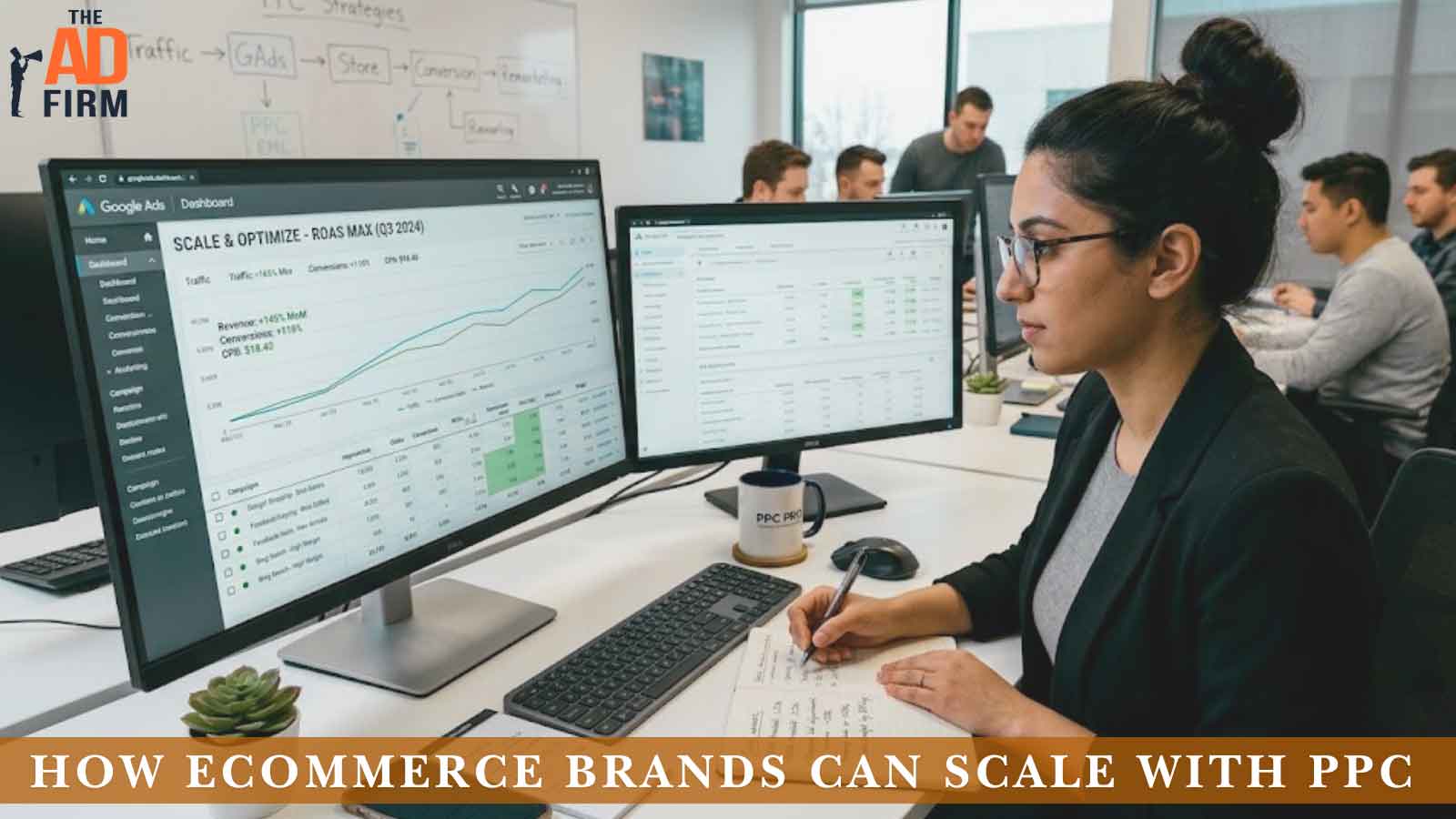
Most ecommerce brands run out of strategy long before they run out of budget. Spend goes up, but Return on Ad Spend (ROAS) stalls or slides, and the instinct is to pour more money into the same campaign structure that got them this far. That approach rarely works. What got a brand to its first $50,000 in monthly ad spend almost never holds at $200,000 without real structural changes.
Scaling PPC for ecommerce isn’t about spending more. It’s about restructuring campaigns, refining targeting, and connecting front-end acquisition to back-end customer value so growth compounds instead of plateauing.
How Do You Structure PPC Campaigns to Scale Profitably
Most ecommerce accounts default to a single campaign type and scale it by increasing budget. That works briefly, then efficiency drops as the campaign runs out of high-intent inventory to serve.
A scalable structure treats each campaign type as a distinct tool with a distinct job, rather than one channel doing all the work.
Balance Search and Performance Max
Performance Max campaigns are effective for broad reach across Google’s full inventory, including Display, YouTube, and Discover. What they aren’t is controllable. PMax automates targeting and placement decisions, which makes it harder to isolate exactly what’s driving conversions.
Targeted Search campaigns remain the more controllable, typically higher-ROAS core of an ecommerce account. Keep Search ads built around your highest-intent, highest-converting product terms, and let PMax handle the broader reach you can’t efficiently capture through manual targeting alone. Running both in parallel, rather than choosing one over the other, gives you reach and control at the same time.
Optimize Your Product Feed
Your Google Shopping feed is the foundation every Shopping and PMax campaign pulls from. A weak feed caps performance no matter how well the campaign itself is built.
Write keyword-rich, specific product titles rather than generic category names or internal SKU codes. A title that includes the product type, key attributes, and variant detail gives Google far more to match against than a code-style label alone. Include clear pricing, accurate availability data, and high-quality imagery that meets Google’s current specifications. Feed quality directly affects which queries your products are eligible to show for, so this work happens before any bid strategy decision matters.
Advance Your Digital Reach with The Ad Firm
- Local SEO: Dominate your local market and attract more customers with targeted local SEO strategies.
- PPC: Use precise PPC management to draw high-quality traffic and boost your leads effectively.
- Content Marketing: Create and distribute valuable, relevant content that captivates your audience and builds authority.
Segment by Profit Margin, Not Just Revenue
Most ecommerce accounts bid based on conversion volume alone, which means a $20 item converting frequently can consume more budget than a $200 item converting less often but generating significantly more profit per sale.
Use custom labels in your product feed to flag products by margin tier and best-seller status. That data lets you bid more aggressively on your most profitable items and pull back on high-volume, low-margin products that are eating budget without proportionally growing revenue.
ALSO READ: Consent Mode Made Simple: How Google’s Update Affects Your Analytics and Ad Data
Use Video and Retargeting to Recover Lost Demand
Search and Shopping campaigns capture demand that already exists. Video and retargeting create and recapture demand that would otherwise disappear without a second touch.
Both channels work differently from Search, and both require a distinct approach to creative and audience building.
Short-Form Video for Top-of-Funnel Reach
Platforms like YouTube and TikTok reward short-form video that shows products in action rather than static product shots. This format performs particularly well for ecommerce brands. It mirrors the organic content shoppers already engage with on those platforms, which lowers the resistance typical ad creative runs into.
Build video creative around real product demonstrations, quick before-and-after comparisons, or use cases that answer the question a shopper has before they’ve typed a single search query. This content drives awareness and engagement that feeds your Search and Shopping campaigns further down the funnel.
Dynamic Retargeting for Abandoned Carts and Browsers
A large percentage of ecommerce traffic leaves without converting on the first visit. Dynamic retargeting recaptures that traffic by showing visitors the exact products they viewed or added to cart, rather than a generic ad.
This works by removing the friction of having the shopper search again. The product is already top of mind, and the ad simply closes the gap between interest and action. Segment retargeting audiences by how far they got in the funnel, since a cart abandoner and a casual browser need different messaging and different urgency.
ALSO READ: Google Local Service Ads Supporting Local SEO Growth
Streamline Your Digital Assets with The Ad Firm
- Web Development: Build and manage high-performing digital platforms that enhance your business operations.
- SEO: Leverage advanced SEO strategies to significantly improve your search engine rankings.
- PPC: Craft and execute PPC campaigns that ensure high engagement and superior ROI.
How Do You Control Wasted Spend as PPC Budget Scales?
Adding budget to a campaign with loose targeting doesn’t scale results. It scales whatever inefficiency was already there.
The brands that grow PPC spend profitably treat targeting as a continuous discipline, not a launch-day checklist. Negative keyword reviews, audience exclusions, and bid adjustments by device and time of day remain critical at every spend level. At larger budgets, skipping them is where growth quietly becomes waste. Automation handles the real-time bid signals that manual management can’t keep pace with at scale, but only on top of a structure clean enough for it to optimize accurately.
Build Out Negative Keyword Lists
Negative keywords prevent your ads from showing on searches that will never convert. Without an active negative keyword strategy, even well-targeted Search campaigns bleed budget on irrelevant queries that technically match your keywords but don’t match buyer intent.
Review your search terms report weekly during the scaling phase. New irrelevant queries surface constantly as campaigns expand, and catching them early protects efficiency before wasted spend compounds across a larger budget. Build shared negative keyword lists across campaigns rather than managing them individually. That structure keeps new campaigns protected from the same irrelevant queries you’ve already identified, instead of starting each one from a blank list.
Automate Bidding and Inventory Adjustments
AI-driven bidding strategies adjust bids in real time based on signals manual management can’t track at scale, including device, location, time of day, and historical conversion probability. For ecommerce specifically, automated inventory scripts that pause ads for out-of-stock products prevent wasted spend on items customers can’t actually buy.
Automation works best layered on top of a well-structured account, not as a replacement for one. A PPC agency that understands both the automation tools and the underlying account structure gets more out of smart bidding than automation running on a disorganized campaign.
ALSO READ: PPC Ad Copy That Stands Out in Crowded Search Results
Connect PPC to Back-End Customer Value
Scaling isn’t only a front-end acquisition problem. The brands generating the highest sustainable growth pair PPC with lifecycle marketing that turns first-time buyers into repeat customers, which raises the lifetime value of every dollar spent on acquisition.
Amplify Your Market Strategy with The Ad Firm
- PPC: Master the art of pay-per-click advertising to drive meaningful and measurable results.
- SEO: Elevate your visibility on search engines to attract more targeted traffic to your site.
- Content Marketing: Develop and implement a content marketing strategy that enhances brand recognition and customer engagement.
This shift in thinking changes how you should measure PPC success in the first place.
Why Lifetime Value Changes the PPC Math
A campaign with a mediocre first-purchase ROAS can still be highly profitable if those customers come back. Tracking PPC performance against first-purchase revenue alone undervalues campaigns that are quietly building a strong repeat customer base.
Connect your PPC data to your customer relationship management system or email platform so you can see lifetime value by acquisition channel, not just initial conversion value. That visibility often reveals that your highest-ROAS campaign on paper isn’t actually your most profitable one over a 12-month window. A campaign attracting price-sensitive, one-time buyers can look strong in week one and weak in month six. A campaign attracting brand-aligned customers often tells the opposite story once repeat purchases are factored in.
Pair PPC With Email Flows to Maximize Retention
Once PPC brings a customer in, email marketing flows do the work of keeping them engaged after that first purchase. Automated post-purchase sequences, replenishment reminders, and personalized offers based on purchase history all extend the value PPC generated on the front end.
This connection is where most ecommerce brands leave growth on the table. PPC and email are frequently managed as separate channels with separate goals, when the real growth opportunity sits in the handoff between them. Treating that handoff as part of one continuous strategy, rather than two disconnected efforts, is what separates brands that plateau at a certain ad spend from brands that keep compounding past it.
How Do You Know When You’re Ready to Scale PPC
Scaling too early is one of the most common reasons ecommerce PPC accounts lose efficiency instead of gaining it. Pushing more budget into a campaign that hasn’t proven consistent performance just amplifies whatever inefficiencies already exist.
A few signals indicate an account is genuinely ready for a budget increase, rather than just due for one on the calendar.
Look for Consistent Conversion Data, Not a Single Good Week
One strong week of ROAS isn’t evidence of a scalable campaign. Smart Bidding strategies need enough conversion volume to optimize accurately, and a single spike can be noise rather than signal.
Strengthen Your Online Authority with The Ad Firm
- SEO: Build a formidable online presence with SEO strategies designed for maximum impact.
- Web Design: Create a website that not only looks great but also performs well across all devices.
- Digital PR: Manage your online reputation and enhance visibility with strategic digital public relations.
Look for at least three to four consecutive weeks of stable or improving performance before increasing the budget meaningfully. If ROAS has been inconsistent week to week, the priority is diagnosing that inconsistency first, not adding spend on top of it.
Confirm Your Fulfillment and Support Can Handle the Volume
PPC can drive demand faster than operations can sometimes absorb it. A scaling campaign that outpaces inventory levels, shipping capacity, or customer support response times creates a different kind of problem: more traffic and sales, but a worse customer experience that shows up later in returns, refunds, and negative reviews.
Confirm inventory depth and fulfillment capacity can support the volume increase before pushing the budget higher. A CRO review of your checkout and post-purchase flow at this stage catches friction points that get more expensive to fix once traffic volume increases.
Scale Your Ecommerce PPC With The Ad Firm
Scaling PPC profitably requires more than increasing budget. It requires the campaign structure, feed optimization, and lifecycle strategy to actually support that growth without efficiency collapsing under the weight of it.
The Ad Firm has been managing PPC campaigns for growing ecommerce brands since 2009. With a 4.9-star rating across more than 1,400 client reviews and Google Premier Partner status, our team builds the structure your scaling strategy needs, from ecommerce PPC management to the lifecycle marketing that compounds it. Contact The Ad Firm today to talk through where your account is leaving growth on the table.
Common Questions About Scaling Ecommerce PPC
How much should I increase my PPC budget when scaling?
Incremental increases of 15 to 20% every two to three weeks tend to preserve efficiency better than large jumps. Big, sudden budget increases often outpace the available high-intent inventory, which drives down ROAS as the algorithm reaches for lower-quality traffic to spend the additional budget.
Should I use Performance Max or Search campaigns to scale?
Both, run in parallel rather than as a choice between them. Search gives you control and typically stronger ROAS on your highest-intent terms. PMax extends reach into placements and audiences Search alone can’t access. Brands that scale efficiently use each campaign type for what it does best.
Enhance Your Brand Visibility with The Ad Firm
- SEO: Enhance your online presence with our advanced SEO tactics designed for long-term success.
- Content Marketing: Tell your brand’s story through compelling content that engages and retains customers.
- Web Design: Design visually appealing and user-friendly websites that stand out in your industry.
How do I know if my product feed is holding back my campaigns?
Check your Shopping campaign’s impression share and disapproval rate inside Google Merchant Center. Low impression share paired with high-quality titles and descriptions often points to missing attributes, weak imagery, or pricing inconsistencies that are limiting how often your products are eligible to show.
Is retargeting still effective with rising privacy restrictions?
Yes, though it requires a more first-party-data-driven approach than it used to. Building retargeting audiences from your own site data, email list, and customer relationship management platform, rather than relying solely on third-party cookies, keeps retargeting effective even as browser-level tracking restrictions continue to tighten.